
Wind Sensors for Awnings: Why They Matter
Key Takeaways:
|
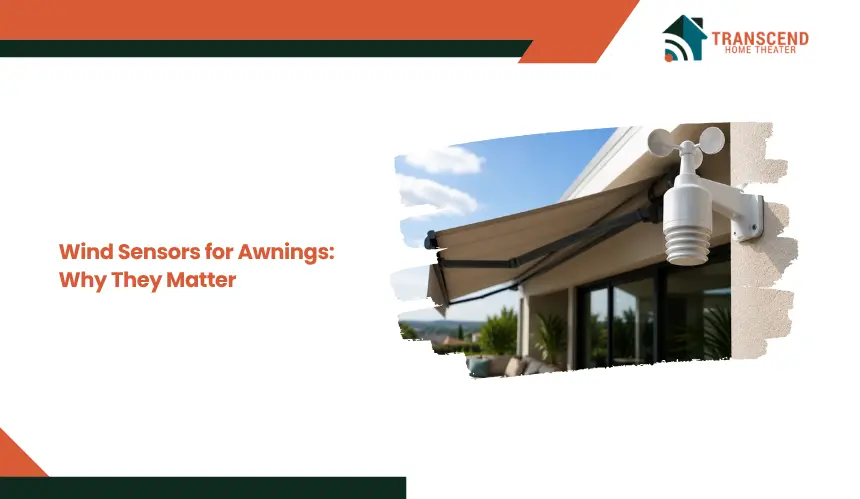
Strong winds can damage a retractable awning in seconds, often before anyone has time to close it manually. A wind sensor reduces that risk by monitoring wind conditions and automatically retracting the awning when speeds exceed a safe limit.
This added layer of automation helps protect the fabric, frame, and motor while reducing the likelihood of costly repairs. This article explains how wind sensors work, why they matter, and what to consider when deciding if your awning should have one.
What Does a Wind Sensor Do for an Awning?
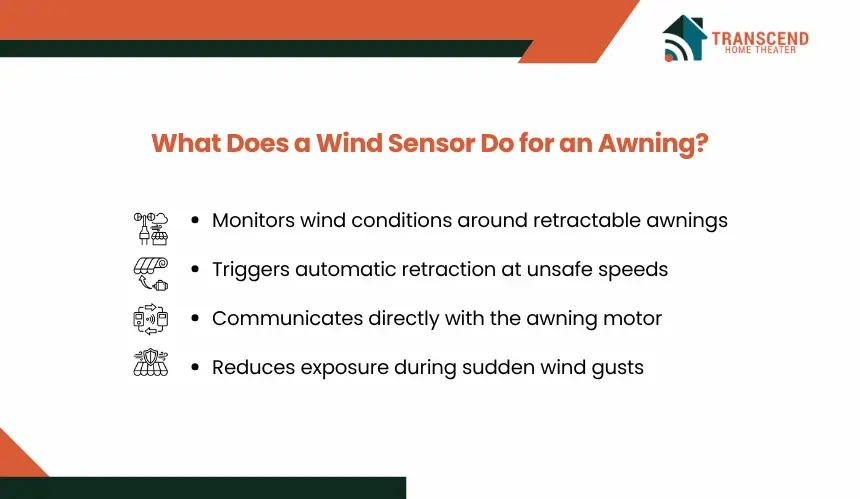
A wind sensor is an automated safety device that monitors wind conditions around a retractable awning. When wind speed reaches a predefined threshold, the sensor sends a signal to the awning’s control system, triggering the motor to retract the awning before excessive force can damage its components.
How Does a Wind Sensor Detect Changing Wind Conditions?
Wind sensors measure air movement using either a rotating anemometer or electronic sensing technology, depending on the system design. These measurements are continuously analyzed against programmed wind speed limits. Instead of relying on manual observation, the sensor provides real-time monitoring, allowing the awning to respond immediately as weather conditions change.
How Does the Sensor Communicate With the Awning Motor?
Once the sensor identifies unsafe wind conditions, it transmits a command to the awning controller through a wired or wireless connection. The controller activates the motor, retracting the awning without user intervention. In integrated systems, this communication occurs within seconds, reducing the time the awning remains exposed to potentially damaging wind loads.
What Happens When Wind Exceeds the Preset Threshold?
When wind speed surpasses the configured safety limit, the awning retracts automatically into its protective housing or cassette. Retracting the awning minimizes the surface area exposed to the wind, reducing stress on the fabric, support arms, mounting brackets, and motor assembly. Many systems keep the awning retracted until wind conditions stabilize, preventing repeated exposure during gusty weather.
Why Wind Sensors Matter for Protecting Your Awning
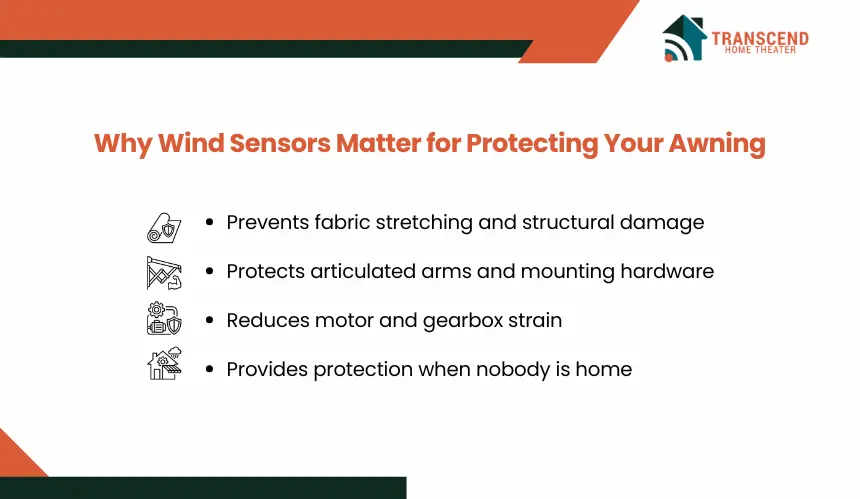
Wind damage rarely occurs because an awning is poorly built. More often, it happens because changing weather conditions outpace manual response. A wind sensor reduces that vulnerability by reacting immediately, helping preserve both the awning and the structure it protects.
Preventing Fabric Damage and Bent Awning Arms
An extended awning acts like a sail when exposed to strong wind. Sudden gusts can stretch the fabric beyond its design limits, twist the articulated arms, or place excessive force on mounting hardware. By retracting the awning before these loads become critical, a wind sensor helps prevent structural deformation and premature material failure.
Reducing Wear on the Motor and Mechanical Components
Wind places continuous resistance on the awning’s moving parts. As the motor works against that force, internal components experience higher mechanical stress, leading to faster wear over time. Automatic retraction removes this unnecessary load, allowing the motor, gearbox, and drive mechanism to operate under normal conditions and extending the overall service life of the system.
Protecting Property During Sudden Weather Changes
Weather conditions can shift rapidly, especially during seasonal storms that bring unexpected wind gusts. In Maryland, where coastal influences and passing storm fronts can produce variable weather throughout the year, an automatic wind sensor provides protection even when no one is home to monitor the forecast. By retracting the awning before damaging winds arrive, it helps reduce the risk of damage to outdoor furniture, windows, doors, and the awning itself.
Are Wind Sensors Worth It for Every Awning?
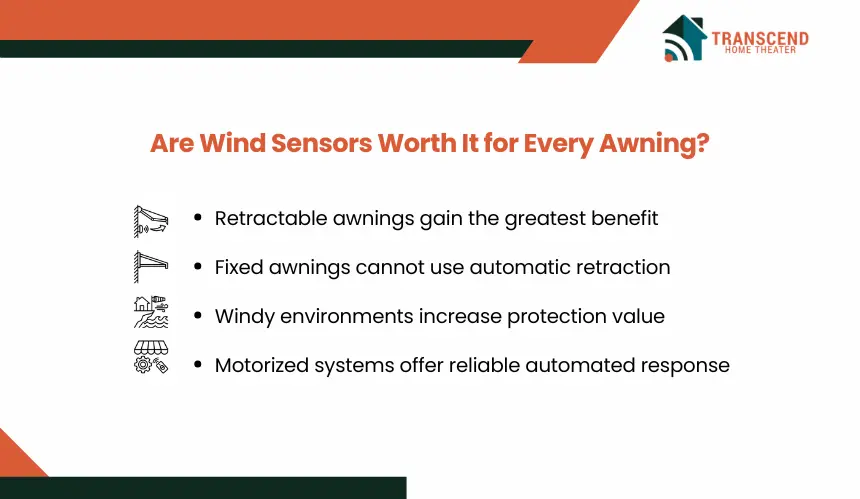
A wind sensor is not a universal requirement, but its value increases with the level of automation, environmental exposure, and replacement cost of the awning. Evaluating these factors helps determine whether the added protection justifies the investment.
Retractable vs. Fixed Awnings
Retractable awnings benefit the most from wind sensors because they are designed to extend and retract based on changing conditions. The automation only works effectively if the system knows when to close. Fixed awnings, by contrast, cannot retract, so a wind sensor offers little functional benefit. Instead, their wind resistance depends on structural design and proper installation.
Homes in Windy or Coastal Environments
Properties located in areas with frequent gusts or rapidly changing weather face a greater risk of awning damage. This is especially relevant in parts of Maryland, where coastal weather patterns and seasonal storms can create unpredictable wind conditions.
Homeowners investing in motorized shades installation in Maryland often choose wind sensors as part of a broader automation system, ensuring outdoor shading responds automatically instead of relying on manual operation.
Manual and Motorized Awning Considerations
Wind sensors are designed primarily for motorized awnings because they require an electric drive system to retract automatically. Manual awnings still depend on someone being present to close them before weather conditions worsen.
If convenience, equipment protection, and reduced maintenance are priorities, upgrading to a motorized awning with an integrated wind sensor provides a significantly higher level of operational reliability.
What to Consider When Choosing a Wind Sensor
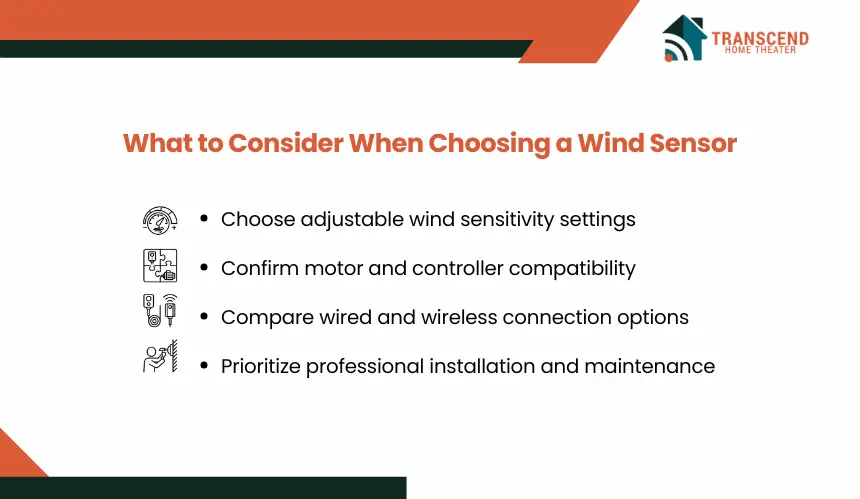
Not all wind sensors offer the same level of performance or compatibility. Selecting the right model depends on how the awning is operated, the control system it uses, and the environmental conditions it will face throughout the year.
Wind Sensitivity and Adjustable Thresholds
A quality wind sensor allows the activation threshold to be adjusted so the awning retracts at an appropriate wind speed. If the threshold is set too low, the awning may retract unnecessarily during normal breezes. If it is set too high, the system may not respond until damaging forces are already acting on the structure. Adjustable sensitivity helps match the sensor to the installation environment.
Compatibility With Existing Awning Systems
Before purchasing a wind sensor, verify that it supports the awning’s motor, controller, and communication protocol. Some sensors are designed for specific manufacturers, while others work across multiple automation platforms. Confirming compatibility before installation helps avoid integration issues and ensures the safety features function as intended.
Wired vs. Wireless Sensor Options
Wired wind sensors provide a direct connection to the control system and are often selected for new installations where cabling can be planned in advance. Wireless models simplify retrofits by reducing installation complexity while still delivering reliable communication. The right choice depends on the property’s layout, accessibility, and existing electrical infrastructure rather than one option being universally better.
Professional Installation and Maintenance
Even a high-quality wind sensor requires proper positioning and configuration to perform accurately. Sensors should be installed where they receive unobstructed airflow and can measure actual wind conditions instead of localized turbulence. Periodic testing, cleaning, and calibration help maintain accurate readings, ensuring the awning responds consistently when weather conditions change.
Upgrade your outdoor living space with smarter automation. Transcend Home Theater provides Home Automation Window Coverings, Smart Home Automation, and integrated control solutions for homeowners across Virginia, Maryland, and Northwest DC, helping protect motorized awnings and other automated shading systems with intelligent technology.
Frequently Asked Questions
Can I leave my awning extended when nobody is home if it has a wind sensor?
A wind sensor lowers risk, but it does not make an extended awning safe to leave unattended. Fast gusts may develop before retraction finishes, and obstacles can interfere with movement. Manufacturers commonly advise closing the awning before leaving home or when storms are forecast, even when automatic retraction is enabled.
What happens to the wind sensor if the power goes out?
Most motorized awnings cannot retract during an outage unless the motor includes a manual override, backup battery, or emergency crank. The correct procedure depends on the motor and cassette design. Homeowners should confirm the fallback method during installation and keep access to the override clear before severe weather arrives.
Why does my awning retract when there is barely any wind?
Unexpected retraction can result from an overly sensitive setting, loose mounting, arm vibration, low sensor batteries, radio interference, or a sensor that needs to be paired again. Start by checking the battery and mounting position, then test each sensitivity level. Persistent false triggers should be diagnosed by the installer rather than disabling protection permanently.
Can an awning wind sensor mistake movement or vibration for strong wind?
Some sensors measure airflow with an anemometer, while arm-mounted models respond to movement or vibration. A motion-based sensor may interpret shaking, impact, or unstable mounting as wind. Its advantage is detecting forces directly on the awning, but correct placement and calibration are necessary to prevent unnecessary retraction.
Will the awning automatically reopen after the wind stops?
Automatic reopening depends on the controller’s programming. Many systems remain closed after a wind event because reopening without supervision could expose the awning to another gust cycle. Advanced home automation controls may support timed reopening or weather-based rules, but the awning should not extend automatically while furniture, people, or equipment occupy its path.
Can wind, sun, and rain sensors control the same awning?
Wind, sun, and rain sensors can operate through one control system, but their command priority must be configured correctly. Safety commands should override comfort settings, allowing strong wind to retract the awning even when a sun sensor requests shade. Rain settings also depend on fabric, pitch, drainage, and manufacturer operating limits.
What happens if something blocks the awning while it is retracting?
A wind sensor does not necessarily detect objects in the awning’s path. Furniture, ladders, branches, or cleaning equipment can obstruct automatic retraction and damage the fabric, arms, or gearbox. Keep the closing zone clear, and disable automatic operation during maintenance so the awning cannot move unexpectedly around people or equipment.