
AI-Powered Home Security Cameras: Facial Recognition, Alerts & Privacy Controls (2026 Review)
AI-powered home security cameras in 2026 use machine learning and edge-based processing to deliver accurate facial recognition, smarter real-time alerts, and stronger privacy controls that help homeowners understand what is happening around their property with far greater clarity.
Unlike older systems that simply recorded motion, these cameras analyze video content in real time to distinguish people, pets, vehicles, and routine movement. This reduces false alarms and provides alerts that are actually meaningful.
This article offers a focused 2026 review of how these technologies work, what they improve, and which features matter when evaluating modern AI-powered home security cameras.
Understanding How AI-Powered Home Security Cameras Work
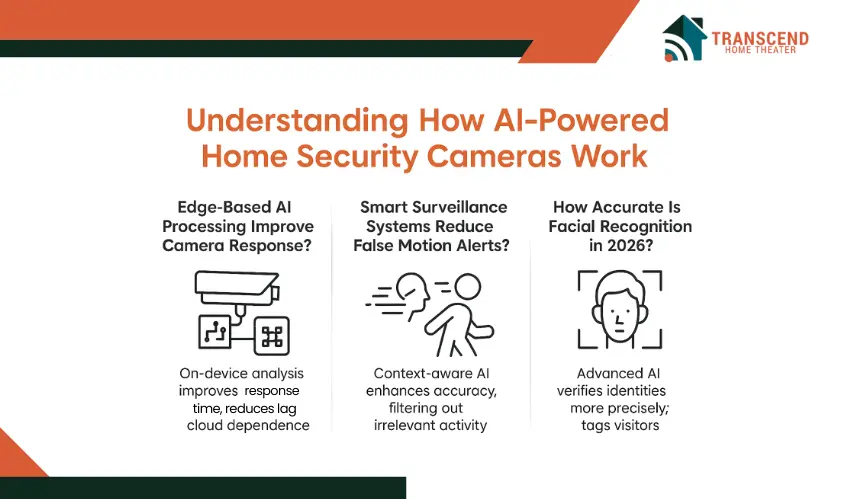
Homeowners exploring AI security systems often want to know how these cameras interpret activity, recognize faces, and deliver precise alerts without overwhelming them with unnecessary notifications.
Let’s explore the core technologies that drive modern smart surveillance so readers understand what makes current systems more accurate and dependable.
How Does Edge-Based AI Processing Improve Camera Response?
Edge-based AI allows cameras to analyze video directly on the device rather than relying entirely on cloud servers. This reduces lag and helps the system identify events as they happen. Faster on-device processing improves facial recognition speed, motion classification, and overall responsiveness.
It also minimizes bandwidth use and keeps more data inside the home, which appeals to users who value privacy and reduced cloud dependency.
How Do Smart Surveillance Systems Reduce False Motion Alerts?
Did you know? Research shows that 62% of security system owners experienced a false alarm in the past 12 months. This makes false alerts one of the top reasons households cancel monitoring services |
AI-powered motion detection focuses on patterns instead of simple movement. These systems can distinguish a passing vehicle from a person approaching the front door, and they can learn what typical household activity looks like.
This helps reduce unnecessary notifications triggered by wind, shadows, or pets. As the system gathers more data, it becomes better at identifying real events that matter.
How Accurate Is Facial Recognition in 2026?
Facial recognition models now use detailed mapping techniques to verify identities with higher precision. Cameras can tag frequent visitors, identify unfamiliar faces, and keep a history of recognized individuals.
Homeowners often use this feature to monitor arrivals, track expected guests, or confirm when family members return home. Improvements in AI modeling have made recognition more stable across lighting changes and different viewing angles.
Privacy and Data Security Standards for Home Security Cameras
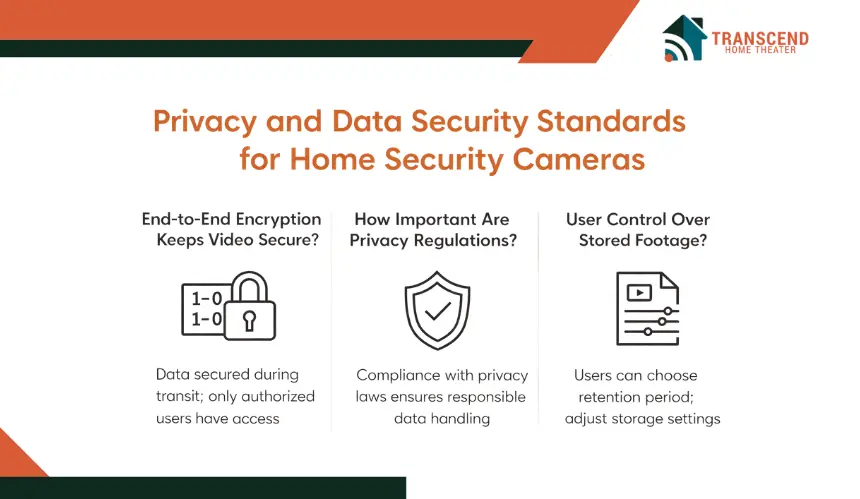
Homeowners comparing modern home security cameras often want clear reassurance about how their footage is handled, stored, and protected. Working with an expert Smart home automation company can help choose devices with strong privacy safeguards, which makes it important to understand the security standards behind today’s AI-driven systems.
What Is the Difference Between Local Video Storage and Cloud Storage?
Local storage keeps footage inside the home on a built-in drive or dedicated hub, which appeals to users who prefer tighter control over their recordings. It reduces reliance on external servers and lowers the risk of unauthorized cloud access.
Cloud storage offers remote access and automatic backups, but it requires trust in the provider’s security policies. Many 2026 models use hybrid options that balance convenience with stronger privacy.
How Do Encryption Protocols Protect Video Data?
AI-powered cameras use end-to-end encryption to secure footage during transmission and storage. Protocols such as AES-256 and TLS protect video streams from interception, ensuring that only authorized users can view stored or live content.
These encryption layers have become essential for homeowners who want defenses against hacking and unauthorized access.
Privacy Zones, Masking Tools, and User-Controlled Data Settings
AI-powered cameras now include tools that let users control exactly what the device records. Privacy zones allow certain areas to be excluded from monitoring, while masking tools hide sensitive regions within the camera’s field of view.
Manual data controls let users adjust how much footage is stored, shared, or uploaded. These features give households more flexibility to maintain security without losing their sense of personal privacy.
Smart Home Integration and Automation Features in Home Security Cameras
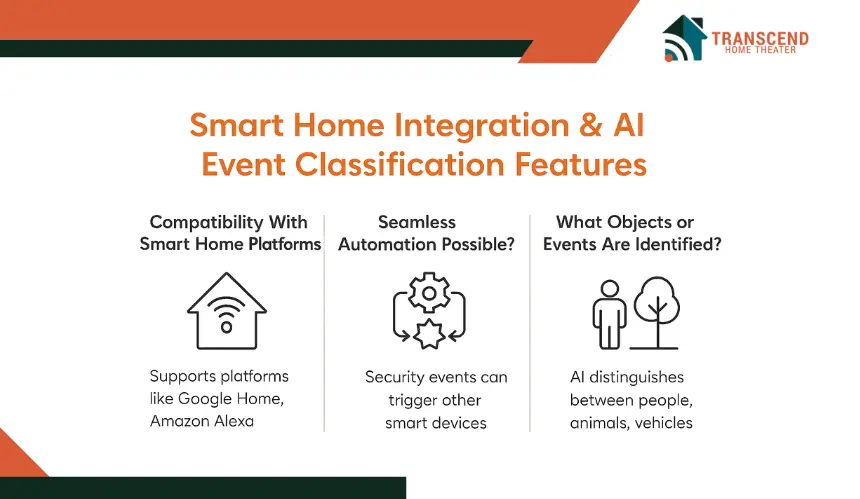
Homeowners choosing modern home security cameras often want systems that blend smoothly with the rest of their smart home setup. Many rely on connected devices for everyday convenience, so they expect their cameras to work with voice assistants, smart lighting, automated locks, and home hubs.
Let’s explore how today’s cameras integrate with major platforms and how these integrations create a more coordinated and efficient home environment.
How Well Do Home Security Cameras Work With Alexa, Google Home, and Apple HomeKit?
AI-powered home security cameras now connect directly with leading voice assistants to make monitoring easier. Users can view live feeds with spoken commands, receive notifications through smart speakers, or add camera actions to their daily routines.
Compatibility with Alexa, Google Home, and Apple HomeKit helps centralize security management, allowing homeowners to control multiple devices from one platform.
How Automation Scenes Improve Home Security Camera Performance?
Automation scenes link home security cameras with other smart devices to create coordinated responses when motion or activity is detected. For example, cameras can trigger porch lights, lock smart doors, or send alerts to connected displays. These cross-device workflows give homeowners a responsive environment that adapts instantly to real-time events.
Automation makes the entire system feel more intuitive, reducing manual actions and strengthening overall home protection.
AI Analytics and Intelligent Event Classification in Home Security Cameras
Many homeowners want security cameras that can recognize exactly what is happening rather than alerting them to every small movement. AI-driven analytics help cameras understand context, classify events accurately, and notify users only when something meaningful occurs.
How Do Home Security Cameras Identify People, Pets, and Packages?
Modern AI analytics analyzes body shapes, movement patterns, and object characteristics to distinguish people, pets, and packages with a higher level of accuracy. This reduces unnecessary alerts and helps homeowners focus on events that truly require attention.
The system can recognize a family member walking inside, a pet exploring the yard, or a package arriving at the front door, each generating a different type of notification.
How Do Activity Zones and Behavioral Tracking Improve Detection Accuracy?
Activity zones allow homeowners to mark specific areas where monitoring matters most. Cameras then focus their analysis within those boundaries to avoid alerts from irrelevant spaces. Behavioral tracking studies recurring patterns, such as routine deliveries or frequent visitors, helping the system improve its accuracy over time. These tools give homeowners more meaningful insights while reducing false notifications.
Did you know? A broad home-security camera effectiveness review found that properties with visible surveillance systems are 60 % to 70 % less likely to be targeted by burglars. |
Comparing Wired and Wireless AI Home Security Cameras
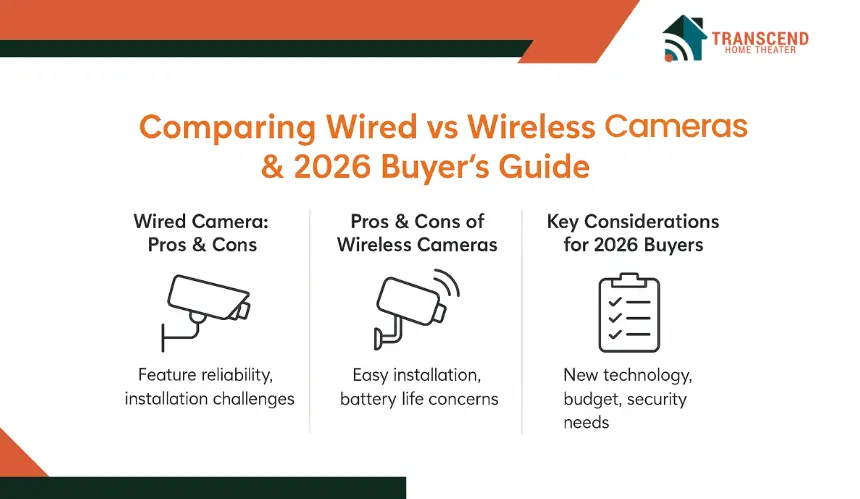
Homeowners exploring AI-powered systems often want a clear understanding of how wired and wireless setups differ in stability, performance, and long-term reliability.
Each option meets different security needs, and this section helps readers evaluate which system fits their home environment and monitoring preferences.
1. Performance Differences Between Wired and Wireless Cameras
Wired home security cameras offer consistent performance because they receive uninterrupted power and maintain stable network connections through Ethernet or dedicated cabling. This stability supports smoother video streams and more reliable AI processing.
Wireless cameras provide flexible placement and easy setup, but their performance depends heavily on Wi-Fi strength and battery life, which can influence alert timing and video clarity.
2. Installation and Maintenance Considerations
Wired cameras usually require more effort during installation since cables must be routed through walls or exterior surfaces. Once they are set up, maintenance is minimal. Wireless cameras are simpler to install and move, making them ideal for renters or homeowners who prefer quick DIY setups.
They do, however, require periodic charging or battery replacement. This difference makes wired systems better for long-term consistency and wireless systems better for convenience.
2026 Buyer’s Guide for AI-Powered Home Security Cameras
Homeowners looking to upgrade their security setup often want a quick way to compare features and understand what truly matters in an AI-powered camera.
The points below offer a simple, clear overview to help guide confident purchasing decisions without unnecessary complexity.
- Look for fast and accurate facial recognition to ensure the system identifies familiar and unfamiliar visitors correctly.
- Check the quality of real-time alerts, focusing on how well the camera detects meaningful events instead of routine movement.
- Review privacy settings, including encryption, local storage options, and user-controlled data tools.
- Evaluate smart home compatibility if you use Alexa, Google Home, or Apple HomeKit.
- Consider your budget by comparing entry-level, mid-range, and premium models based on features and long-term value.
- Choose cameras with strong low-light performance if nighttime monitoring is a priority.
For homeowners who want smarter protection without the guesswork, Transcend Home Theater makes upgrading effortless. Our team helps you choose the right AI-powered cameras, set them up for peak performance and connect everything to your smart home.
Frequently Asked Questions
Do AI home security cameras work during internet outages?
Most modern cameras offer limited offline functionality, such as local recording on internal storage or an SD card. Alerts and remote access pause until the connection returns, but core monitoring continues depending on the model.
Can AI cameras recognize license plates on residential driveways?
Some advanced models include improved object recognition that can capture and interpret license plates at close range. Performance varies based on lighting, angle, and motion speed.
How well do AI cameras perform in extreme weather conditions?
High-quality AI cameras are designed with weather-resistant housings that protect internal components during heavy rain, snow, or heat. Certain models also adapt their AI detection accuracy to changing environmental conditions.
Are AI-powered home security cameras safe from electromagnetic interference?
Most systems are built to withstand common household interference from routers, appliances or wireless devices. Cameras that use shielded wiring or advanced signal filtering handle interference more effectively.
Can AI cameras differentiate between human movement and environmental noise like leaves or reflections?
Advanced models trained on diverse datasets can ignore environmental noise, including reflections, blowing leaves, or shifting shadows. Their algorithms focus on shape, movement direction, and behavioral patterns.
Do AI cameras support multi-resident profiles for shared homes?
Some systems allow multiple user profiles with personalized alert preferences. This helps shared households manage notifications without overlapping or missing important updates.
Can AI security cameras integrate with energy-saving automation?
A few smart home ecosystems allow users to link cameras with energy management tools. When no activity is detected for long periods, connected devices can adjust lighting or thermostat settings to reduce energy use.