
Automating Curtains, Shades & Skylights: Comfort Meets Efficiency (2026 Upgrades)
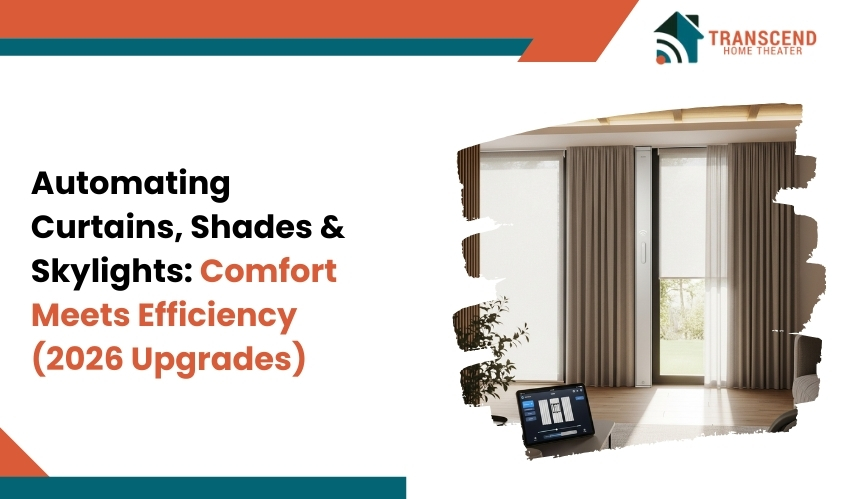
A Quick Answer: Automating curtains, shades, and skylights is done by installing motorized tracks or lift systems, connecting them to a smart controller, and using sensors or app-based settings to manage how they open and close throughout the day. The setup typically includes a motor unit, a control hub, and automation rules that respond to light levels, temperature changes, or user schedules. Once configured, these window treatments operate on their own, adjusting light, privacy, and comfort without manual effort. |
Homeowners use automation to maintain consistent lighting, reduce glare, improve sleep patterns, and support energy efficiency by limiting unnecessary heat gain. Modern systems in 2026 also integrate with major platforms through Matter-compatible hubs, allowing voice control, scene selection, and multi-room coordination.
This article explores how each technology works, the benefits they offer, the systems available in 2026, and the key considerations to keep in mind when choosing the best automated curtains, shades, or skylight solutions for your home.
Evolution of Automated Window Treatments in 2026
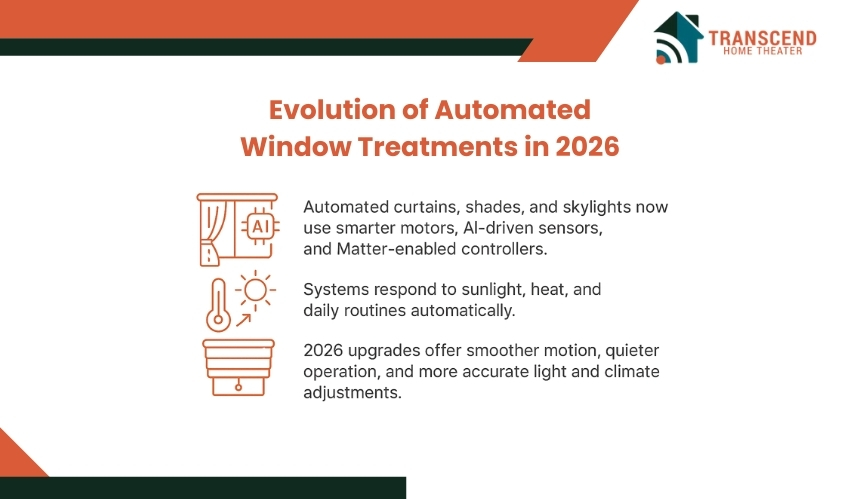
Automated curtains, shades, and skylights have advanced significantly in 2026 due to improvements in motor technology, smart-home connectivity, and adaptive environmental sensing. These upgrades allow homeowners to manage natural light and indoor comfort with greater accuracy and less effort.
The focus has shifted from simple remote-controlled systems to intelligent shading that responds to sunlight patterns, climate conditions, and personal routines.
1. Automated Curtains and Shades
Modern automated curtains and shades are designed to provide smooth, quiet motion and reliable light control without manual adjustments. They rely on motorized tracks or rollers that lift, close, or tilt based on predefined settings.
These systems can respond to time-based schedules, brightness levels, or occupancy detection to maintain a balanced indoor environment.
Users often combine blackout materials, room-darkening fabrics, or UV-filtering textiles to fine-tune privacy and lighting. Many 2026 solutions also support scene presets, which allow a room to shift from natural brightness to a dim, relaxing atmosphere with one command.
2. AI-Enhanced Skylight Systems
Skylight automation in 2026 incorporates AI-driven sensors that analyze sunlight direction, heat intensity, and indoor temperature. These systems can open or close skylight shades, adjust diffusers, or tilt panels to prevent glare and reduce unwanted heat.
The technology helps maintain consistent lighting in rooms with strong sun exposure, especially during midday peaks. Some skylight systems also coordinate with ventilation controls to release warm air and support natural airflow.
3. Smart Window Automation
The biggest transformation in 2026 is the widespread adoption of Matter-compatible motors and controllers, which allow different brands to work together within a unified ecosystem. This standard makes automation more reliable and easier to set up, even for users with mixed platforms.
Upgraded processors in control hubs enable faster responses to environmental triggers, while improved motors offer longer lifespan and smoother operation. These advancements contribute to a more stable, energy-aware automation experience that helps homeowners maintain comfort without constant manual input.
How Automation Improves Comfort, Energy Savings and Home Efficiency
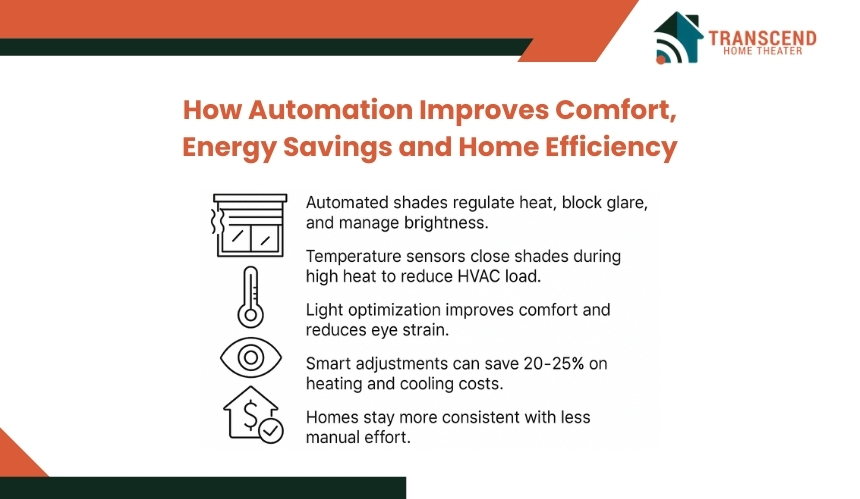
Automated window treatments enhance the indoor environment by controlling brightness, temperature, and privacy with minimal user input. When these systems respond to sunlight, heat, or living patterns, homeowners experience more consistent comfort and better energy management throughout the day. The advantages come from coordinated motion, precision timing, and the ability to maintain ideal indoor conditions without constant adjustments.
How Do Automated Window Treatments Regulate Indoor Temperature?
Fact: Window treatments can block up to 77% of unwanted heat gain from the sun during summer and significantly reduce drafts and heat loss during winter. |
Temperature regulation relies on sensors and programmed routines that respond to solar heat throughout the day. By automatically closing shades during high heat hours or opening them in cooler periods, these systems reduce the workload on heating and cooling equipment.
Many treatments like cellular or insulating shades create a thermal barrier, reducing heat loss in winter by trapping warm air and reflecting heat in the summer to keep rooms cooler.
This helps maintain a more stable climate in living spaces, especially in rooms with large windows or strong sunlight exposure. Over time, the reduced strain on HVAC systems also contributes to long-term energy savings.
How Does Light Optimization Improve Daily Comfort and Well-Being?
Light optimization focuses on creating the right balance between natural brightness and visual comfort. Automated shades adjust to reduce glare on screens, enhance reading visibility, or create a softer tone during evening hours.
These adjustments help reduce eye strain and support a smoother transition between day and night. Some homeowners use preset scenes for work, relaxation, or morning routines to maintain predictable lighting patterns that fit their lifestyle.
How Do Automated Shades Support Energy Efficiency?
Fact: Automated shades can save 20% and 25% on energy costs for heating and cooling by using sensor-based systems that automatically adjust based on sunlight and room occupancy. |
Energy efficiency improves when shading systems coordinate with environmental conditions and home automation schedules. By blocking excessive sunlight during peak hours or letting in natural warmth during cold periods, the home depends less on artificial heating or cooling.
This targeted approach reduces energy waste and creates a more efficient flow of temperature control. Many homeowners notice improved insulation performance when combining automated shades with energy-efficient fabrics.
Types of Automated Curtains, Shades and Skylight Systems to Explore in 2026
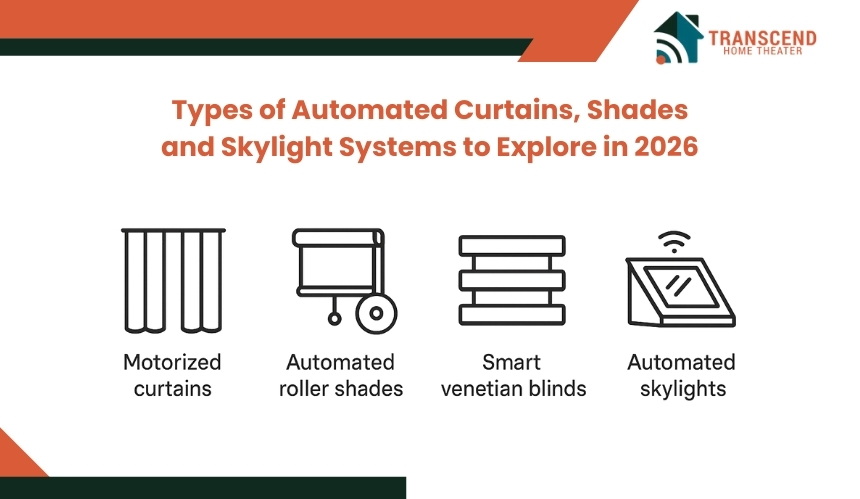
Homeowners exploring automation in 2026 can choose from several window treatment systems designed to handle different lighting needs, room layouts, and privacy expectations.
Each type offers a specific functional advantage, and the right choice depends on how the space behaves throughout the day.
Which Automated Shade Styles Work Best for Different Rooms?
Different rooms benefit from specific shade types, and each category supports unique comfort and design goals. Homeowners often choose them based on insulation needs, daylight preferences, and room usage patterns.
Automated Roller Shades:
Roller shades work well in modern interiors that need clean lines and smooth, consistent light control. Their motorized mechanism lifts or lowers the fabric evenly, making them ideal for living rooms, offices, and kitchens where predictable brightness is important. They also support a wide range of opacity levels that help manage privacy without compromising natural light.
Automated Roman Shades:
Roman shades suit rooms where visual softness and layered textures contribute to the overall design. Their motorized lift system creates gentle folds, giving bedrooms and sitting areas a warm, relaxed feel. These shades offer strong light-filtering capabilities and are often chosen when a balance between style and function is needed.
Automated Cellular or Honeycomb Shades:
Cellular shades provide excellent insulation because their pocketed structure traps air and slows down heat transfer. This makes them valuable in energy-conscious homes or rooms that experience strong temperature swings. When automated, they adjust in response to heat levels or time-based routines, helping maintain comfort in a more controlled way.
How Do Automated Drapery Systems Enhance Larger or More Stylish Spaces?
Automated drapery systems are popular in spacious environments where wide windows or sliding doors require smooth, elegant motion. These setups rely on motorized tracks that glide curtains along a preset path to create a sophisticated visual effect.
They are commonly used in living areas, dining rooms, and master bedrooms where visual flow and room design play a larger role. Automated drapery also allows homeowners to experiment with different curtain fabrics, textures, and pleat styles while still enjoying the convenience of hands-free operation
What Smart Skylight Systems Are Available for Light Control in Hard-to-Reach Areas?
Automated skylight systems offer precise control in spaces where manual adjustments are difficult or impractical. These systems include electric skylight shades that glide across the opening, solar-powered blackout covers, and daylight diffusers that soften harsh overhead light.
Many skylight systems also integrate with sensors that detect brightness or heat, which helps protect rooms from excessive warmth during midday hours.
Users with vaulted ceilings or high windows often rely on these automated solutions to maintain comfort without climbing to adjust a manual shade.
Core Technologies Powering Automated Window Treatments
Automated window systems rely on several technologies that make motion smoother, control more responsive, and integration easier across smart-home platforms.
Understanding these components helps homeowners compare systems and choose options that match their comfort, performance, and energy goals.
1. Motor Technologies
Motor technology determines how smoothly and quietly automated window treatments operate. Each motor type offers unique performance advantages and suits different room layouts or fabric weights.
- Quiet DC Motors: DC motors offer smooth, low-noise operation and are commonly used in bedrooms, nurseries, and offices where quiet movement matters. They consume less power and work well for lightweight fabrics or small windows.
- High-Torque Motors: These motors are built for heavier drapery fabrics and wide window panels. Their strong lifting ability helps maintain consistent performance across long tracks or extra-wide curtain systems. They are often installed in living rooms with panoramic windows or sliding doors.
- Brushless Motor Systems: Brushless motors provide longer lifespan and more stable operation because they have fewer moving components that wear out. They suit homeowners who want long-term reliability or plan to integrate automation throughout the entire house.
- Soft-Start and Soft-Stop Controls: This feature slows down movement at the beginning and end of each cycle to prevent fabric jerks and extend motor life. It also improves overall motion quality and reduces stress on mounting hardware.
2. Control Interfaces
Control interfaces shape how users interact with their curtains, shades, and skylights. Modern systems support multiple methods to fit different lifestyles and automation preferences.
- App-Based Controls: Smartphone apps allow users to manage shades from anywhere, create schedules, and adjust light levels with precision. These apps often include presets for reading, relaxing, or morning routines and allow remote monitoring.
- Voice Assistant Integration: Systems that work with Google Home, Alexa, HomeKit, or SmartThings give homeowners hands-free control. Voice commands are commonly used to open shades gradually, close curtains at night, or adjust skylight brightness in busy rooms.
- Wall Switches and Smart Keypads: Physical controls are valuable for guests, children, or rooms where smartphones are not always accessible. Many 2026 switches include multi-scene buttons for quick adjustments.
- Universal Remote Systems: Single remotes that control multiple shading devices offer convenience for homeowners who prefer traditional buttons. These remotes are often used in media rooms, home theaters, or lounge areas.
3. Sensor-Based Automation
Sensors allow window treatments to react to real-world conditions instead of relying only on time-based schedules. This creates a more responsive and energy-aware shading system.
- Sunlight Sensors: These sensors detect brightness and close shades automatically during intense sun hours to reduce glare or protect furniture from UV exposure.
- Temperature Sensors: Temperature sensors monitor heat levels and adjust shading to support indoor cooling or warmth retention. They help reduce HVAC usage during seasonal peaks.
- Occupancy Sensors: These motion detectors identify when a room is in use and adjust shades for privacy or comfort. They are especially useful in bathrooms, home offices, or guest rooms.
- Weather-Responsive Sensors: Some systems connect to local weather data or rooftop sensors that track wind, rain, or cloud cover. Automated skylight covers often rely on this data to protect the home during sudden weather changes.
Choosing the Right Smart Home Ecosystem for Automated Window Treatments
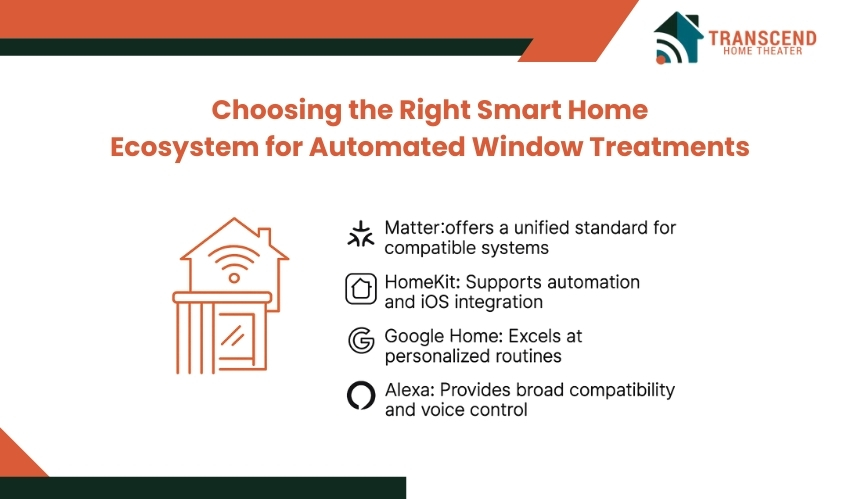
Selecting the right smart home ecosystem determines how easily automated curtains, shades, and skylights integrate with the rest of the home. Each platform offers its own strengths in scheduling, voice control, automation routines, and multi-device coordination.
Understanding these differences helps homeowners choose a system that fits their daily habits and long-term upgrade plans.
1. Matter-Compatible Systems
Matter has become the leading standard for smart home connectivity in 2026 because it lets devices from different brands work together without multiple apps or extra hubs. This unified approach makes automation easier for homeowners who want a seamless shading setup without compatibility concerns between motors, sensors, and control systems.
Another key benefit is the smoother and faster pairing process. Matter-enabled devices connect to the home network quickly and respond more consistently since most communication happens locally. This improves daily performance and keeps automation stable even with slow internet.
Matter also supports long-term flexibility. Homes can continue expanding their automated window treatments as new Matter-certified products are released, creating a future-ready environment where upgrades or additions do not require replacing existing systems.
2. HomeKit, Google Home, Alexa and SmartThings
Different platforms offer unique strengths that appeal to different types of users. Each one supports automated window treatments, but the experience varies based on voice assistants, app design, and automation flexibility.
- Apple HomeKit: HomeKit supports secure, privacy-focused control with smooth automation scenes. It is popular among users who prefer energy-efficient routines, precise scheduling, and tight integration with iOS devices.
- Google Home: Google Home excels with personalized routines based on user activity and room behavior. Many homeowners use it for morning and evening automation, voice commands, and multi-room coordination.
- Amazon Alexa: Alexa offers wide compatibility with a large range of motors and retrofit devices. It handles voice commands well in busy households and allows fast adjustments when hands-free control is needed.
- Samsung SmartThings: SmartThings provides advanced automation rules for users who want deeper customization. It works well for homes with mixed brands or complex setups that require fine-tuned control.
3. Hybrid Setup for Window Treatment Automation
A hybrid setup is most useful in homes that already have older blinds, retrofitted curtains, or skylight systems that cannot connect directly to modern platforms. Bridges or protocol adapters help these devices join newer networks without replacing working hardware, which makes the transition smoother and more cost-effective.
Hybrid systems also appeal to users who want advanced automation features. Some homeowners combine SmartThings with Matter hubs to access deeper sensor integration, layered routines, or specialized triggers that a single ecosystem might not support. This approach provides more customization for complex or multi-room setups.
Many homeowners start with a hybrid configuration when upgrading their smart home gradually. It allows existing motors or remote-only systems to operate alongside newer Matter-compatible devices, making it easier to expand without committing to a full system replacement.
Best Room-by-Room Upgrades for Automated Curtains, Shades and Skylights
Rooms respond differently to sunlight, temperature changes, and daily routines. A room-focused upgrade approach helps homeowners improve comfort, manage glare, and control privacy more effectively.
- Living Rooms and Lounges: Automated roller shades with adjustable opacity help reduce glare and maintain comfortable brightness throughout the day. Many homeowners use scene presets that shift light levels for movie time or evening relaxation.
- Bedrooms: Motorized blackout curtains or double-layer treatments improve sleep quality by blocking early morning light. Gradual opening routines create a gentle wake-up atmosphere that feels more natural than an alarm.
- Kitchens and Dining Areas: Light-filtering shades reduce harsh overhead sunlight while keeping the space bright. Sensor-driven adjustments help maintain consistent comfort as the sun moves through the day.
- Skylight Areas: Overhead shades and daylight diffusers soften strong sunlight and prevent heat buildup. These solutions work especially well in lofts, stairwells, and high ceilings where manual adjustments are difficult.
How Can Automated Shading Integrate With Climate Control and Lighting Scenes?
Coordinating shades with climate control and indoor lighting creates a more cohesive comfort environment. Automation becomes more predictable and energy-aware when these systems work together. Working with a smart home automation company can ensure your shading, HVAC, and lighting systems are perfectly synchronized for maximum comfort and efficiency.
- Climate-Synced Shading: Shades lower during high heat hours to support HVAC efficiency. In cooler mornings, shades open automatically to bring in natural warmth and reduce heating demand.
- Lighting Scene Integration: Automated shades work with smart lighting scenes to personalize ambience. For example, shades dim light for reading sessions, brighten spaces during work hours, or close at sunset to prepare the home for nighttime routines.
- Seasonal Adjustment Modes: Systems can shift behavior automatically across seasons. Summer modes prioritize heat reduction, while winter modes focus on natural warmth and maintaining insulated comfort.
How Can Homeowners Maintain Their Automated Window Systems Effectively?
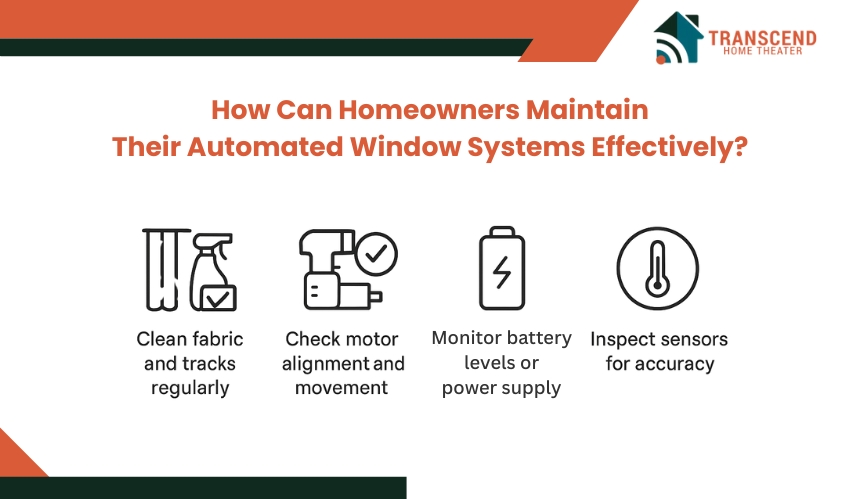
A few practical habits can keep automated window treatments operating smoothly year after year.
- Clean Fabric and Tracks Regularly: Dust buildup affects both light quality and motor performance. Light vacuuming and gentle wiping help maintain fabric appearance and prevent friction along tracks or rollers.
- Check Motor Alignment and Movement: Periodically test the full open and close cycles to confirm smooth travel. If motion becomes uneven, recalibrate travel limits through the app or control hub to restore proper alignment.
- Monitor Battery Levels or Power Supply: Battery-operated motors should be recharged before they reach low levels to avoid performance dips. Hardwired systems benefit from occasional cable checks to ensure stable power flow.
- Inspect Sensors for Accuracy: Light and temperature sensors should remain unobstructed. Cleaning the sensor surface helps maintain accurate response to sunlight or heat changes.
- Update Firmware When Available: Many 2026 systems receive firmware updates that improve responsiveness, automation accuracy, and system compatibility. Keeping devices updated supports long-term performance.
Upgrade your home comfort and efficiency today with smart automated curtains, shades, and skylights. Transcend Home Theater makes it easy to transform your space with 2026-ready automation solutions that enhance light control, privacy, and energy savings. Contact us now to explore tailored setups and bring effortless convenience to every room.
Frequently Asked Questions
Can I automate curtains and shades without a full smart-home system?
Yes. Many 2026 retrofit solutions allow existing curtains, roller shades, or skylights to become automated without installing a full smart-home ecosystem. Devices like SwitchBot Curtain, Zemismart motors, or battery-powered rollers can be controlled via apps or simple remotes.
Are voice commands reliable for controlling multiple automated shades at once?
Modern systems using Matter or platforms like HomeKit, Google Home, and Alexa reliably handle multiple window treatments simultaneously. Users can trigger scenes, open or close several shades, or coordinate skylight adjustments with a single command, even across different brands.
How do automated window treatments handle sudden weather changes?
Advanced skylight systems and outdoor-facing sensors can detect rain, strong winds, or high sunlight and adjust shades automatically. Some models integrate with weather data to close shades or covers proactively, protecting rooms from heat, glare, or water damage.
Can I schedule automated shades differently for weekdays and weekends?
Yes. Most modern apps allow granular scheduling. You can set different open/close times based on daily routines, adjust for sunrise and sunset, or create custom weekend schedules to match lifestyle changes.
Are there eco-friendly automated shading options in 2026?
Yes. Solar-powered motors for skylights and battery-efficient motors for curtains reduce energy consumption. Combining energy-saving fabrics like honeycomb shades with smart automation also enhances insulation and lowers HVAC usage.
How do automated window treatments improve sleep and wellness?
By controlling light exposure, automated curtains and shades support circadian rhythms. Gradual morning opening sequences, blackout curtains, and glare reduction help users wake naturally and maintain better sleep patterns.