
How Builders and Designers Are Adapting to the Smart Home Boom (2026 Industry Insights)
Builders and designers are adapting to the smart home boom by reshaping construction plans, material choices, and design strategies so that new homes can support connected devices, automated systems, and AI-driven technologies.
This shift is happening quickly because homeowners expecting modern conveniences want living spaces that communicate, learn, and respond in real time. Statistics show that among U.S. households with children, 63% own a smart home product.
This article explores the core adaptations happening in construction and interior design. It explains what trends are driving the smart home surge and how professionals are preparing homes for long-term digital performance.
Understanding the Smart Home Boom: What’s Fueling Demand in 2026
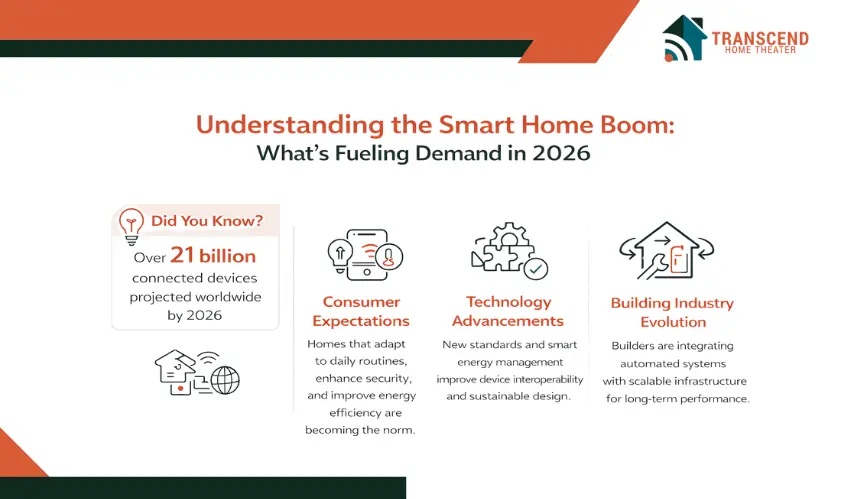
Did you know? Statistics show that the number of connected devices worldwide is expected to exceed 21 billion units by 2026, rising from about 18.5 billion devices in 2024. |
The rapid rise in connected living has created a shift in how homeowners think about comfort, security, and daily convenience.
To understand why builders and designers are changing their approach, it is important to look at the forces shaping consumer expectations and industry direction.
What Consumer Behaviors Are Driving the Shift Toward Connected Homes?
Growing demand for smart homes in 2026 is tied to changes in how people interact with their living spaces. Many homeowners now rely on automation for routines like lighting control, temperature adjustment, and home security.
These habits form because voice assistants, mobile apps, and AI-based recommendations create a level of convenience that feels effortless.
Families want homes that anticipate needs, reduce energy waste, and support lifestyle flexibility. These expectations are now influencing buying decisions across the housing market.
How Are Technology Advancements Reshaping New Housing Trends?
Advances in home automation systems are pushing the industry to evolve. Interoperability standards such as Matter, Thread, and Zigbee are allowing devices to communicate more reliably. Builders must consider connectivity requirements, including stronger Wi-Fi coverage, centralized hubs, and low-voltage wiring paths.
The rise of smart energy management systems is also influencing how homes are initially designed. These improvements are encouraging homeowners to adopt integrated systems that support sustainability, predictive maintenance, and long-term performance.
How Builders Are Engineering Homes for Full Smart System Integration
Modern home construction is evolving to support the growing demand for intelligent living spaces. Builders are adjusting core building practices so new homes can handle interconnected devices, automation features, and expanding digital infrastructure.
This shift begins at the structural level, where planning for long-term scalability and consistent connectivity has become essential.
How Are Builders Preparing Homes for Scalable Smart Technology?
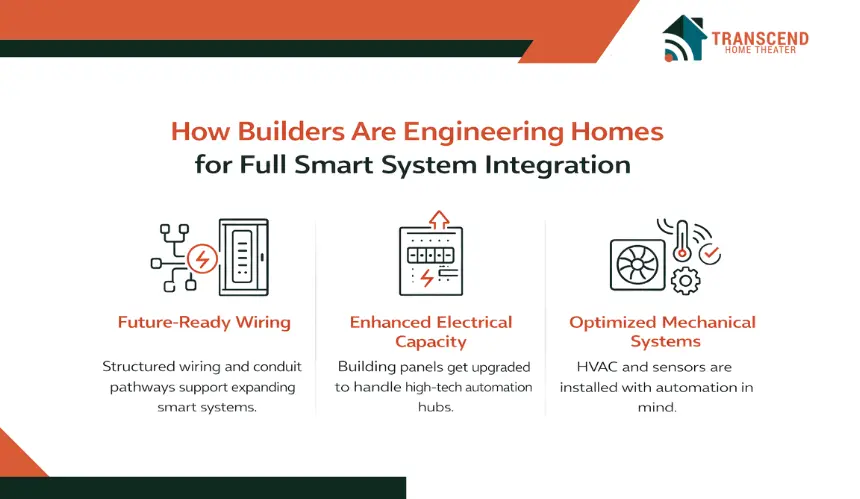
Builders are designing wiring plans that allow homeowners to expand their smart systems over time. Many projects now include structured wiring routes, conduit pathways, and centralized low-voltage panels that keep the home ready for future upgrades.
These improvements make it easier to add sensors, lighting controls, or network devices without major renovations. Reliable coverage also becomes a priority, which is why builders consider router placement, wired access points, and signal distribution early in the construction process.
How Are Electrical Systems in Homes Being Reinforced for High-Tech Living?
The rise of AI-powered appliances and connected devices requires stronger electrical capacity. Builders often upgrade panels to support higher loads, add dedicated circuits for automation hubs, and design charging stations that meet evolving homeowner needs.
These steps keep homes prepared for growing demand from energy-intensive features like EV chargers, smart HVAC components, and server-style equipment used in advanced automation systems.
How Are Mechanical Systems in Homes Being Optimized for Automated Controls?
Mechanical systems such as HVAC and ventilation are being designed with automation compatibility in mind. Builders are incorporating zoning layouts, sensor points, and placement areas for monitoring devices. These adjustments make climate control more responsive, especially when linked to occupancy data or real-time energy usage.
Leak detection, air quality monitoring, and intelligent ventilation setups are also influencing how mechanical rooms and duct routes are configured during construction.
How Interior Designers Are Integrating Tech Seamlessly Into Modern Living Spaces
Designers play a key role in making smart homes feel comfortable and visually cohesive. Their work focuses on merging connected systems with décor, material choices, and spatial planning so that technology enhances the environment without overpowering it. This requires thoughtful coordination between aesthetics, functionality, and the user experience within each room.
1. The Rise of “Invisible Tech” in 2026 Homes
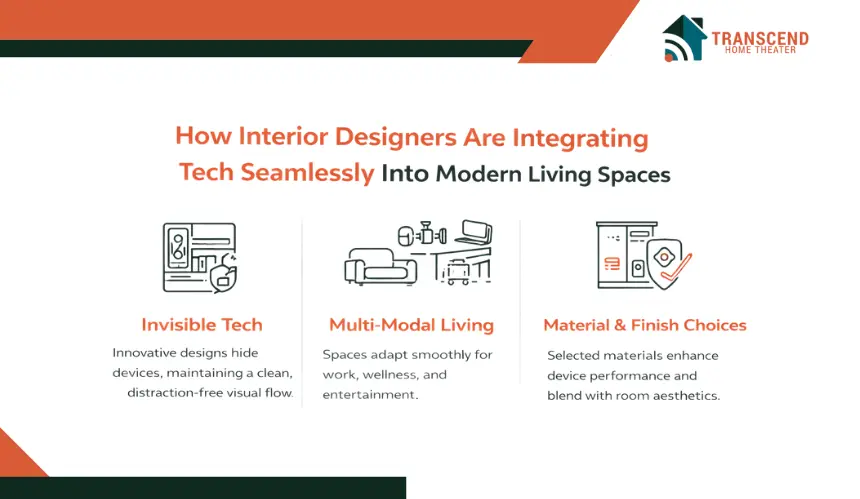
Invisible tech has become a preferred direction because homeowners want smart features without visible distractions. Designers use recessed lighting modules, slim audio systems, and built-in control points to maintain a clean visual flow.
Smart speakers, hubs, and screens are often placed within custom cabinetry or integrated panels that match the room’s finish. These strategies make automation feel effortless and reduce the visual footprint of devices.
2. Designing for Multi-Modal Living: Work, Wellness, Entertainment
Homes now serve multiple purposes, and designers create rooms that adapt smoothly throughout the day. Automated lighting scenes support focused work, relaxing evenings, or energizing fitness sessions.
Balanced acoustics and flexible furniture layouts help homeowners transition between productivity, rest, and recreation. Designers also integrate digital wellness elements such as circadian lighting and gentle ambient sound options that support mood regulation.
3. Material & Finish Choices That Support Smart Devices
Certain materials enhance how smart devices operate, so designers select options that promote performance. Ventilated cabinetry supports heat-producing hubs, while non-interference materials help sensors maintain accuracy.
Acoustic-friendly fabrics and textured surfaces improve how automated speakers and sound systems perform in living areas. These choices ensure that technology functions reliably while staying aligned with the room’s visual style.
Collaboration Between Builders, Designers, and Tech Integrators
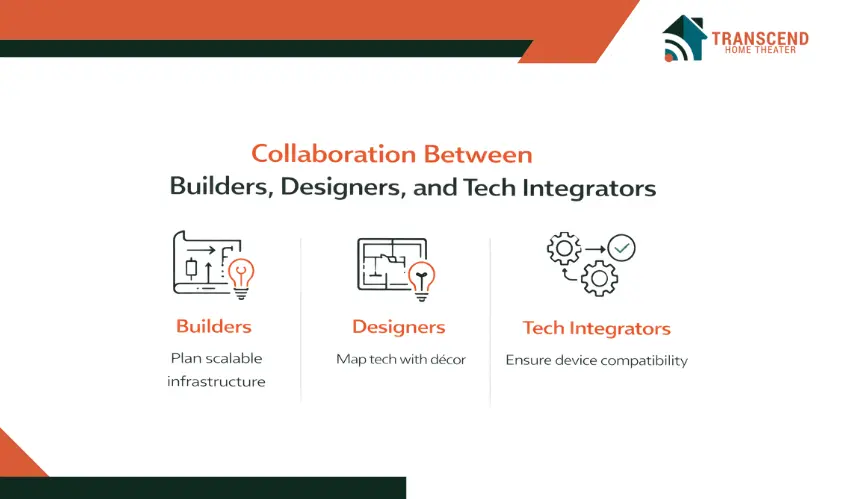
Creating a fully functional smart home requires coordinated planning between the construction team, design specialists, and technology professionals.
Early collaboration ensures that every decision made during the build supports both the functionality and the visual balance of the final automated environment.
Teams now follow a more connected workflow that focuses on clarity, system alignment, and efficient installation.
- Builders map structural requirements so walls, ceilings, and conduits accommodate wiring paths and device placement.
- Designers identify areas where technology should blend naturally with décor, including hidden access points or built-in storage for hubs.
- Tech integrators evaluate system demands, recommend device compatibility, and confirm network and power needs before construction progresses.
- Shared digital planning tools help keep all teams aligned, reducing redesigns and preventing conflicts between aesthetics and system performance.
Future Innovations Shaping Smart Home Construction
Future smart homes will be shaped by technologies that go far beyond today’s automation features. Builders and designers will work with systems capable of learning from long-term behavior patterns, adapting to environmental conditions, and maintaining structural health without manual intervention.
Working with a smart home automation expert can help homeowners prepare for technologies that will soon become standard in next-generation construction.
AI-Driven Homes That Predict Needs Before They Arise
Homes powered by advanced artificial intelligence will begin forecasting user needs through long-term behavior modeling. These systems will interpret patterns related to movement, comfort preferences, and energy usage to create environments that adjust before a homeowner interacts with a device.
Early concepts include sensory clusters that share data across rooms to fine tune temperature, lighting, and air quality based on predicted routines. These networks will improve over time as machine learning models recognize micro-behaviors such as preferred sleep cycles, daylight sensitivity, or seasonal activity shifts.
Autonomous Maintenance & Self-Healing Systems
Next-generation smart homes will feature self-managing infrastructure capable of detecting, diagnosing, and correcting internal problems. Builders will incorporate components that monitor the mechanical, plumbing, and environmental conditions of the home through continuous scans.
These systems may use micro-sensors to identify pressure changes, structural vibrations, or HVAC irregularities before failure occurs. Automated shutoff valves, self-cleaning ventilation units, and performance dashboards will work together to manage risks in real time.
This level of autonomy will reduce repair costs and extend the lifespan of core systems by acting at the first sign of deviation.
New Materials and Architectural Concepts
Construction materials are evolving to interact directly with automation systems. Experimental smart glass prototypes are being designed to shift opacity, regulate heat gain, and harvest solar energy at the surface level. Modular automation walls are emerging as flexible building components that allow homeowners to reconfigure device placement without rewiring.
Researchers are also exploring surfaces that convert motion or environmental vibration into usable electricity, adding passive energy generation to the structure itself.
These innovations will allow homes to become dynamic environments that generate power, shape lighting, and adapt to changing lifestyle needs.
Ready to bring future smart living into your home? Transcend Home Theater can help you design a space that feels intelligent, seamless, and prepared for the technology ahead. Our expertise in integrated systems, connected infrastructure, and emerging automation tools helps homeowners create spaces that feel intelligent, effortless, and future ready.
Frequently Asked Questions
How are smart home warranties changing as technology evolves in 2026?
Manufacturers and integrators are offering expanded warranties because automation systems now involve software updates, cloud connectivity, and long-term device pairing.
Many warranties include remote diagnostics, firmware support, and extended protection for components linked to whole-home platforms. This model reduces service gaps and helps homeowners maintain system stability over time.
What insurance benefits are homeowners receiving for installing smart systems?
Insurance providers are offering premium reductions for smart features that lower risk, such as leak detection sensors, automated security systems, and energy monitoring tools.
These devices help prevent losses and provide real-time reporting, which improves claim accuracy. Savings vary by region but continue to increase as adoption grows.
Are there emerging smart home features that support aging-in-place needs?
New features such as fall detection sensors, voice-directed navigation, adaptive lighting pathways, and automated emergency notifications are becoming standard tools for aging-in-place design. These systems help older adults maintain independence while providing families and caregivers with additional peace of mind.
How is AI influencing personalization trends in next-generation smart homes?
AI tools now analyze patterns related to comfort, energy use, and daily routines to create personalized home experiences. This includes custom lighting responses, learning-based temperature adjustments, and predictive recommendations.
These systems evolve with the homeowner’s habits, creating environments that feel more intuitive and emotionally supportive.