
The Future of Universal Remote Systems for Smart Homes (2026–2027 Prediction)
Did you know? Industry estimates suggest that 50 to 60 percent of universal remotes released by 2030 may include some level of AI-based predictive control, helping reduce user input and streamline smart home management. |
Smart homes are becoming more powerful every year, yet most people still feel frustrated switching between apps, devices, and assistants just to complete simple tasks. The dream of having one intelligent remote that understands the entire home is finally starting to feel within reach.
As technology moves toward 2026 and 2027, universal remote systems are expected to become smarter, more intuitive, and far better at connecting the devices people rely on every day. This article explores what the next era of universal remotes may look like and how they could reshape the way people interact with connected living spaces.
How Universal Remote Systems Are Evolving in the Smart Home Era
Universal remote systems are entering a phase of rapid transformation as modern homes rely on a broader mix of connected devices. People no longer want simple button-based controls. They want a system that understands context, communicates with different platforms, and brings scattered devices into one smooth experience.
This evolution is shaping a new generation of controllers that focus on intelligence, interoperability, and deeper integration within the home environment. A smart home automation expert can help you understand the expanding technology faster and how you can keep up with it.
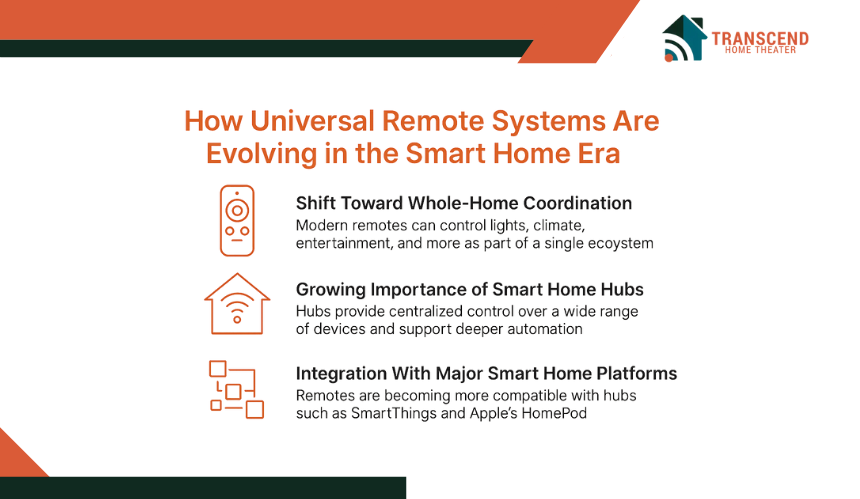
1. Shift Toward Whole-Home Coordination
Older universal remotes were only designed to replace separate device controllers. They relied on preset codes and basic infrared communication. Today, the shift is toward ecosystem-level automation where a single remote can coordinate lights, climate systems, entertainment, sensors, and appliances without needing separate apps.
This change is driven by improved wireless protocols, cloud-linked automation engines, and real-time communication across multiple smart home platforms.
2. Growing Importance of Smart Home Hubs
Smart home hubs have become the foundation for modern universal remote performance. Platforms such as SmartThings, Hubitat, Amazon Echo Hub, and Apple HomePod create a centralized environment where devices can communicate with each other reliably.
Universal remotes are now being built to work with these hubs so users can access deeper automation features, unified dashboards, and cross-platform compatibility through a single interface.
This integration also helps reduce device fragmentation by connecting lighting systems, thermostats, air quality sensors, and entertainment setups under one management layer.
What Consumers Expect From Next-Generation Universal Remote Systems
As connected homes continue to grow more complex, people are becoming more aware of what they want from the next wave of universal remotes. Instead of juggling multiple apps or switching between different assistants, users expect a single control system that feels natural, intuitive, and dependable.
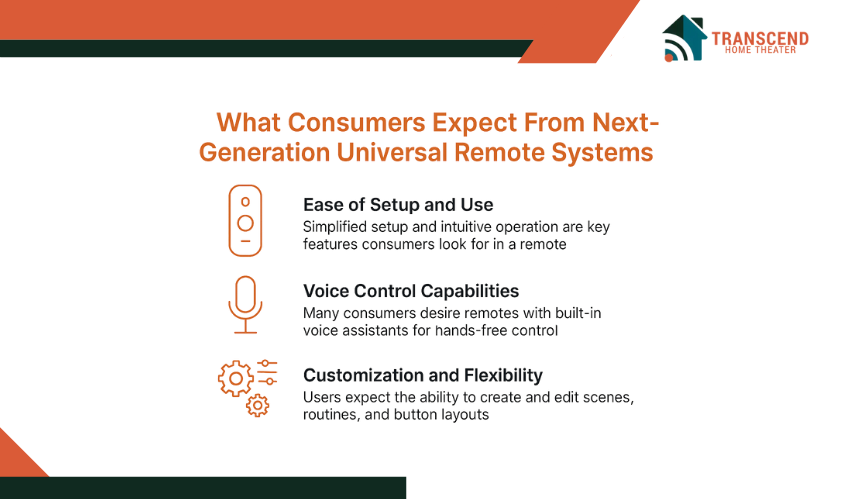
1. Stronger Cross-Platform Compatibility
One of the most common user expectations is the ability for a universal remote to work across every major platform without limitations. Many homeowners rely on a mix of brands such as Philips Hue, Nest, Ring, Sonos, and Ecobee, which means compatibility must go beyond basic pairing. This is why standards like Matter, Thread, and newer low-power wireless technologies are gaining attention.
Consumers want a remote that can recognize every device, sync routines between platforms, and function reliably without requiring multiple hubs or apps.
2. Unified Dashboards and Voice-First Controls
People prefer straightforward control experiences, which is why a unified dashboard is quickly becoming a must-have feature. Instead of opening different apps for lights, thermostats, speakers, or cameras, users want a single interface that organizes all devices by room, category, or activity.
Voice integration also plays a major role. Many homeowners expect future remotes to pair seamlessly with Alexa, Google Assistant, or Siri so commands can shift between button control, voice queries, and app interaction whenever needed.
3. Growing Demand for Predictive Automation
Consumers are starting to expect universal remotes that understand habits rather than waiting for manual input. Predictive automation uses AI to learn routines such as preferred lighting levels, morning temperature settings, or nighttime security behavior.
By 2026 and 2027, many users will expect their remote to automatically group devices, recommend personalized scenes, and trigger adjustments based on context such as presence, time of day, or activity patterns.
Core Technologies Shaping Universal Remote Systems by 2027
The next generation of universal remote systems will be defined by major advancements in wireless communication, device recognition, and local processing capabilities. These technologies will reshape how people interact with connected homes, making remote systems more intelligent, adaptable, and responsive.
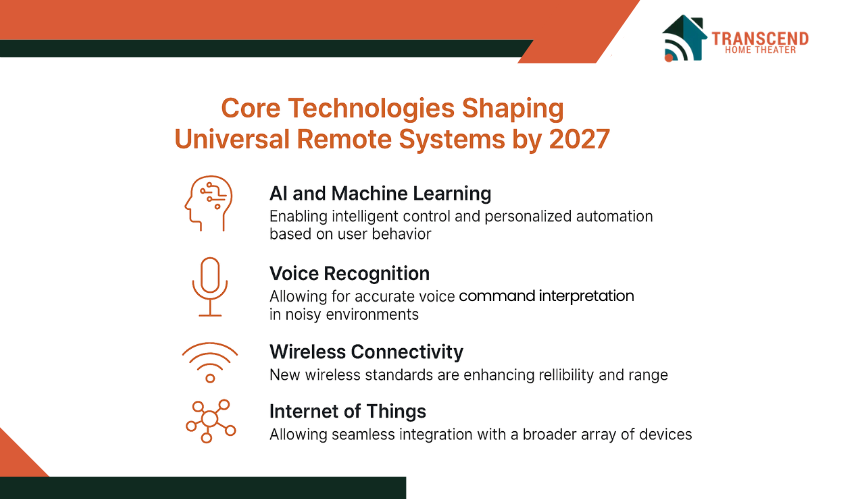
1. Multi-Protocol Radio Integration
Universal remotes are moving toward multi-protocol radio systems that allow a single device to communicate across several smart home technologies. Support for Bluetooth LE, Zigbee, Z-Wave, Thread, Wi-Fi HaLow, and infrared helps the remote interact with both older appliances and modern smart ecosystems.
By blending these radios into one system, future remotes can automatically detect device types, manage connections, and offer smoother automation across multiple brands.
2. Spatial Awareness With Ultra-Wideband Positioning
Ultra-Wideband technology is expected to play a major role in next-generation remotes. Its ability to detect location with high precision allows the remote to identify nearby devices and trigger context-based actions. A user may point toward a speaker, lamp, or display, and the remote can immediately bring up relevant controls.
This spatial awareness also supports room-level automation, where the system recognizes where the user is and adjusts lighting, audio profiles, or environmental settings accordingly.
3. AI-Driven Scene Learning and Behavior Modeling
Artificial intelligence will influence how universal remotes understand user routines and environment patterns. Instead of relying on manually created scenes, AI can observe behavior, predict preferred settings, and adjust the environment automatically.
This includes learning evening lighting preferences, work-from-home schedules, or entertainment setups based on the time of day.
AI-driven models will help remotes make smarter decisions and create tailored experiences that adapt to each household.
The Rise of All-in-One Smart Home Controllers
As smart home ecosystems expand, users want a single control experience that feels organized and effortless. This shift is leading to all-in-one controllers that combine physical remotes, touch interfaces, and intelligent automation in one device.
- Touchscreen Remotes With Local Processing Power: Newer universal remotes are adopting touch displays supported by local processing. This allows faster responses, smoother navigation, and reliable control even during network interruptions.
- Blended Control Through Voice, Apps, and Gestures: Multimodal control is becoming standard as future remotes support voice commands, app controls, and simple gesture interactions. This combination gives users the freedom to choose the control style that feels most natural in different situations.
- Point-and-Control Using Spatial Recognition: Spatial recognition features help a remote detect which device a user is pointing toward. By identifying nearby lamps, screens, or speakers, the system can instantly display relevant options and reduce the need to scroll through menus.
Integration With Major Smart Home Platforms
Did you know? Many smart home users face significant fragmentation issues. Some users report having 20 or more different apps to control various smart home devices, creating frustration that universal remotes aim to alleviate by offering unified control interfaces. |
Universal remote systems are becoming more capable as they connect with larger smart home ecosystems. This integration allows users to control lighting, security, climate, and entertainment from one place while taking advantage of platform-specific features.
- Deeper Voice Assistant Connectivity: Future remotes are expected to support more advanced interactions with Alexa, Google Assistant, and Siri. This includes faster responses, improved contextual understanding, and the ability to shift between voice and physical control without losing track of device states.
- Seamless App and Cloud Linking Across Brands: Users often struggle with fragmented accounts spread across different apps. Next-generation remotes aim to reduce this frustration by linking cloud services from multiple brands into one system.
- Compatibility With Upcoming Matter Enhancements: Matter continues to influence how universal remotes communicate with connected devices. As new Matter certifications arrive, remotes will gain the ability to support more device types and more advanced automation features.
Expert Predictions for Universal Remote Systems by 2027
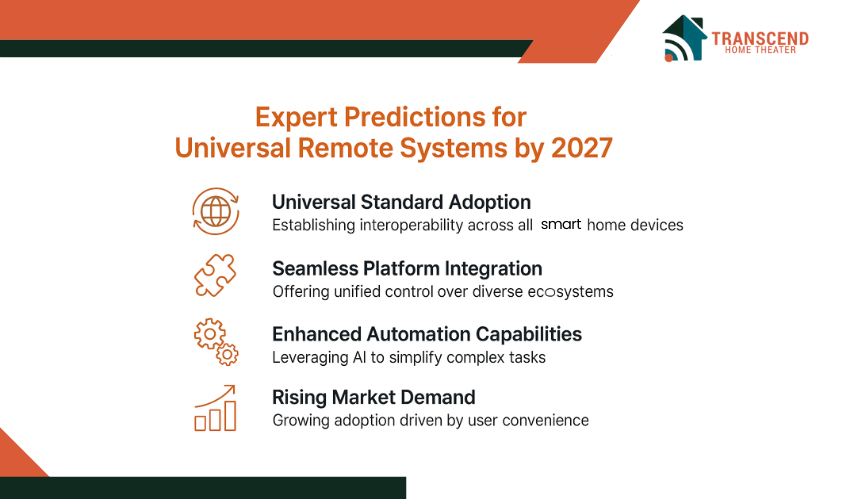
The coming years are expected to reshape how universal remotes respond to user needs, manage connected devices, and interact with home environments. Experts anticipate a shift toward systems that feel more aware, more independent, and more secure, reflecting the growing complexity of modern smart homes.
1. Contextual Intelligence as a Core Feature
Contextual intelligence is expected to reshape how universal remotes interpret daily routines. Instead of relying on fixed scenes or manual adjustments, future systems will observe patterns such as preferred brightness levels, evening comfort settings, or entertainment habits.
With this awareness, the remote will adjust devices automatically based on presence, time, or activity. This evolution will help create a home environment that responds naturally to daily life rather than requiring constant fine-tuning.
2. Move Toward App Independence
Experts predict that universal remotes will begin handling more automation on the device itself. Local processing power will help remotes operate even when networks fluctuate and will reduce dependence on mobile apps for essential functions.
This shift toward on-device intelligence allows users to manage their home with fewer steps while enjoying a more stable and predictable experience.
3. Energy-Aware Device Coordination
Energy management is becoming a priority for homeowners, and universal remotes are expected to support this need more actively. Future systems may adjust thermostats, lighting schedules, or appliance behavior based on grid conditions or energy efficiency goals.
By coordinating devices in a smarter way, these remotes can help reduce utility costs while keeping the home comfortable and consistent.
4. Enhanced Security and Access Protection
Security enhancements will play a major role in shaping the next wave of universal remotes. Many experts expect deeper integration of authentication features such as biometric checks or secure processing chips. These protections help ensure that access to critical devices remains in the hands of authorized users only.
As connected homes become more capable, stronger security will become a defining expectation for both homeowners and manufacturers.
If you’re ready to bring the next generation of smart home control into your everyday life, Transcend Home Theater can help you design a setup that feels effortless and future-ready. Reach out today to explore smarter, more connected ways to manage your home.
Frequently Asked Questions
Will Universal Remotes Replace Smart Home Hubs?
Some experts believe future remotes may take over certain coordination tasks, especially those tied to quick device responses. Others feel hubs will remain valuable for deeper system management that benefits from dedicated hardware. Both views suggest the two devices may evolve side-by-side rather than one fully replacing the other.
Will Voice Assistants Lose Their Role as Universal Remotes Become More Capable?
Even as universal remotes gain stronger control features, voice assistants will continue to serve an important purpose in smart homes. Standalone speakers offer hands-free interaction, room-wide listening coverage, and quick access for users who cannot easily reach a remote.
These strengths allow voice assistants to remain valuable companions rather than competitors to future remote systems.
Will Universal Remotes Shift to Subscription Models?
Some companies may experiment with optional cloud-based plans that offer specialized features or extended analytics. Basic control functions, however, are expected to remain free so homeowners can continue managing essential devices without ongoing fees.
How Long Should a High-Quality Universal Remote Last?
Most premium remotes are designed to function reliably for several years, even as new devices enter the home. Longevity depends on build quality, internal components, and how consistently the manufacturer supports firmware improvements. A well-built model can remain useful long after the initial purchase.
Are Universal Remotes Becoming More Accessible for Users With Disabilities?
Accessibility is gaining attention, and future remotes may offer enhanced support features. These can include larger touch targets, customizable layouts, tactile buttons, audio prompts, and compatibility with assistive tools. Manufacturers are beginning to view accessibility as a core design requirement rather than an optional add-on.