
Whole-Home Audio vs. Portable Smart Speakers: Key Differences and Best Choice for 2025
|
A Direct Answer: Whole-home audio delivers synchronized, high-fidelity sound throughout multiple rooms using integrated smart home technology, offering a seamless and immersive listening experience. |
In 2025, smart audio technology has advanced from simple Bluetooth speakers to fully connected sound ecosystems. Homeowners today are faced with two dominant choices: whole-home audio systems and portable smart speakers.
This article explores how whole-home audio systems and portable smart speakers differ in scope, design, and user experience. It highlights how whole-home setups deliver integration and consistency, while portable speakers prioritize convenience and mobility.
What Is a Whole-Home Audio System and How Does It Work?
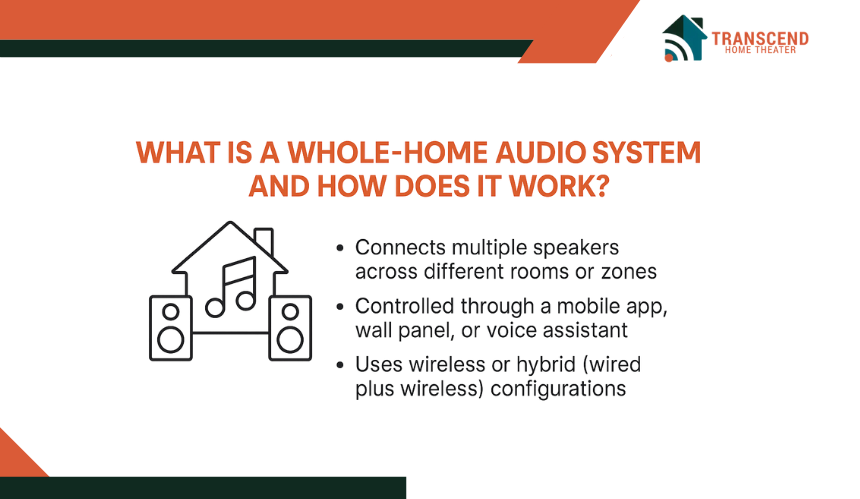
A whole-home audio system connects multiple speakers across different rooms or zones to create a unified sound experience. Each zone can play the same music or separate tracks simultaneously, controlled through a mobile app, wall panel, or voice assistant.
Modern setups use wireless or hybrid (wired plus wireless) configurations and integrate seamlessly with smart home platforms such as Alexa, Google Home, or Apple HomeKit.
For homeowners seeking a seamless and professional setup, partnering with a trusted multi-room audio installation company ensures precise wiring, optimal placement, and smooth integration with existing smart devices.
Key Functional Traits of Whole-Home Audio:
- Operates over Wi-Fi or Ethernet for stable, high-quality streaming
- Can include ceiling, in-wall, or hidden architectural speakers
- Compatible with multiple sources. Spotify, Apple Music, or media servers
- Controlled through automation routines or touch panels
What Are Portable Smart Speakers Designed For?
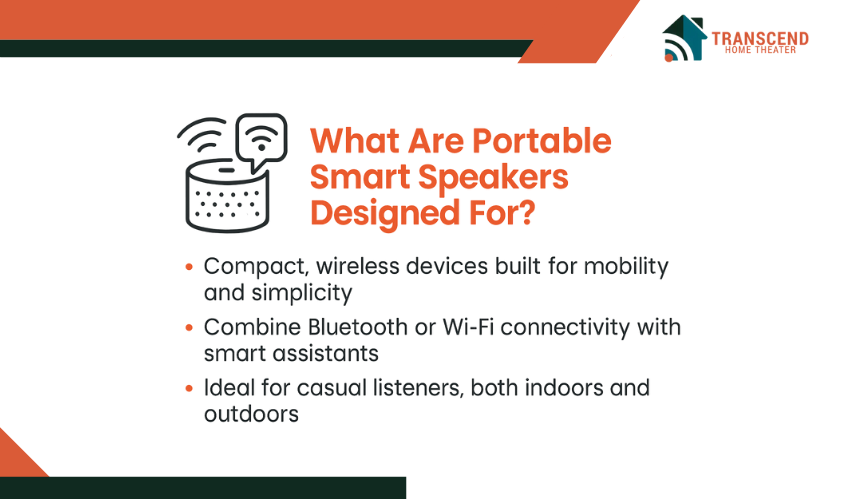
Portable smart speakers are compact, wireless devices built for mobility and simplicity. They combine Bluetooth or Wi-Fi connectivity with smart assistants such as Alexa or Google Assistant, offering both voice control and hands-free functionality.
Their plug-and-play nature makes them ideal for casual listeners, renters, or anyone wanting sound on the go, indoors, or outdoors. While they do not offer the same synchronized experience as multi-room systems, many newer models can still be grouped together for limited multi-zone playback.
Key Functional Traits of Portable Smart Speakers:
- Lightweight and rechargeable for easy transport
- Smart assistant-enabled for voice commands and streaming
- Quick setup without professional installation
- Ideal for small spaces, apartments, or outdoor use
Comparing Key Features of Whole-Home Audio Systems and Portable Smart Speakers
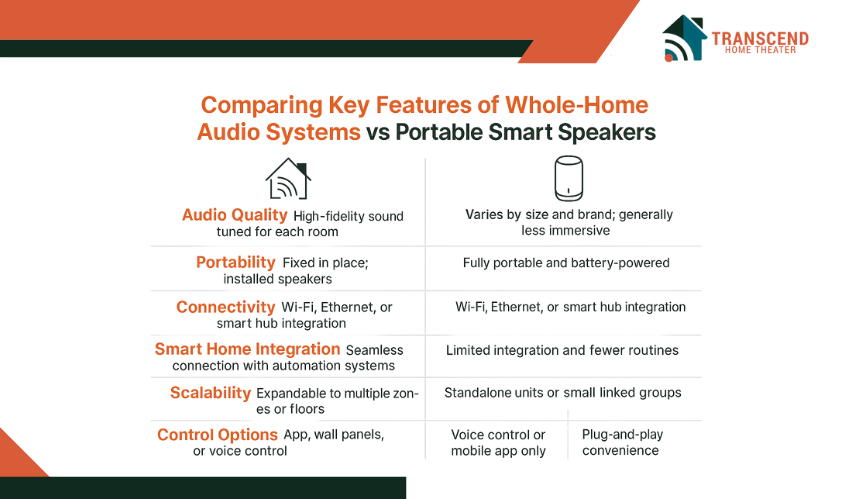
Choosing between whole-home audio systems and portable smart speakers requires The following table provides a clear, side-by-side comparison to help homeowners decide which option best fits their lifestyle, space, and listening needs.
Each column highlights how both systems differ in setup, performance, convenience, and purpose, offering a quick guide for decision-making.
Feature | Whole-Home Audio Systems | Portable Smart Speakers |
Audio Quality | High-fidelity sound tuned for each room | Varies by size and brand; generally less immersive |
Portability | Fixed in place; installed speakers | Fully portable and battery-powered |
Connectivity | Wi-Fi, Ethernet, or smart hub integration | Bluetooth and Wi-Fi compatible |
Smart Home Integration | Seamless connection with automation systems | Limited integration and fewer routines |
Scalability | Expandable to multiple zones or floors | Standalone units or small linked groups |
Control Options | App, wall panels, or voice control | Voice control or mobile app only |
Setup Requirements | Professional installation recommended | Plug-and-play convenience |
Ideal For | Homeowners seeking a permanent, high-end experience | Renters, travelers, and casual listeners |
How to Decide Which System Suits You Best: Whole-Home Audio or Portable Smart Speakers?
If sound quality, home integration, and long-term reliability are top priorities, a whole-home audio system is the clear winner. It offers consistent coverage, customization, and a sleek, built-in look.
For those who value affordability and flexibility, portable smart speakers make more sense. They require no installation, can move freely between rooms, and still deliver impressive sound quality for casual listeners.
Choosing the Sound System Based on Lifestyle & Space
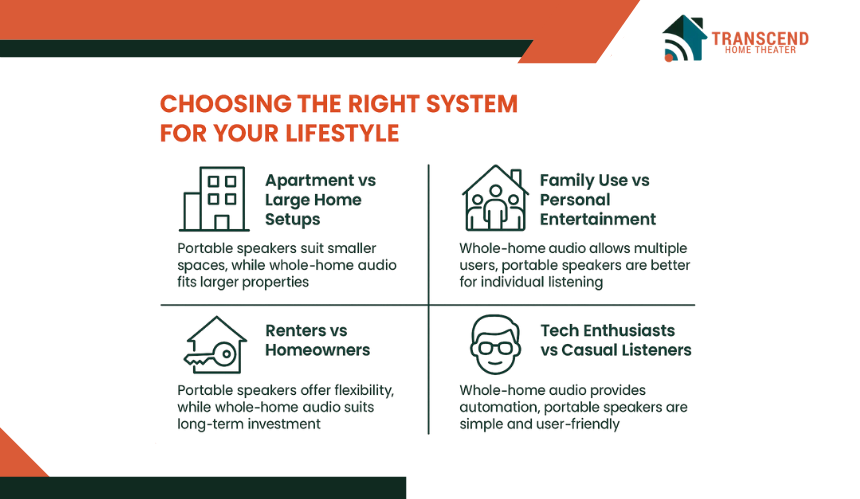
Selecting between a whole-home audio system and portable smart speakers ultimately comes down to how you live, listen, and use your space. While both offer advanced sound experiences, the right choice depends on your lifestyle, home size, and listening habits. This section helps simplify that decision by breaking it down into real-world scenarios.
1. Apartment vs. Large Home Setups
If you live in an apartment, condo, or smaller space, portable smart speakers are often the more practical choice. Their compact size, wireless connectivity, and easy mobility make them ideal for close environments where acoustics are simpler to manage.
In contrast, whole-home audio systems shine in larger properties or multi-level homes. They distribute sound evenly throughout various rooms and outdoor areas, eliminating dead zones and offering consistent coverage. For open floor plans or entertainment spaces, this system provides a truly immersive experience.
Quick Tip:
- Apartments or smaller homes: Portable smart speakers
- Large homes or multi-zone spaces: Whole-home audio system
2. Family Use vs. Personal Entertainment
For households where multiple people use the same space, whole-home systems allow everyone to enjoy different audio zones simultaneously. Kids can stream music in one room while parents listen to a podcast elsewhere. They also integrate well with smart home routines, like bedtime playlists or morning news briefings.
If you primarily listen alone or use audio for background tasks, portable smart speakers deliver flexibility without complexity. You can move them to your office, kitchen, or outdoor area, depending on the activity.
Quick Tip:
- Families or shared spaces: Whole-home audio for simultaneous, multi-user control
- Individual use: Portable smart speakers for personal mobility
3. Renters vs. Homeowners
Renters benefit most from portable smart speakers because they don’t require wiring or permanent installation. They’re easy to set up, transport, and upgrade with no structural modifications.
Homeowners, on the other hand, can maximize value with whole-home audio. It adds long-term comfort and boosts property appeal by integrating with lighting, temperature, and security systems. Many homeowners partner with a multi-room audio installation company to design a setup that complements their interiors while ensuring lasting quality.
Quick Tip:
- Renters: Portable speakers for flexibility and zero installation
- Homeowners: Whole-home audio for long-term investment and integration
4. Tech Enthusiasts vs. Casual Listeners
Tech enthusiasts who enjoy automation, customization, and premium sound control will find whole-home systems more rewarding. They can connect their setup with voice assistants, create routines, and fine-tune acoustics to perfection.
Meanwhile, casual listeners who prefer simple operation will appreciate portable smart speakers. Their plug-and-play nature and app-based control make them accessible without technical setup or maintenance.
Quick Tip:
- Tech-focused users: Whole-home systems for automation and control
- Everyday listeners: Portable speakers for simplicity and ease of use
How Does Sound Quality Differ Between Whole-Home Audio and Portable Smart Speakers?
Whole-home audio systems provide superior clarity, depth, and balance because each speaker is strategically placed and professionally calibrated to match the acoustics of individual rooms. Many systems use built-in amplifiers and advanced tuning software to ensure that sound remains rich and consistent, whether you’re in the living room or the kitchen.
While high-end models of portable smart speakers can produce remarkable audio for their size, they generally lack the full frequency range, power output, and spatial balance of installed systems. Their compact build often limits bass response and sound projection, especially in larger spaces.
What Factors Affect Overall Audio Performance?
Several technical and environmental factors influence how these systems perform:
- Speaker placement: Wall-mounted or ceiling speakers offer wider coverage compared to countertop devices.
- Room acoustics: Hard surfaces can create echoes, while soft furnishings absorb sound.
- Connectivity type: Wired or Wi-Fi-based systems ensure stable streaming, while Bluetooth may drop quality over distance.
- Amplification power: Dedicated amplifiers in whole-home systems deliver cleaner, distortion-free sound at higher volumes.
- Audio codec support: Systems supporting formats like Dolby Atmos or FLAC offer more immersive and detailed playback.
Which System Provides the Most Immersive Sound Experience: Whole-Home Audio or Portable Smart Systems?
For homeowners seeking a cinematic or full-home listening experience, whole-home audio systems clearly outperform portable speakers. Their ability to balance sound across zones, integrate with AV receivers, and fine-tune room acoustics creates an enveloping experience unmatched by standalone devices.
However, for users who listen casually or want quick, wireless sound anywhere, portable smart speakers deliver more than enough quality for music, podcasts, or voice commands.
In short, if audio excellence and spatial immersion are priorities, whole-home systems are the way to go. But if versatility and mobility matter more, portable smart speakers strike the perfect balance between quality and convenience.
The Role of Technology in Sound Optimization
Recent advancements in AI-driven sound calibration and acoustic mapping have blurred some of the traditional gaps between the two systems.
- Whole-home setups can now auto-adjust output levels for each zone using built-in microphones and software.
- Portable smart speakers employ machine learning to adapt sound based on nearby surfaces, improving clarity in smaller rooms.
- Integration with platforms like Dolby Atmos, Spatial Audio, and Trueplay (Sonos) enables more realistic sound staging for both types.
While both technologies enhance performance, the outcome still depends on intent. Whole-home systems deliver a tailored acoustic experience, while portable speakers provide optimized personal sound wherever they are placed.
Smart Home Integration: Automation and Control in 2025
In 2025, smart home automation has become a defining part of how people experience entertainment and comfort. Both whole-home audio systems and portable smart speakers now connect seamlessly with Alexa, Google Assistant, and Apple HomeKit, allowing users to control music, lighting, temperature, and more through voice commands or mobile apps.
Whole-home audio systems offer the deepest level of integration, working in harmony with IoT audio systems to automate routines and create synchronized experiences across devices. Homeowners often consult a smart home automation company to design customized setups that unify sound, ambiance, and daily tasks.
Portable smart speakers also fit neatly into smart ecosystems, offering easy voice control and app-based scheduling for essential features. While their automation capabilities are simpler, they provide accessible smart control for everyday use.
Transform your space with expertly designed sound solutions from Transcend Home Theater. Whether you prefer the seamless luxury of a whole-home system or the flexibility of portable smart speakers, our team will create a setup tailored to your lifestyle.
Frequently Asked Questions
Can whole-home audio systems be upgraded without replacing existing speakers?
Yes. Many modern systems support modular upgrades, allowing homeowners to add new zones, improve amplifiers, or integrate with newer smart home platforms without replacing the entire setup. This future-ready flexibility keeps your investment relevant for years.
Do portable smart speakers support high-resolution or lossless audio formats?
Some high-end models now support formats like FLAC or Dolby Atmos Music through Wi-Fi streaming, but Bluetooth connections still compress audio. For consistent lossless playback, Wi-Fi or wired systems perform better.
Is it possible to combine portable speakers with a whole-home system?
Yes, hybrid configurations are becoming popular. Users can connect compatible portable smart speakers to certain whole-home ecosystems via Wi-Fi or multi-room streaming apps, extending flexibility across zones without full integration.
How do energy efficiency and power consumption compare between the two systems?
Portable smart speakers are designed for lower power use due to rechargeable batteries and smaller amplifiers. Whole-home audio consumes more energy but can be optimized using smart automation routines that power down unused zones.
Are there eco-friendly or sustainable options available in 2025 audio systems?
Yes. Many brands now focus on eco-friendly speaker materials, energy-saving amplifiers, and recyclable components. Choosing sustainable models supports cleaner technology without sacrificing audio performance.
Can voice assistants manage multiple users or personalized sound profiles?
Absolutely. Most 2025 smart audio ecosystems recognize individual voices and tailor playback to personal preferences, playlists, and routines. This personalization makes multi-user homes more convenient and intuitive.