
Recliners, Sofas & Risers: Choosing Seating for Comfort & Acoustics
Key Takeaways
|
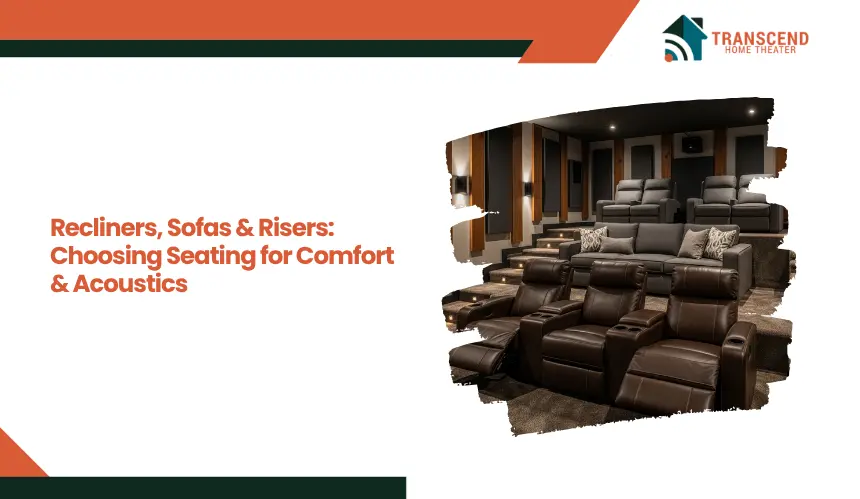
Choosing seating for a media space often feels simple until comfort and sound start working against each other. A chair that feels perfect may place the listener outside the audio sweet spot, while a well-positioned seat can still cause discomfort during longer sessions.
Recliners, sofas, and risers each serve a different purpose in shaping posture, viewing alignment, and sound clarity. Understanding how these elements influence both physical comfort and acoustic performance helps create a setup that feels right and sounds accurate from the very first use.
Understanding the Role of Seating in Comfort and Acoustic Performance
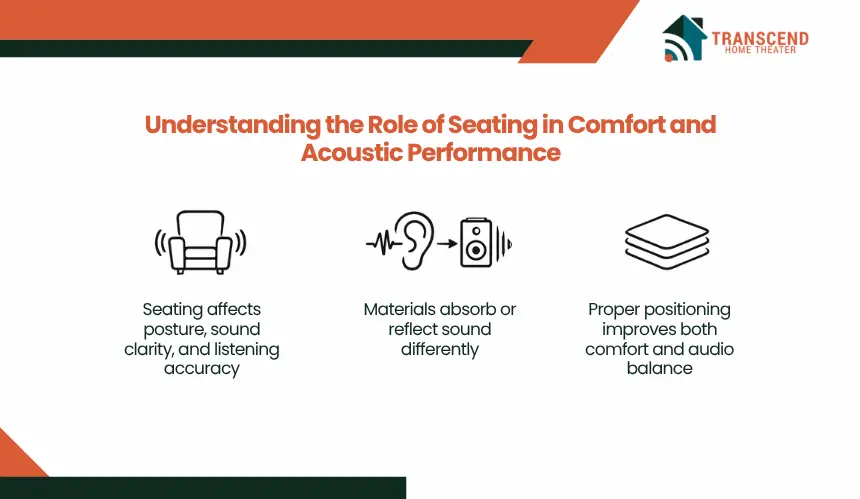
Seating plays a direct role in how both the body and the ears experience a space. It influences posture, listening accuracy, and how sound travels across the room. Before comparing specific seating types, it is important to understand how positioning, structure, and materials shape both comfort and acoustic outcomes.
How Seating Impacts Listening Experience and Sound Distribution
Sound behaves differently depending on where and how a person is seated. The position of the ears relative to front speakers, surround channels, and subwoofers determines how clearly audio details are perceived. Even small differences in seat height or distance can shift the soundstage and reduce clarity.
Materials also matter. Soft upholstery can absorb certain frequencies, while firmer surfaces may reflect sound, slightly altering how audio reaches the listener. In a well-planned setup, seating is aligned with the audio sweet spot so that dialogue, effects, and bass feel balanced rather than uneven across the room.
Ergonomics and Long-Duration Comfort Factors
Comfort is not just about softness. It is about how the body is supported over time. Proper lumbar support, seat depth, and backrest angle all contribute to maintaining a natural posture during extended viewing or listening sessions.
When seating lacks ergonomic support, viewers tend to shift positions frequently, which can disrupt both comfort and consistent audio perception. A well-designed seat keeps the spine aligned, reduces pressure points, and allows the head to remain naturally positioned toward the screen and speakers.
Why Seating Choice Affects Room Layout Efficiency
Seating determines how efficiently a room can be organized. The size, shape, and placement of each seat influence spacing, walking paths, and how many people can be accommodated without compromising comfort.
It also affects sightlines and viewing angles, especially in rooms with multiple rows. Poor placement can lead to blocked views or uneven listening zones, while a thoughtful layout ensures that each position maintains both visual clarity and balanced sound exposure.
Recliners Explained: Individual Comfort with Controlled Positioning
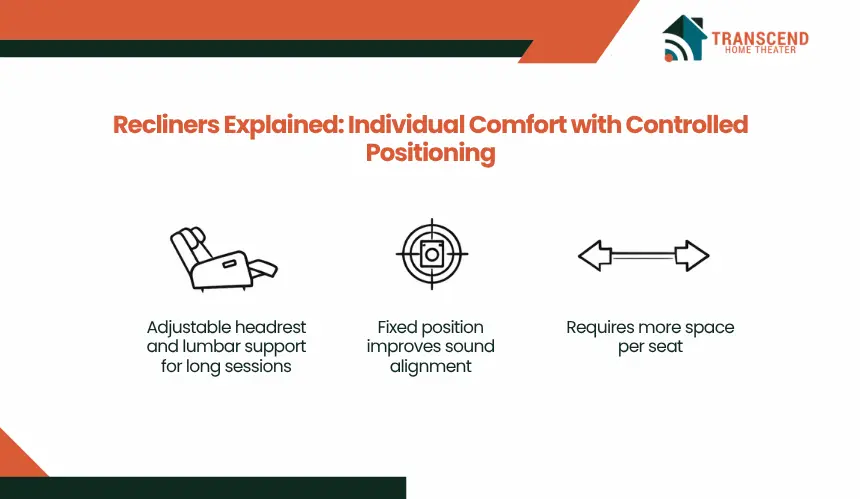
Recliners are often chosen for spaces where precision matters. They are designed to give each person a defined seating position, which helps maintain both consistent posture and stable listening alignment. This makes them especially useful in setups where sound accuracy and personal comfort need to work together without constant adjustment.
Key Features That Define Modern Recliners
Modern recliners go beyond simple backrest movement. Many include power recline systems, adjustable headrests, and built-in lumbar support that allow fine-tuning based on body position and screen height. These adjustments help maintain a steady viewing angle without straining the neck or lower back.
Additional features such as memory settings, integrated controls, and storage compartments enhance usability without affecting the seating structure. The focus remains on creating a controlled environment where the user can settle into a position that supports both comfort and consistency.
Acoustic Advantages of Recliner Seating
Recliners help maintain a predictable listening position. Since each seat is fixed and individually defined, it becomes easier to align ear level with speakers and maintain consistent distance from audio sources. This stability supports accurate soundstage perception and clearer dialogue reproduction.
Because movement is limited once the seat is adjusted, there is less variation in how sound reaches the listener. This is particularly beneficial in surround sound setups where small shifts in position can affect channel balance and spatial accuracy.
Limitations and Space Considerations
Recliners require more space per seat compared to other options. Each unit needs clearance for reclining movement, which reduces overall seating capacity in smaller rooms. This can limit layout flexibility, especially when trying to accommodate multiple viewers.
They also require careful spacing to maintain accessibility and proper alignment within the room. While they offer high individual comfort, planning becomes essential to ensure that the room does not feel crowded or restrictive when multiple recliners are installed.
Sofas and Sectionals: Flexible Seating for Shared Spaces
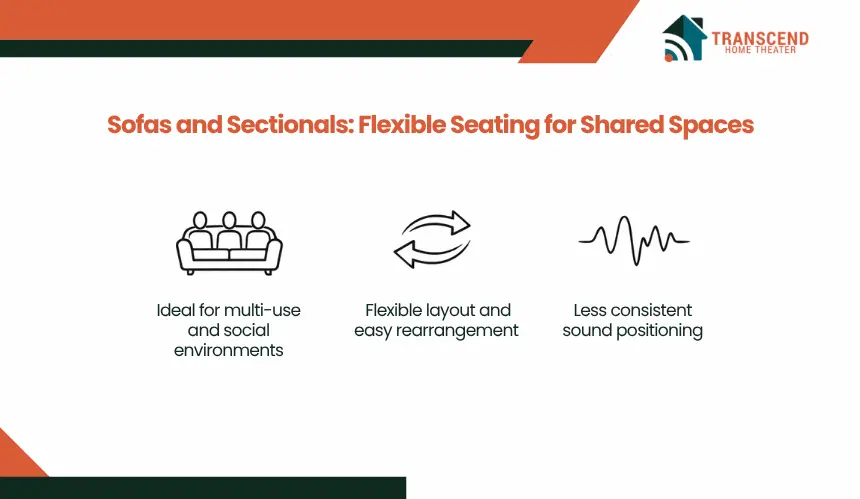
Sofas and sectionals are built for flexibility. They suit environments where seating needs to adapt to different activities, from casual viewing to social gatherings. Unlike recliners, they prioritize shared space and fluid movement, making them a practical choice for living rooms and multi-purpose areas.
When Sofas Work Better Than Recliners
Sofas are ideal when the space is not dedicated solely to media use. In family rooms or open-plan layouts, they allow multiple people to sit together without strict positioning. This makes them more suitable for conversations, relaxed viewing, and everyday use.
They also fit better in spaces where layout changes are common. Rearranging a sectional or adjusting seating orientation is easier compared to fixed recliner setups, offering greater adaptability as room needs evolve.
Acoustic Trade-Offs of Sofas
While sofas provide comfort and flexibility, they introduce variability in listening positions. Different seating spots place users at slightly different distances and angles from speakers, which can affect how sound is perceived across the group.
The softer and wider structure can also absorb more sound, particularly in mid and high frequencies. This may slightly reduce sharpness in audio clarity, especially in setups where speaker alignment is already sensitive to positioning.
Design Variations That Improve Comfort and Performance
Not all sofas perform the same. Modular sectionals allow better control over layout, making it easier to align seating with screen and speaker placement. Firmer cushions help maintain posture, while deeper seats provide relaxation but may shift viewing angles.
Choosing the right configuration involves balancing depth, support, and orientation. A well-selected sofa can still deliver a comfortable and reasonably balanced experience when positioned thoughtfully within the room.
Risers and Elevated Platforms: Enhancing Visibility and Sound Balance
Risers are not seating, but they directly influence how seating performs. They are used to elevate rows, ensuring that every viewer maintains a clear line of sight and a more balanced audio experience. In multi-row environments, they become a structural necessity rather than an optional upgrade.
Why Risers Are Essential in Multi-Row Seating Layouts
In rooms with more than one row, the front seats can block both the screen and parts of the sound field. Risers solve this by lifting the rear row to a higher position, creating a tiered layout that preserves visibility for everyone.
This elevation allows each viewer to engage with the screen without obstruction, maintaining consistent viewing angles across rows. Without risers, the overall experience becomes uneven, especially in larger setups.
Acoustic Benefits of Elevated Seating
Elevation changes how sound reaches the listener. By raising the rear row, risers help position listeners closer to the intended surround sound field, improving balance between front and rear channels.
They also reduce interference caused by bodies or seats in front, allowing sound waves to travel more freely. This results in clearer separation of audio elements and a more immersive listening experience across multiple seating levels.
Structural and Design Considerations for Risers
Designing a riser requires careful planning. Height must be calculated based on screen placement and the distance between rows to ensure proper visibility without creating steep or uncomfortable steps.
Stability, safety, and integration with the room’s flooring are equally important. In some setups, risers also accommodate wiring or acoustic enhancements, making them a functional part of the overall system rather than just a visual adjustment.
How to Choose the Right Seating Based on Room Type and Usage
The right seating choice becomes clear when it is matched directly to how the room functions. Each environment demands a different balance between acoustic precision, flexibility, and space efficiency. Instead of comparing features in isolation, the focus should be on selecting the seating type that performs best within that specific setting.
For Dedicated Home Theater Rooms
Recliners are the most effective option in dedicated media rooms where sound calibration and viewing alignment are prioritized. Their fixed positioning allows each seat to be placed within the intended audio sweet spot, supporting accurate surround sound performance and consistent ear-level alignment.
When multiple rows are required, recliners combined with risers deliver the most controlled outcome. This setup ensures that every viewer has a clear sightline and a balanced audio experience. Sofas are generally less suitable here because they introduce variation in seating positions, which reduces acoustic consistency.
For Living Rooms and Multi-Purpose Spaces
Sofas and sectionals are better suited for shared spaces where flexibility is essential. These environments are not designed solely for media use, so seating needs to adapt to daily activities such as socializing, relaxing, or rearranging the layout.
While recliners can still be used, they often limit spacing and movement. Sofas allow more people to sit comfortably without requiring strict positioning. In this context, achieving perfect sound alignment is less important than maintaining a practical and comfortable setup that works across different uses.
For Small Rooms vs Large Rooms
In smaller rooms, compact recliners or loveseat-style seating perform better because they help maintain proper distance from the screen without overcrowding the space. Large sectionals can restrict movement and push viewers too close to the display, affecting both comfort and viewing angles.
In larger rooms, recliners with risers become the preferred solution for structured layouts, especially when multiple rows are needed. Sofas can still work in these spaces, but they are more effective in open layouts where flexibility is prioritized over acoustic precision.
Practical Setup Tips for Optimizing Comfort and Acoustics Together
Even with the right seating selected, performance depends heavily on how that seating is positioned and integrated into the room. Small adjustments in height, distance, and material placement can significantly influence both listening accuracy and physical comfort. A well-executed setup ensures that the seating works with the audio system rather than against it.
1. Position Seating at Ear-Level with Main Speakers
The vertical alignment between the listener’s ears and the front speakers plays a critical role in sound clarity. If seating is too low or too high, dialogue can feel disconnected from the screen, and sound imaging becomes less precise.
Recliners with adjustable headrests help maintain this alignment, while sofas may require additional consideration of seat height and cushion compression. The goal is to keep the primary listening position aligned with the speaker’s intended output level.
2. Maintain Balanced Distance from Screen and Speakers
Distance affects both visual comfort and sound perception. Sitting too close can exaggerate certain frequencies and reduce immersion, while sitting too far can weaken detail and impact.
A proportional distance based on screen size and speaker placement ensures that audio and visuals remain synchronized. This balance supports a cohesive experience where neither element feels dominant or disconnected.
3. Use Materials That Complement Room Acoustics
Seating materials influence how sound behaves within the room. Softer fabrics tend to absorb mid and high frequencies, while firmer surfaces reflect more sound. The choice should align with the room’s overall acoustic treatment.
If the space already includes acoustic panels or carpeting, seating can be used to fine-tune absorption levels. The objective is to avoid excessive dampening or unwanted reflections that may distort the listening experience.
4. Test Seating Layout Before Final Installation
Before finalizing placement, it is practical to test the layout using temporary positioning. This allows adjustments based on real listening and viewing conditions rather than assumptions.
Testing helps identify issues such as uneven sound distribution, blocked sightlines, or discomfort over time. Refining the setup at this stage ensures that both comfort and acoustic performance are fully optimized before the installation is fixed.
Creating a space that feels right and sounds right takes more than just picking seats. It requires the right balance of layout, acoustics, and comfort working together. Transcend Home Theater helps design seating setups that are aligned with real performance, not guesswork, so every seat delivers a consistent experience.
Frequently Asked Questions
How do seat materials influence bass response in a media room?
Seat materials can subtly affect how low frequencies are perceived. Heavily padded or foam-dense seating may absorb some mid-bass energy, while firmer materials allow bass to travel more freely across the room. In setups with strong subwoofer output, this difference can influence how tight or diffused the bass feels.
Are motorized recliners reliable for long-term use in home theaters?
Motorized recliners are generally designed for repeated use, but reliability depends on build quality and internal components. Systems with reinforced frames, quiet motors, and accessible maintenance parts tend to perform better over time, especially in spaces used frequently for extended viewing sessions.
What is the ideal aisle spacing between seating rows for easy movement?
Aisle spacing should allow comfortable passage without disrupting seated viewers. In most layouts, a clearance of around 36 to 48 inches supports smooth movement while maintaining a compact footprint. This becomes especially important in multi-row setups with reclining seats.
Can seating placement affect dialogue clarity even with a high-end audio system?
Yes, placement can influence how clearly dialogue is perceived. Even advanced systems rely on proper listener positioning to deliver balanced sound. If seating is placed outside the intended listening zone, voices may sound less defined despite the quality of the equipment.
Is it better to anchor seating to the floor or keep it movable?
Fixed seating provides stability and maintains consistent alignment with the audio and visual setup. Movable seating offers flexibility for rearranging the space but may lead to slight shifts in positioning over time. The choice depends on whether the room is designed for fixed performance or adaptable use.
How does seat height variation impact multi-user viewing comfort?
Differences in seat height can affect both viewing angles and overall comfort across users. In shared setups, uneven heights may cause some viewers to adjust posture frequently, especially if sightlines are partially obstructed. Maintaining consistent elevation or compensating with layout adjustments helps create a more balanced experience.