
The Psychology of Smart Homes: How Automation Changes User Behavior
A Quick Answer: Smart home automation changes user behavior by shifting daily decision-making toward automated routines, reducing cognitive load, and prompting new patterns shaped by predictive systems. As devices begin anticipating needs, people gradually adjust their habits in response to environmental cues, convenience loops, and subtle behavioral nudges created by the technology. |
Modern households now rely on networked lighting, climate control, voice assistants, and adaptive sensors that work in the background. These tools reshape how individuals interact with their home, how frequently they perform tasks, and how they perceive comfort and control.
Over time, automated processes influence expectations for efficiency, personalization, and emotional ease within the living space. This article explores the psychology behind these changes and explains how smart home environments guide user behavior.
The Behavioral Foundations of Smart Home Adoption
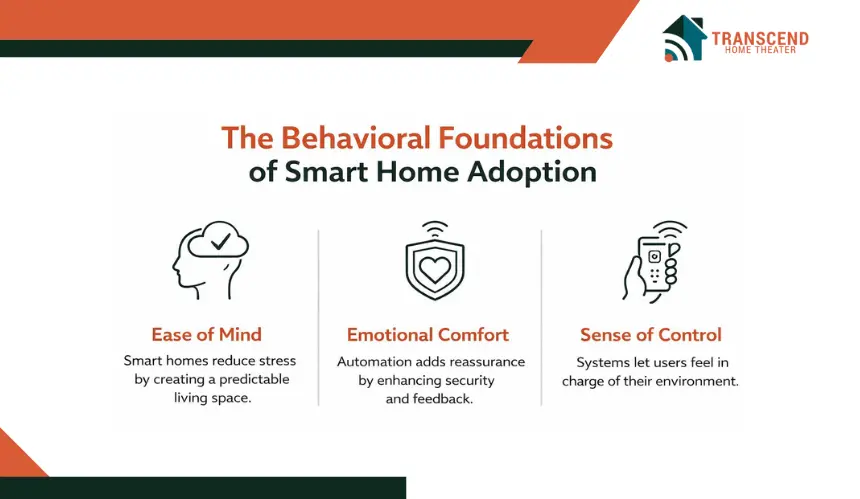
Smart homes appeal to users for reasons that go far beyond convenience. People respond to the psychological benefits these systems create, including mental ease, emotional comfort, and a sense of control within their living environment. These influences shape the initial decision to adopt automation and set the stage for later behavioral shifts.
How Does Automation Reduce Cognitive Load and Ease Daily Decisions?
Automated lighting, schedules, and energy routines remove many small choices that normally occupy mental space. Voice assistants, programmed thermostats, and connected appliances act as decision support tools that help streamline everyday tasks. This reduction in cognitive load makes the home feel easier to manage, which encourages consistent use of automation.
Why Do Smart Homes Create Strong Feelings of Comfort and Control?
Many homeowners adopt automation because it increases their sense of emotional stability. Connected security systems, presence sensors, and monitoring apps offer reassurance and help people feel more in control of their environment. This perceived stability builds trust in the technology and contributes to a stronger attachment to automated systems.
How Do Reward Cues and Instant Responses Reinforce Smart Home Usage?
Smart devices often respond instantly to user input, which creates a feedback loop that encourages repeated interaction. Quick rewards, such as temperature adjustments or ambient lighting changes, strengthen the desire to automate more tasks. These small moments of gratification play a meaningful role in shaping user behavior during the adoption stage.
How Automation Shapes Daily Routines and Long-Term User Habits
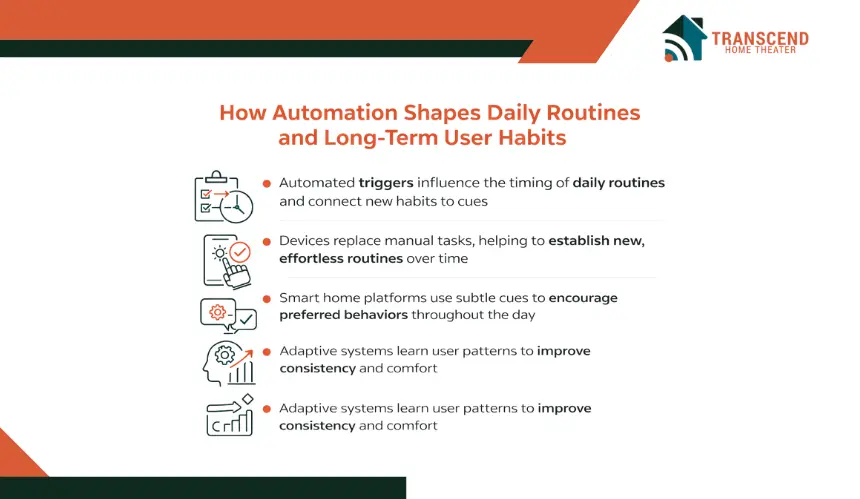
As smart home systems begin coordinating lighting, climate, scheduling, and appliance activity, users gradually shift how they move through daily tasks. Automated triggers influence the timing of routines, the level of attention required, and the way people interact with their environment.
How Do Automated Systems Replace Old Habits and Create New Routines?
Once a device starts performing tasks consistently, users stop carrying them out manually. Morning lighting presets, temperature adjustments, or automated appliance cycles help establish predictable rhythms. Over time, these automated patterns shape new habits that feel natural and effortless.
What Behavioral Nudges Do Smart Devices Use to Guide Daily Actions?
Smart home platforms use subtle cues to encourage preferred behaviors. Notifications about energy savings, reminders to secure entries, and prompts for efficient appliance use act as behavioral nudges that guide decisions. These cues help users adjust their actions without feeling pushed.
How Do Learning Algorithms Influence User Behavior Over Time?
Adaptive systems observe patterns and adjust settings to improve consistency and comfort. When a smart thermostat learns preferred temperatures or a lighting system adapts to activity levels, the home begins shaping expectations for convenience. This creates long-term behavioral alignment with the automated environment.
Cognitive and Emotional Impacts of Living in an Automated Environment
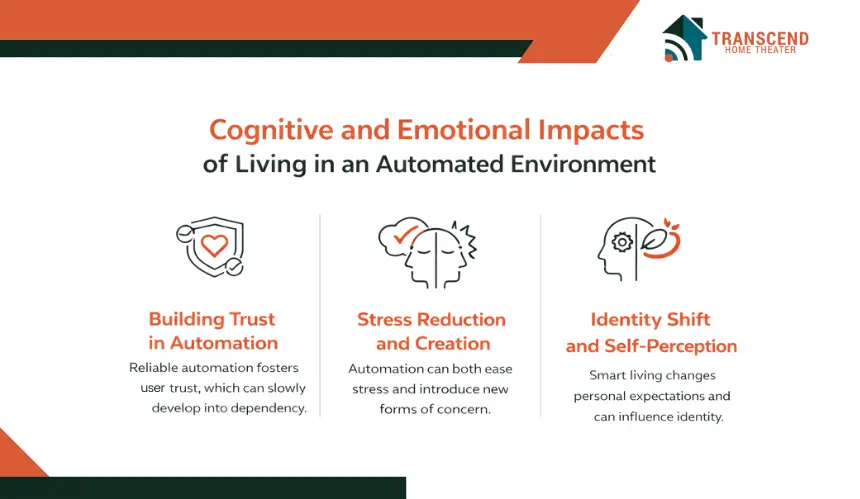
Smart home environments influence how people process information, manage emotions, and interpret their living space. As automated systems take on more responsibilities, users experience meaningful psychological shifts that affect mental ease, emotional security, and personal expectations.
1. Trust in Automation: When Does Reliability Become Dependency?
Trust develops when automated systems perform consistently and reduce the need for manual checks. Users begin feeling confident that lighting schedules, climate settings, and security alerts will function as intended.
This trust can slowly turn into dependency when tasks feel difficult or inconvenient without the automated support. The home becomes a predictable partner, which changes how users manage responsibility and decision making.
Did you know? A research found that global smart speaker shipments reached 147 million units in 2019, growing about 70 percent in one year, yet most users still mostly use them for music rather than full home control. |
2. Stress Reduction vs Stress Creation: The Dual Impact of Smart Tech
Automation often reduces stress by keeping the environment stable and predictable. Sensors, alarms, and connected monitoring tools help users feel protected and aware of potential issues.
At the same time, the constant flow of data and notifications can introduce new forms of tension, especially when users feel pressured to monitor device performance or interpret system alerts. This blend of relief and concern creates a unique emotional landscape.
3. The Identity Shift: How Smart Homes Influence Lifestyle and Self-Perception
As automation becomes part of daily living, users often align their identity with the type of home they maintain. Some associate themselves with efficient living, while others view automation as a reflection of innovation or environmental responsibility.
These subtle shifts influence lifestyle choices and contribute to a sense of personal alignment with the automated environment.
Social Behavior: How Smart Homes Influence Family Dynamics and Interaction
Smart homes influence more than individual behavior. They also shape how families share responsibilities, communicate, and maintain personal boundaries. As connected devices organize routines, the household begins responding to new patterns created by the technology.
How Does Automation Redistribute Household Roles Through Connected Systems?
Automation shifts responsibilities by reducing the number of tasks family members must coordinate manually. Smart cleaning tools, lighting routines, and temperature schedules complete work that once required negotiation. This redistribution helps families avoid conflicts about chores and allows each person to focus on other priorities without feeling overwhelmed.
How Do Smart Devices Mediate and Support Family Communication?
Smart home platforms serve as communication hubs that help families stay organized. Voice assistants relay reminders, schedules appear on shared displays, and device alerts notify everyone of important updates. These tools support smoother communication by giving the household a single system that broadcasts information clearly and consistently.
Privacy Considerations in Connected Homes
Privacy becomes an important consideration when sensors, cameras, and logging features are active within a shared space. Some family members appreciate the increased awareness, while others worry about data visibility or device monitoring.
These concerns lead to conversations about personal boundaries and how much information each person is comfortable sharing within an automated environment.
Important: A 2022 review of smart home applications and user perceptions highlights a recurring pattern: people like convenience, time savings and safety, but repeatedly mention privacy invasion, dependence on technology and cost as psychological barriers. |
Consumer Psychology: Why People Upgrade Smart Home Tech
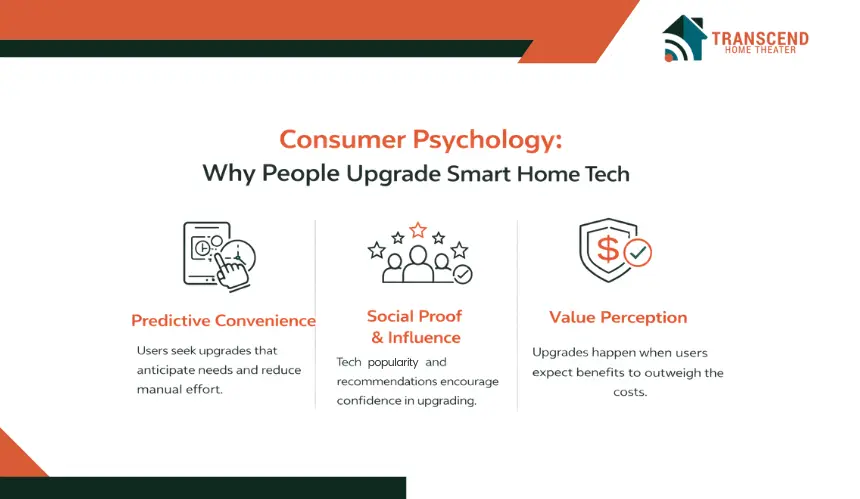
Smart home users often decide to upgrade when their expectations for comfort, efficiency, and personal convenience evolve. These decisions reflect deeper psychological motivations linked to lifestyle alignment and perceived improvements in daily living.
1. The Desire for Predictive Convenience & Seamless Living
Users pursue upgrades when they want their home to anticipate needs more accurately. Enhanced sensors, faster processors, and smarter learning models promise a smoother experience that feels effortless.
People are drawn to systems that understand routines, adjust settings on their own, and reduce the number of decisions required throughout the day. This desire for greater comfort motivates users to adopt more advanced automation.
2. Social Proof & Tech Adoption Influence
Consumer choices are often shaped by what others are using or recommending. When new devices gain popularity or receive strong reviews, users feel more confident about upgrading.
Seeing friends, family, or online communities embrace updated systems creates a sense of reassurance that the improvement is worthwhile. This social validation plays a powerful role in accelerating adoption.
3. Value Perception: Cost-Benefit Psychology Behind Smart Home Investments
Many users upgrade when they believe the benefits outweigh the expense. Energy savings, reduced manual effort, smoother routines, and improved reliability all contribute to a positive value perception. When users expect a meaningful enhancement to their quality of life, they view an upgrade as a practical investment rather than an unnecessary purchase.
How Automation Improves the Customer Experience in Retail and Service Spaces
Automation in commercial environments enhances how customers move, interact, and make decisions within a store or service center. These tools help businesses create smoother, more reliable experiences that feel effortless for the customer.
Fact: Customer research shows that waiting longer than expected causes a modest drop in satisfaction, while waiting less than expected produces a much larger boost, highlighting the psychological power of expectations in lines. |
1. Faster Service and Shorter Wait Times
Automated checkout systems, digital queue tools, and self service counters help customers complete tasks quickly. These features reduce long lines and allow people to navigate the space without unnecessary delays. The result is a more relaxed and efficient visit that strengthens overall satisfaction.
2. Clear Information and Guided Navigation
Smart kiosks, digital displays, and interactive screens give customers instant access to product information, store layouts, and recommendations. This reduces confusion and helps customers feel confident as they make decisions. Clear guidance supports a smoother experience from entry to exit.
3. Personalized Recommendations and Experiences
Automation allows businesses to tailor suggestions based on preferences, purchase history, or behavior. Personalized promotions, adaptive lighting zones, or custom product highlights create a stronger emotional connection to the space. Customers feel recognized, which enhances loyalty and trust.
4. Enhanced Comfort and Safety
Environmental sensors, automated climate control, and air quality systems help maintain a comfortable atmosphere. Occupancy monitoring and sanitation alerts add a layer of safety that customers appreciate. These features create a space that feels cared for and attentive to visitor needs.
Did you know? Industry data reported in 2024 indicates that around 80 percent of in-store shoppers like the idea of non-traditional checkout, and about 66 percent view self-checkout as the optimal option for them. |
Human–Tech Interaction Frameworks Used to Study Smart Home Behavior
Understanding how people interact with automated systems requires structured frameworks that explain the psychological processes behind user actions. These models help clarify why certain behaviors emerge and how smart homes influence decision making, habits, and comfort levels. A smart home automation expert often can guide you on how these frameworks are applied in real environments.
1. Habit Loop Model (Cue → Routine → Reward)
The habit loop model explains how automated environments strengthen or replace routines through repeated cues. Smart devices often trigger predictable actions, such as lights activating when someone enters a room or temperature settings adjusting at a specific time.
These automated cues guide the routine, while the resulting comfort acts as the reward. Over time, users form strong associations between the cue and the outcome, which shapes long term behavior.
2. Human–Computer Interaction (HCI) and UX Behavior Models
HCI frameworks study how users respond to digital interfaces and system feedback. In smart homes, these models help explain how usability, clarity, and interface design influence engagement.
Clear prompts, intuitive controls, and consistent responses reduce cognitive effort and make the technology feel approachable. When users encounter fewer barriers, they interact more naturally with automated systems.
Insight: A 2022 study on Human–Computer Interaction in smart living environments highlights privacy, security, usability and adaptability as the four dominant HCI challenges designers must solve |
3. Behavioral Economics and Choice Architecture in Automated Homes
Behavioral economics provides insight into how automation shapes decisions through subtle influences. Smart homes often present default settings, energy reports, or suggested routines that guide users toward specific choices.
These design elements act as a form of choice architecture, encouraging actions that support comfort, efficiency, or safety without feeling restrictive.
Transform the way you live by creating a home that understands your needs and adapts to your lifestyle. If you are ready to experience the next level of comfort and effortless control, Transcend Home Theater can help you design smart spaces that feel intuitive from the moment you walk in. Explore smarter living with a system built around you.
Frequently Asked Questions
How does automation influence tech comfort levels for people who are not familiar with smart devices?
Automation increases comfort by allowing new users to interact with technology through simple, low pressure methods. Voice assistants, guided app tutorials, and automatically triggered routines help users complete tasks without needing technical knowledge.
As the system performs reliably, unfamiliar users begin trusting it, which reduces anxiety and builds confidence. Over time, this creates a smoother transition into regular smart home use.
Can smart home automation support accessibility for people with mobility or sensory challenges?
Smart homes offer significant accessibility benefits. Hands free commands allow users with mobility limitations to adjust lighting, climate, or appliances without reaching physical controls.
Visual and audio alerts assist individuals with sensory challenges by providing cues that match their needs. Automated pathways, scheduled routines, and adaptive responses create an environment that supports independence and reduces physical strain.
How does automation affect the way guests interact with a home they are not familiar with?
Automation helps guests navigate an unfamiliar home more easily by offering intuitive cues. Motion activated lights guide movement through hallways, voice assistants answer simple questions, and smart displays provide clear instructions for entertainment or temperature adjustments.
These features allow guests to feel comfortable without asking the homeowner for help every few minutes, which improves their overall experience.
Do smart homes change how people manage unexpected situations inside the home?
Yes. Automation provides real time information during unexpected events, which helps users respond faster and more confidently. Alerts for water leaks, temperature spikes, or unusual activity guide homeowners toward the appropriate action.
Automated shutoff features, safe mode settings, and system recommendations also help minimize damage or risk, giving users a sense of control during unpredictable situations.
How do automated systems impact energy awareness and eco conscious decision making?
Automated systems show users exactly how much energy they are consuming and when it can be reduced. Smart thermostats track heating and cooling patterns, lighting systems identify unnecessary usage, and appliances report consumption levels.
These insights help users understand their environmental footprint and make informed choices. Over time, the visibility of this data encourages more sustainable habits.
Are there psychological benefits to combining multiple smart devices into a single ecosystem?
A unified ecosystem simplifies the mental effort required to operate different devices. Instead of managing several apps or controls, users rely on one coordinated platform that handles routines, preferences, and system updates.
This consistency reduces frustration, increases satisfaction, and creates a sense of harmony within the home. The more devices work together, the more seamless and psychologically comfortable the environment becomes.