
Dynamic Lighting Scenes: How Circadian Light Patterns Improve Sleep & Mood
A Quick Answer: Dynamic lighting scenes improve sleep and mood by aligning indoor light with natural circadian patterns that guide the body’s internal clock. When light intensity and color temperature shift through the day in a controlled rhythm, the brain receives clearer signals about when to stay alert and when to wind down. This alignment supports healthier melatonin release at night and steadier cortisol levels in the morning. |
Researchers studying human light exposure found that people who follow daylight-matched lighting patterns experience considerable improvement in sleep efficiency. This article explores how dynamic lighting scenes function, why specific light characteristics influence emotional balance, and how these systems support better daily well-being.
Understanding Circadian Lighting and Its Role in Human Health
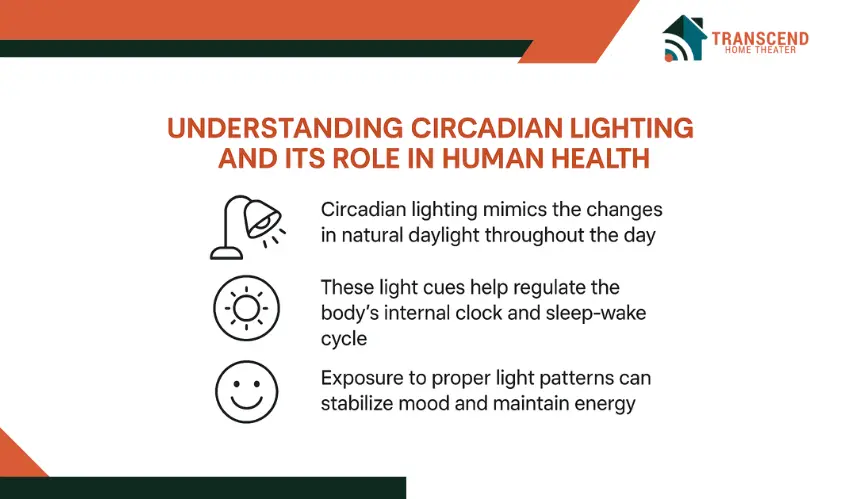
Circadian lighting supports the body’s natural rhythm by mimicking the gradual changes of outdoor daylight. Human biology responds strongly to shifts in brightness and color temperature, which influence hormones, alertness patterns, and emotional regulation.
Let’s explore how these light cues shape daily well-being without repeating concepts explored later in the article.
What Is Circadian Lighting and Why Does It Influence the Body’s Internal Clock?
Circadian lighting follows a structured pattern of cool morning light, balanced midday brightness, and warm evening tones. These variations interact with the suprachiasmatic nucleus, the part of the brain that controls circadian timing.
When light aligns with biological expectations, the internal clock stays synchronized with the 24-hour cycle, which helps regulate energy levels and sleep timing.
Researchers measuring human light exposure found that naturalistic lighting patterns increase circadian rhythm stability by more than 30 percent in controlled environments, highlighting how sensitive the body is to daily light cues.
How Do Different Light Temperatures Affect Mood and Emotional Balance?
Light temperature influences neurotransmitters that shape emotional well-being. Cooler light supports alertness by stimulating pathways linked to serotonin, while warmer light signals the body to relax. Studies show that exposure to natural color temperature shifts can improve mood ratings in indoor spaces.
These responses are part of the body’s natural light sensitivity, which uses color as a guide for transitions between active and restful states.
How Do Daily Light Cycles Shape Focus, Productivity, and Daytime Performance?
Consistent daylight-like cycles help the brain maintain steady focus during the day. Morning brightness increases alertness through cortisol activation, while balanced midday levels support sustained attention.
Did you know? Researchers evaluating workplace lighting found that environments with dynamic lighting cycles improved task performance of up to 42 percent compared to fixed lighting conditions. |
These predictable changes help people concentrate for longer periods and reduce the mental fatigue that appears when lighting remains static.
How Dynamic Lighting Scenes Work in Real Homes
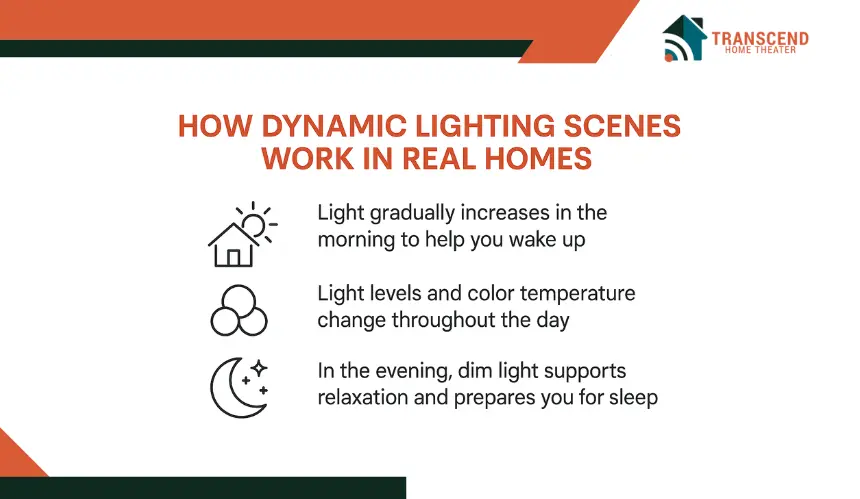
Dynamic lighting scenes operate by adjusting brightness, color temperature, and timing throughout the day in a controlled sequence. These changes are guided by smart home systems that read environmental conditions and user preferences.
What Components Are Required to Create Effective Dynamic Lighting Scenes?
A complete circadian lighting setup often includes tunable white LEDs, smart dimmers, lighting hubs, and sensors that detect motion or sunlight levels. Each component plays a specific role.
- Tunable white or full-spectrum LED fixtures: These lights shift between cool and warm color temperatures, which allows the system to imitate natural daylight patterns. Studies on human-centric lighting confirm that tunable LEDs provide more accurate circadian simulation than fixed temperature bulbs.
- Smart dimmers and lighting controllers: These devices regulate brightness levels so that scenes can transition gradually rather than changing abruptly. Controlled dimming helps maintain comfort by supporting the body’s sensitivity to light intensity.
- A central automation hub or lighting gateway: The hub manages schedules, communicates with fixtures, and synchronizes the entire system. It also connects lighting routines with user preferences, presence detection, and time-based commands.
- Motion sensors and daylight sensors: Motion sensors activate scenes only when the space is occupied. Daylight sensors read natural light levels and adjust artificial lighting to maintain consistent circadian cues..
- Smart home compatibility modules: These integrations allow lighting scenes to work with voice assistants and other connected devices. This ensures all lighting changes occur automatically without requiring manual adjustments.
Did You Know? Homes equipped with daylight-sensing technology often reduce unnecessary energy use by more than 40 percent |
The tunable fixtures regulate color temperature, smart switches handle intensity changes, and the central controller manages timing patterns.
How Do Morning, Midday, and Nighttime Scenes Operate in a Typical Home?
Dynamic lighting scenes follow a structured pattern that mirrors natural light progression. Morning scenes begin with soft brightness that increases gradually to promote alertness. Midday scenes maintain balanced white light that supports visual clarity and sustained focus.
Night scenes shift to warm tones that prepare the body for rest. Research on indoor light exposure shows that homes using structured scene transitions experience improved comfort ratings because the environment feels more aligned with natural daily cues.
How Does Dynamic Lighting Adapt to the Needs of Different Rooms?
Each room in a home benefits from lighting scenes tailored to its function. Bedrooms often use very gentle transitions to support relaxation and sleep readiness. Kitchens perform better with bright, neutral light that enhances visibility for food preparation.
Home offices rely on scenes that support concentration for extended periods. Room-specific lighting programs increase perceived usefulness because each space feels more comfortable and purpose-driven.
Health and Wellness Benefits of Circadian Lighting
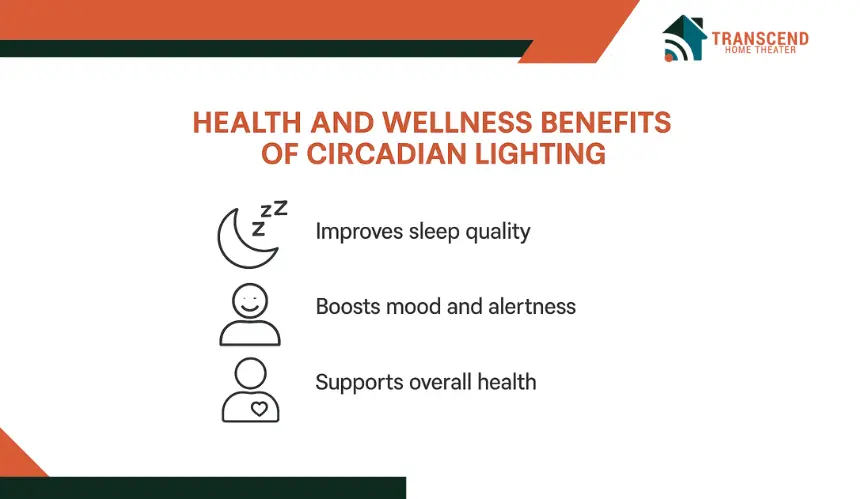
Circadian lighting supports daily wellness by guiding the body through light patterns that feel natural and predictable. When indoor spaces mirror the timing and tone of outdoor daylight, people often experience steadier energy cycles and a calmer emotional state.
How Does Circadian Lighting Support Better Sleep Quality?
Evening circadian lighting encourages the body to ease into its night phase by reducing exposure to stimulating wavelengths. Warm, low-intensity lighting helps the pineal gland begin melatonin production at a more appropriate time. This shift sends a clear biological signal that rest is approaching.
Researchers studying human sleep have observed that individuals exposed to structured evening lighting often fall asleep more smoothly and experience fewer disruptions during the early stages of their sleep cycle. These improvements occur because the light environment aligns with the body’s natural expectations.
How Does Circadian Lighting Improve Mood Stability and Emotional Wellbeing?
Light strongly influences emotional processing because it affects neurotransmitters that regulate calmness, clarity, and daily motivation. Cooler daytime light encourages mental alertness by supporting serotonin pathways, while warm evening lighting helps the nervous system slow down after multiple hours of stimulation.
Natural shifts help people feel more emotionally balanced throughout the day. Homes that use circadian patterns often feel more comforting because the lighting aligns with the rhythm the brain interacts with outdoors.
How Does Circadian Lighting Enhance Daytime Alertness and Cognitive Performance?
Morning and midday circadian lighting provide cues that help the brain maintain focus for longer periods. Bright morning light signals that activity should begin, which helps people mentally transition out of sleep inertia.
Balanced midday lighting reduces ocular strain and supports clearer visual processing, which can make tasks feel more manageable. Dynamic lighting helps individuals sustain concentration by reducing the mismatch between indoor conditions and natural daylight cycles.
What Features Should a Circadian Lighting System Include?
A strong circadian lighting solution should offer precise control over color temperature, brightness levels, and daily scheduling. Systems with tunable white technology provide smoother transitions that follow natural light cues throughout the day.
App based controls, voice integration, and adaptive scheduling help ensure the lighting responds consistently to daily routines. Systems that include ambient sensors often provide a more natural experience because they adjust light levels when outdoor conditions change.
Which Types of Circadian Lighting Solutions Work Best for Different Homes?
Different types of lighting systems support different needs. Smart bulbs offer an accessible option for individuals who want simple circadian transitions without upgrading electrical wiring.
Whole home lighting systems provide deeper customization and more accurate daily patterns. Hybrid setups, which combine smart switches with tunable fixtures, work well for homeowners wanting a balanced approach.
The best option depends on the number of rooms, preferred level of automation, and how much flexibility the user wants in their lighting design.Working with a smart home automation company can simplify this process by ensuring the chosen system fits both the layout of the home and the user’s goals for long term comfort.
Integrating Dynamic Lighting Scenes With Smart Home Ecosystems
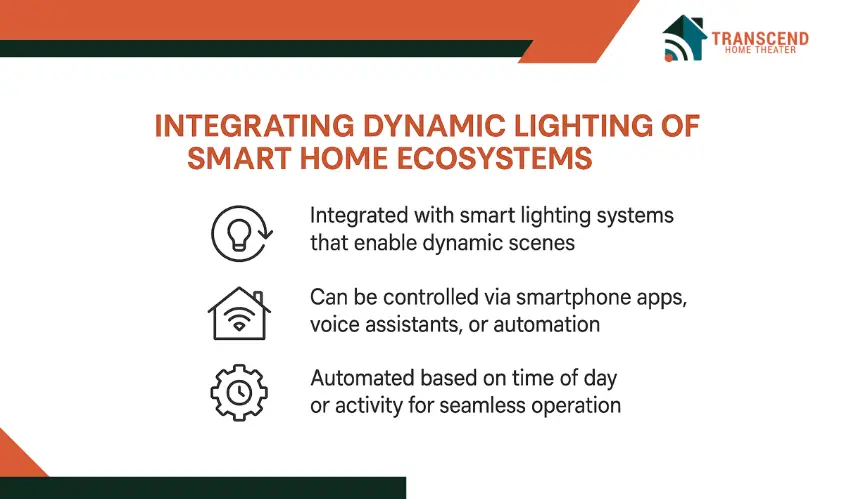
Circadian lighting becomes more effective when it operates as part of a larger smart home system. When lighting interacts with sensors, voice controls, and automated routines, the environment feels smoother and more intuitive. This section explains how these connections work without repeating ideas from the earlier components or system-selection sections.
How Do Voice Assistants and Automation Platforms Support Circadian Lighting?
Voice assistants help users adjust lighting scenes quickly by linking commands to preset routines. Platforms such as Google Home, Amazon Alexa, Apple HomeKit, and SmartThings allow lighting schedules, brightness levels, and color temperatures to update automatically throughout the day.
These platforms make circadian lighting more convenient by ensuring that transitions occur on time, even when the user does not interact with the system manually.
How Do Sensors Improve the Accuracy of Circadian Lighting?
Sensors strengthen the performance of circadian lighting by providing real time information about the room. Motion sensors activate lighting only when the space is occupied.
Daylight sensors read exterior brightness and help the system adjust indoor lighting to maintain consistent circadian cues. Temperature and occupancy sensors can also work with lighting routines to create a more natural and comfortable indoor environment.
How Can Circadian Lighting Sync With Other Smart Home Devices?
Circadian lighting becomes more immersive when paired with devices that influence comfort, such as automated shades, HVAC controls, and smart sleep monitoring systems.
Shades can raise or lower according to the time of day, HVAC systems can adjust temperature during morning or evening lighting scenes, and sleep devices can trigger lighting cues during wind down periods. These connections create a unified environment that feels more aligned with natural daily rhythms.
For homeowners who want a seamless setup where every room follows a natural rhythm, Transcend Home Theater can design a smart lighting ecosystem that transforms comfort throughout the day. Our team helps create lighting experiences that feel effortless and support long term wellness.
Frequently Asked Questions
Can circadian lighting help people who work rotating or late night schedules?
Circadian lighting can support shift workers by creating structured light cues that encourage alertness when it is needed and relaxation when it is time to rest. Custom schedules often help reduce the disruption caused by irregular sleep patterns.
Is circadian lighting helpful in homes that receive very little natural sunlight?
Homes with limited daylight often benefit from circadian lighting because the system can fill the gaps where natural cues are missing. Tunable fixtures recreate the timing and tone of outdoor light, which helps the body maintain a more stable rhythm.
Can children’s bedrooms benefit from circadian lighting routines?
Children respond well to gentle lighting transitions because these cues help regulate bedtime, morning routines, and daily energy patterns. Soft evening lighting can also make wind down periods calmer and more predictable.
How does circadian lighting support individuals who experience seasonal mood changes?
People sensitive to seasonal light variation often feel more balanced when their indoor environment stays consistent throughout the year. Circadian lighting provides structured brightness and warmth that can help ease the emotional effects of shorter days.
Are there specific bulbs or fixtures designed for people with visual sensitivities?
Some manufacturers offer low flicker, high quality tunable LEDs that support individuals who experience discomfort under harsh or inconsistent lighting. These fixtures provide smoother light output that feels easier on the eyes.
Can circadian lighting be used in home gyms or wellness rooms?
Circadian lighting works well in wellness spaces by providing bright, clear morning or midday cues that support movement and energy. The same system can shift later in the day to create an environment suited for stretching, meditation, or cooldown periods.