
Immersive Seating & Haptic Feedback Systems for Home Theaters
Key Takeaways
|
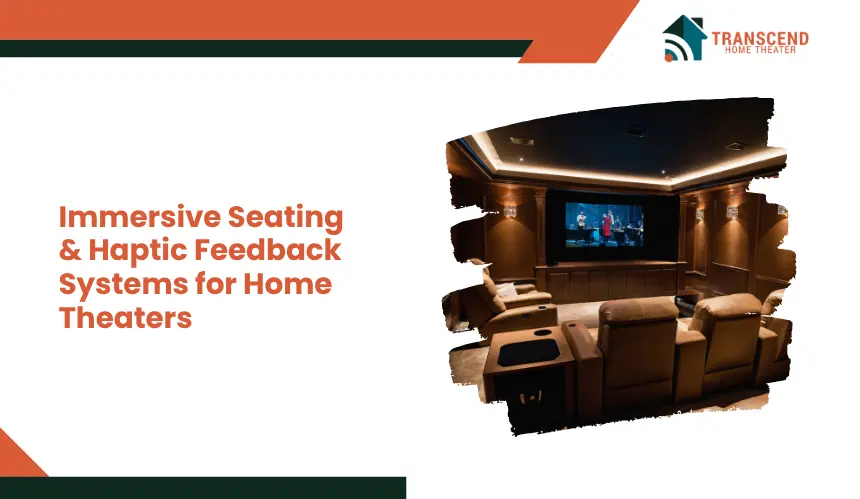
Most home theaters still rely on visuals and sound alone, but that setup often falls short when it comes to true immersion. Viewers may see explosions or hear deep bass, yet they do not physically feel the impact, which limits the overall experience.
This is where immersive seating and haptic feedback systems change the equation. This blog will cover how immersive seating works, how haptic feedback systems translate sound into physical sensations, and the right configuration for a truly engaging home theater experience.
What Defines Immersive Seating in a Home Theater Setup?
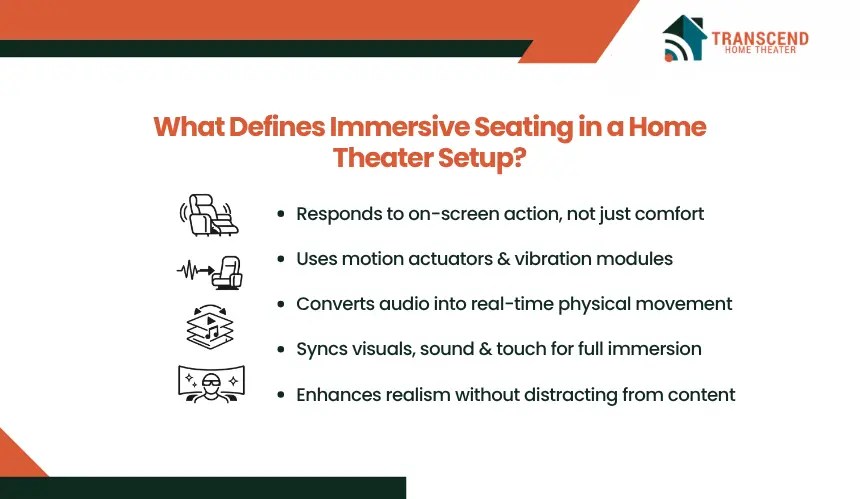
Immersive seating is built to respond to on-screen action rather than simply provide comfort. Unlike traditional recliners, these systems integrate motion actuators, pressure-based vibration modules, and ergonomic positioning to create a physical connection with the content. The goal is not just relaxation but synchronized movement that aligns with cinematic events.
What sets it apart is the ability to translate audio signals into motion and tactile feedback. Whether it is a subtle rumble during dialogue scenes or a strong impact during action sequences, the seating reacts in real time. This creates a layered experience where visual, audio, and physical elements work together instead of functioning independently.
In modern setups, immersive seating is often paired with advanced home theater layouts and calibrated audio systems. This ensures that motion intensity, seating alignment, and acoustic performance remain balanced, avoiding distraction while enhancing realism.
How Haptic Feedback Systems Work in Home Theaters?
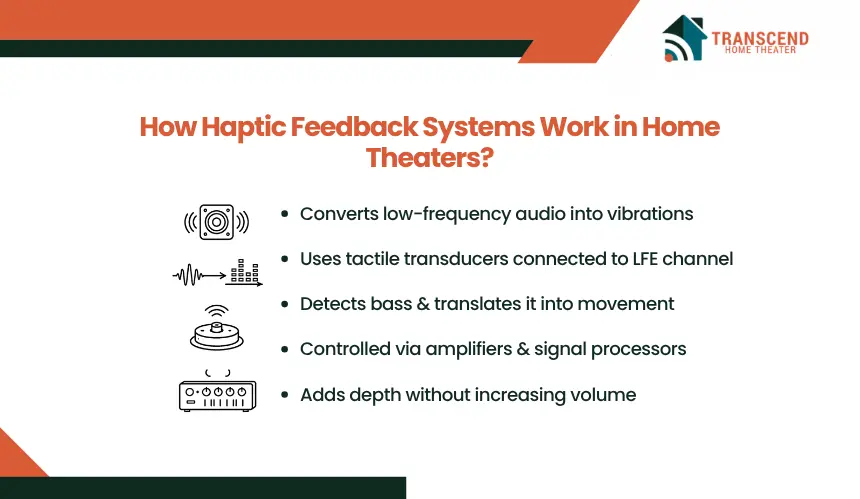
Haptic feedback systems operate by converting low-frequency audio signals into physical vibrations. Using tactile transducers, often connected to the LFE channel of a surround sound system, these setups detect bass frequencies and translate them into precise mechanical movements. This allows users to feel sound rather than just hear it.
The system typically includes transducers, amplifiers, and signal processors that control how vibrations are delivered. When properly configured, the feedback matches on-screen action with high accuracy, creating a seamless connection between audio output and physical sensation. Timing and signal clarity play a critical role in maintaining realism.
Instead of amplifying volume, haptic systems enhance depth and perception. They add a physical dimension to sound design, making effects like engine vibrations, footsteps, or environmental rumble feel more natural without overwhelming the overall audio experience.
Types of Immersive Seating & Haptic Configurations
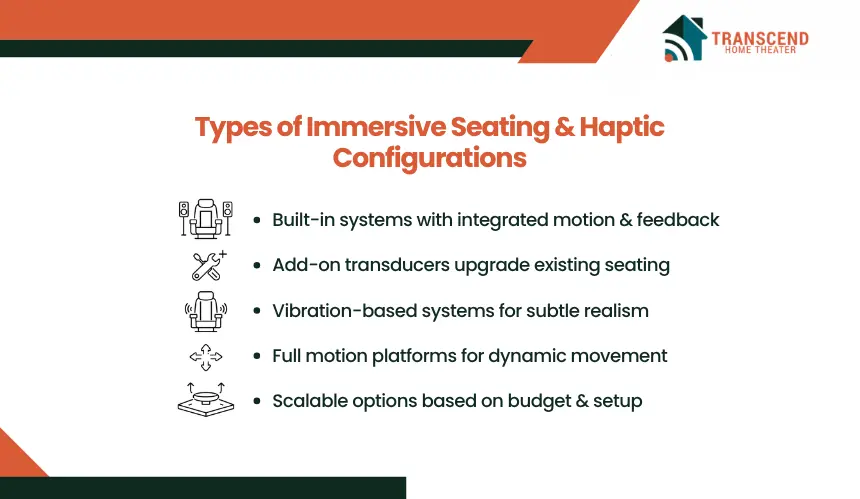
Immersive seating and haptic systems are available in multiple configurations, each designed to match different levels of performance, budget, and installation flexibility. Some solutions are fully integrated for seamless operation, while others allow upgrades to existing setups.
1. Built-In Haptic Seating Systems
Built-in systems are designed with integrated actuators and vibration modules embedded directly into the seating structure. These setups deliver synchronized motion and tactile feedback without requiring external modifications, making them ideal for dedicated home theaters where precision and consistency are essential. They are often paired with advanced AV processors to ensure accurate response to low-frequency effects.
Because everything is engineered as a single unit, performance tends to be more refined and easier to calibrate. This makes them a preferred choice for users seeking a seamless, high-end cinematic experience with minimal setup complexity.
2. Add-On Haptic Feedback Solutions
Add-on systems allow existing seating to be upgraded using tactile transducers mounted to the chair frame. These transducers convert bass signals into vibration, creating a physical response without replacing the entire seating setup. This approach is flexible and cost-efficient, especially for users who want to enhance immersion without investing in new furniture.
The intensity and placement of vibration can be adjusted based on user preference and room layout. This level of customization makes retrofit solutions practical for a wide range of home theater configurations.
3. Full Motion Platforms vs Vibration-Based Systems
Vibration-based systems focus on delivering low-frequency feedback through localized seat movement, enhancing realism without altering the seating position. In contrast, full motion platforms introduce dynamic movement such as tilting, lifting, or shifting, creating a more physically engaging experience.
While motion platforms are commonly used in simulation and gaming environments, vibration-based systems are better suited for cinematic viewing. They provide a balanced experience by enhancing immersion without distracting from the visual narrative.
What Makes Haptic Feedback Feel Realistic?
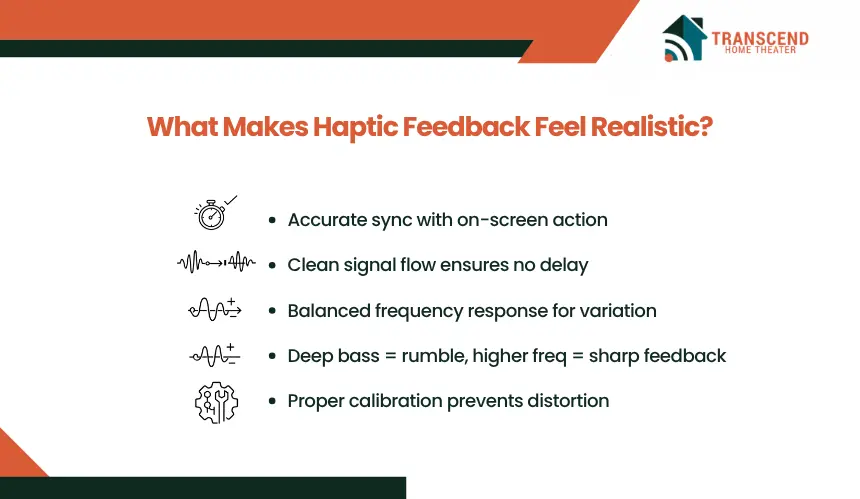
Not all haptic systems deliver the same level of realism. The difference comes down to how accurately the system interprets audio signals and translates them into physical sensations.
A well-tuned setup feels natural and synchronized, while a poorly configured one can feel delayed or exaggerated, breaking immersion.
Audio Synchronization and Signal Accuracy
Realistic haptic feedback depends heavily on precise synchronization with on-screen events. When audio signals from the AV receiver or processor are clean and properly routed, tactile transducers respond instantly to low-frequency effects. This ensures that every explosion, impact, or environmental cue is felt at the exact moment it appears on screen.
Accurate signal processing also prevents distortion or lag. Systems that are calibrated correctly maintain alignment between sound and motion, creating a seamless connection that enhances immersion rather than distracting from it.
Frequency Response and Impact Range
The depth of realism is also influenced by how well the system handles different frequency ranges. Lower frequencies produce deep, rumbling sensations that feel natural during cinematic scenes, while higher frequencies can create sharper, more localized feedback when needed.
A balanced frequency response ensures that vibrations are not overwhelming or repetitive. Instead, they vary based on the content, allowing subtle details and powerful moments to coexist. This variation is what makes haptic feedback feel dynamic and closely tied to the storytelling experience.
Benefits of Immersive Seating & Haptic Systems
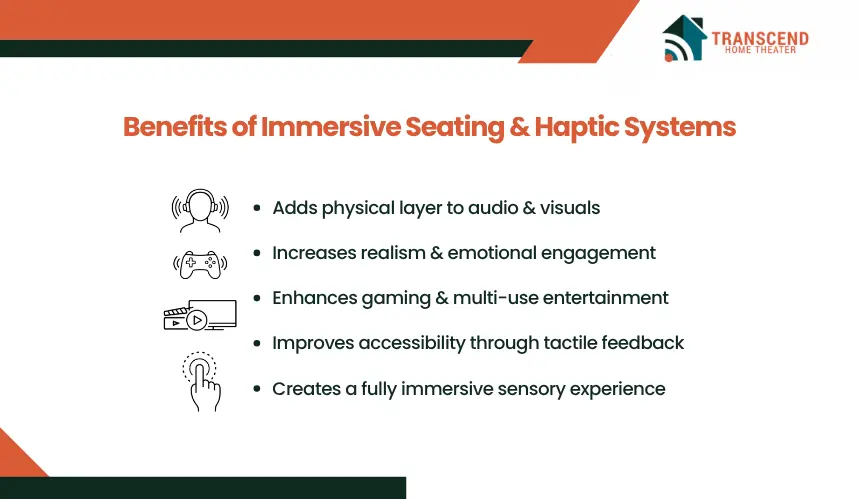
Immersive seating and haptic feedback systems change how content is experienced by adding a physical layer to sound and visuals. Instead of only watching and hearing, viewers begin to feel the on-screen action, which creates a stronger connection to the content and makes the overall experience more engaging.
1. Enhanced Realism and Emotional Engagement
When physical sensations align with audio and visual cues, scenes feel more believable and intense. Subtle vibrations during quiet moments and stronger feedback during action sequences help create a natural flow that mirrors real-world experiences.
This physical connection strengthens emotional responses. Viewers tend to stay more focused and involved because the experience feels active rather than passive, making each scene more memorable.
2. Gaming and Multi-Use Entertainment Advantages
In gaming environments, haptic feedback adds a layer of responsiveness by translating in-game actions into physical sensations. Movements, impacts, and environmental effects can be felt instantly, which improves immersion and situational awareness.
These systems also adapt well to different types of content, including sports, streaming, and simulation. This flexibility makes immersive seating a practical choice for multi-purpose media rooms rather than a single-use setup.
3. Accessibility and Sensory Experience Enhancement
Haptic systems provide an alternative way to experience sound by converting audio cues into tactile feedback. This can be especially valuable for individuals with hearing limitations, allowing them to perceive key moments through physical sensations.
Beyond accessibility, the combination of touch, sound, and visuals creates a more complete sensory experience. This layered interaction enhances perception without relying on higher volume levels, making the environment more comfortable and immersive over longer periods.
How to Choose the Right System for Your Home Theater
Selecting the right immersive seating and haptic system depends on how the space is designed and how the system will be used. Instead of focusing only on features, the decision should align with room dynamics, existing equipment, and the level of immersion expected from the setup.
Step 1: Room Size, Layout, and Seating Configuration
The size and structure of the room play a major role in how haptic feedback is perceived. Larger rooms may require multiple transducers or evenly distributed seating configurations to maintain consistent feedback across all positions. Seating placement, distance from the screen, and floor structure can also influence how vibrations travel and feel.
For example, basement installations common in Northern Virginia often benefit from stronger isolation and controlled vibration transfer, while above-ground media rooms in Maryland homes may require additional tuning to prevent feedback loss through flooring structures.
A well-planned layout ensures that feedback remains balanced and does not vary drastically between seats. This is especially important in multi-row home theaters where uniformity is key to maintaining a consistent experience.
Step 2: Budget vs Performance Considerations
Different systems are available across a wide price range, from simple retrofit solutions to fully integrated motion seating. Entry-level setups can still deliver noticeable improvements in immersion, while premium systems offer refined control, better synchronization, and advanced motion capabilities.
The choice often comes down to how much customization and performance is required. In suburban markets across Virginia and Maryland, many homeowners opt for scalable systems that can evolve from a basic setup into a fully immersive theater without major structural changes.
The choice often comes down to how much customization and performance is required. Investing in scalable systems can also allow for future upgrades without replacing the entire setup.
Step 3: Compatibility with Existing AV Equipment
Compatibility with AV receivers, subwoofers, and signal processors is essential for proper system performance. Most haptic systems rely on low-frequency effects from the audio signal, so ensuring the receiver supports appropriate output channels is critical.
Proper integration also involves correct wiring and signal routing. When components are matched correctly, the system delivers accurate and responsive feedback without interference or loss of audio quality.
Common Mistakes to Avoid When Installing Haptic Systems
Even high-quality haptic systems can underperform if installation and setup are not handled correctly. Small oversights in configuration, signal routing, or placement can lead to unnatural feedback that feels distracting instead of immersive. Avoiding these common mistakes helps maintain a clean and realistic experience.
Overpowering the System with Excessive Vibration
A common mistake is increasing vibration intensity in an attempt to enhance realism. While stronger feedback may seem impressive at first, it can quickly become overwhelming and reduce the clarity of individual effects. Balanced output allows subtle details and impactful moments to stand out naturally.
Maintaining controlled intensity ensures that feedback remains consistent across different types of content, preventing fatigue during longer viewing sessions.
Poor Signal Integration and Latency Issues
Improper signal routing can introduce delays between audio playback and physical feedback. Even slight latency can break immersion, as the sensation no longer matches the on-screen action. Ensuring clean signal flow from the AV receiver to the transducers is essential for accurate timing.
Using compatible components and correct connection methods helps maintain synchronization, which is critical for a seamless experience.
Ignoring Structural and Acoustic Factors
The physical environment plays a significant role in how vibrations are felt. Loose mounting, improper seating support, or unsuitable flooring can absorb or distort feedback, reducing effectiveness. Structural considerations, such as isolation pads and secure mounting, improve performance by directing vibrations where they are intended.
Ready to move beyond watching and start feeling every scene? Transcend your entertainment experience with precision-designed immersive seating and haptic systems from Transcend Home Theater, where every detail is engineered to bring your home theater to life.
Frequently Asked Questions
How long does it take to install immersive seating and haptic systems?
Installation timelines vary based on system complexity and room readiness. Basic haptic add-ons can be installed within a few hours, while fully integrated seating systems with wiring, mounting, and calibration may take one to two days for complete setup and testing.
Can immersive seating systems be integrated with smart home automation?
Many modern systems can connect with smart home platforms to synchronize lighting, audio, and seating responses. This allows users to create automated scenes where motion, sound, and environment adjust together for a more cohesive entertainment experience.
Do haptic systems affect neighbors or other rooms in the house?
Properly installed systems are designed to direct vibrations into the seating rather than the surrounding structure. With the use of isolation techniques and correct mounting, vibration transfer to adjacent rooms can be minimized significantly.
Is there a noticeable difference between single and multiple transducer setups?
Using multiple transducers can create a more evenly distributed and controlled feedback experience across different seating positions. This is especially useful in larger rooms or multi-row setups where consistent performance is important.
Are immersive seating systems suitable for everyday viewing or only special use?
These systems can be adjusted to match different content types, allowing for subtle feedback during casual viewing and more intense responses for action-heavy content. This flexibility makes them suitable for regular use without overwhelming the experience.