
Can Motorized Shades Reduce Energy Costs and HVAC Usage?
Key Takeaways:
|
Motorized shades can reduce HVAC strain when they control heat transfer before indoor temperatures become unstable. Large windows, direct sun exposure, and inconsistent shade usage often force heating and cooling systems to work harder throughout the day, increasing energy consumption and cycling frequency.
Automated shading systems address this by adjusting window coverage based on sunlight, room temperature, schedules, or occupancy patterns. This article explains how motorized shades influence energy performance, HVAC behavior, and real-world operating costs.
How Windows Increase HVAC Load
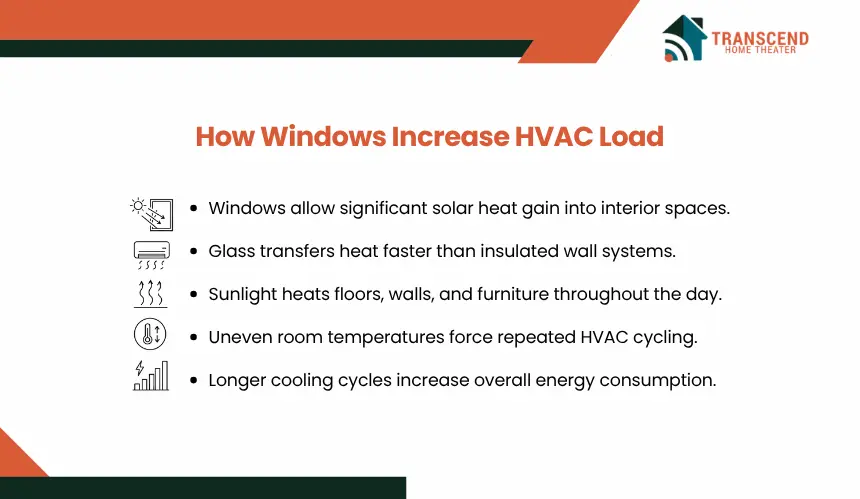
Windows are one of the largest sources of uncontrolled thermal exchange in a building envelope. Unlike insulated walls, glass allows higher levels of solar radiation transfer, conductive heat movement, and localized temperature fluctuation.
When unmanaged sunlight enters through glazing systems, HVAC equipment must compensate for rising indoor thermal load, longer cooling cycles, and uneven room temperatures.
Solar Radiation and Interior Heat Accumulation
A significant portion of HVAC strain begins with solar heat gain through exposed glass surfaces. Shortwave solar radiation passes through windows and is absorbed by interior materials such as flooring, countertops, upholstery, and drywall. These surfaces then release stored heat back into the room as longwave infrared radiation.
This process increases indoor sensible heat load even after direct sunlight has moved away from the space. In many homes, afternoon cooling demand remains elevated because thermal mass inside the room continues radiating retained heat for several hours.
The effect becomes stronger in environments with:
- West-facing glazing systems
- Large uninterrupted glass areas
- Dark interior surfaces with higher heat absorption
- Minimal exterior shading from trees or overhangs
As interior heat accumulation rises, air conditioning systems require longer compressor operation to maintain thermostat setpoints.
Conductive Heat Transfer Through Glass
Glass transfers heat more rapidly than insulated wall assemblies because it has lower thermal resistance. During summer conditions, exterior heat moves inward through window surfaces, while colder outdoor temperatures during winter increase interior heat loss.
This conductive transfer affects perimeter rooms most aggressively because temperatures near windows change faster than central interior zones. HVAC systems then compensate by increasing conditioned airflow, extending furnace runtime, or triggering repeated cooling cycles.
Single-pane windows typically experience the highest transfer rates, although even insulated glazing systems still contribute measurable thermal exchange under prolonged sun exposure or extreme outdoor temperatures.
Heat transfer intensity depends on several variables, including:
- Window orientation
- Solar Heat Gain Coefficient (SHGC)
- Glass insulation performance
- Outdoor temperature differential
- Duration of direct solar exposure
The larger the temperature imbalance near windows, the harder HVAC systems must work to stabilize interior conditions.
Temperature Stratification and HVAC Cycling
Uncontrolled heat gain rarely affects a room evenly. Warm air naturally rises, while solar-exposed zones often become significantly hotter than shaded sections of the same space. This creates temperature stratification, where different vertical and horizontal areas of the room experience inconsistent thermal conditions.
Thermostats respond to these fluctuations by initiating additional HVAC cycles to correct localized overheating. In homes with open layouts or multi-story ceilings, cooling systems may continue operating even after portions of the home have already reached target temperature ranges.
Frequent cycling creates several operational inefficiencies:
- Increased compressor workload
- Higher electrical demand during peak cooling hours
- Faster component wear
- Reduced humidity control consistency
- Uneven airflow balancing across occupied rooms
When thermal fluctuations remain constant throughout the day, HVAC equipment spends more time correcting environmental instability rather than maintaining steady-state efficiency.
Why Window-Driven HVAC Load Increases Energy Consumption
HVAC systems consume the most energy during active thermal correction periods rather than steady maintenance conditions. Rapid indoor heat gain forces cooling equipment to lower temperatures repeatedly instead of sustaining balanced operation.
This increases:
- Compressor runtime
- Fan operation duration
- Peak electrical demand
- System cycling frequency
In many Maryland homes, particularly in areas such as Bethesda, Potomac, and Rockville where larger rear-facing window layouts are common, prolonged western sun exposure can significantly increase late-afternoon cooling demand during humid summer months.
HVAC systems in these environments often operate longer because they must remove both accumulated radiant heat and elevated indoor moisture simultaneously, which is one reason motorized shades installation in Maryland has become more common in homes with expansive glass exposure and recurring afternoon heat buildup.
During colder Maryland winters, conductive heat loss near glass surfaces can also increase furnace runtime and create persistent perimeter-zone temperature imbalance, particularly in homes with expansive glazing or older window assemblies common throughout established neighborhoods in central Maryland
As thermal load variability increases, HVAC efficiency declines because systems operate under more reactive conditions instead of stable environmental control.
How Motorized Shades Change Heat Transfer Dynamics
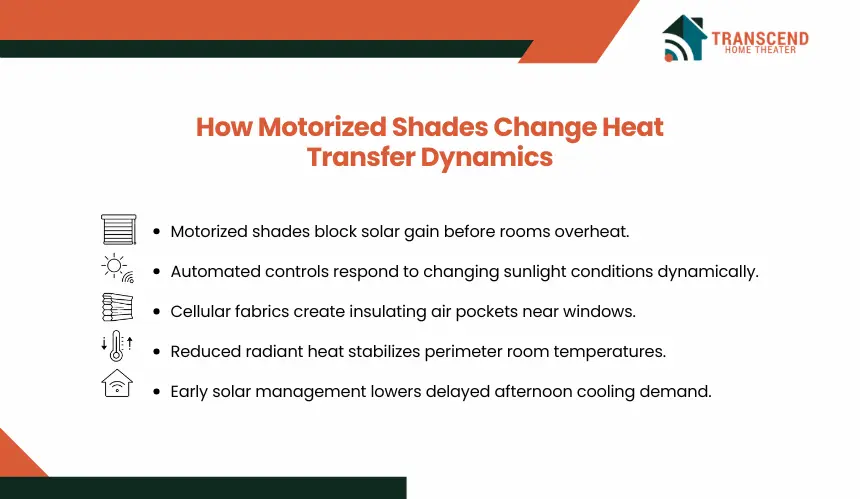
Research on automated shading systems suggests that properly configured motorized shades can reduce daily energy consumption significantly by limiting solar heat gain during peak exposure periods. The U.S. Department of Energy also notes that tightly installed cellular shades may reduce window heat loss by 40% or more during colder seasons.
Automated Solar Management Before Thermal Saturation
Indoor overheating often begins long before occupants notice temperature discomfort. Solar radiation entering through exposed glazing gradually heats interior surfaces, increasing stored thermal energy across floors, walls, furniture, and surrounding air layers.
Motorized shades reduce this accumulation by adjusting before interior materials reach thermal saturation. Instead of reacting after indoor temperatures rise, automated systems limit solar penetration during high-intensity exposure periods when radiant heat transfer is accelerating most rapidly.
This timing difference changes the thermal behavior of the room itself. Interior surfaces absorb less energy during peak daylight hours, which reduces delayed heat release later in the afternoon and lowers residual cooling demand after sunset.
The impact becomes more measurable in rooms with:
- Western or southwestern exposure
- Large uninterrupted glazing areas
- Minimal exterior shading protection
- Long-duration afternoon sunlight
By reducing thermal absorption earlier in the cycle, HVAC systems spend less energy correcting accumulated indoor heat later in the day.
Dynamic Adjustment Based on Real-Time Environmental Conditions
Fixed-position window coverings operate under static conditions even when solar intensity changes throughout the day. Motorized shades function differently because automated controls can continuously respond to environmental variation rather than relying on one manual setting.
Advanced systems may adjust based on:
- Solar angle position
- Indoor temperature rise
- Exterior light intensity
- Occupancy schedules
- Time-of-day automation logic
This creates a more adaptive thermal-control process where shading behavior changes alongside actual building conditions. In Maryland, where humid summer afternoons often combine high solar exposure with elevated moisture levels, dynamic shade adjustment can help reduce the rate of indoor heat accumulation before cooling demand intensifies later in the day.
For example, partial shade positioning during moderate daylight may preserve usable natural light while still limiting excessive solar gain. During periods of aggressive western exposure, full closure can reduce direct radiant loading on interior surfaces before HVAC demand escalates.
The result is more controlled heat-transfer modulation instead of repeated thermal correction after overheating has already occurred.
Reducing Radiant Heat Transfer Near Window Zones
Window-adjacent areas often experience localized overheating because direct solar radiation creates concentrated thermal zones near exposed glass surfaces. These perimeter regions can become significantly warmer than central areas of the room, particularly during prolonged afternoon sun exposure.
Motorized shades reduce this localized radiant loading by limiting direct energy transmission through the glazing surface. Cellular fabrics, solar screen materials, and layered shade systems further slow heat movement by creating insulating air pockets between the window and occupied interior space.
This reduces:
- Surface temperature escalation near windows
- Localized thermostat imbalance
- Heat migration into surrounding rooms
- Temperature stratification across open layouts
As radiant transfer decreases near perimeter zones, HVAC airflow distribution becomes more stable because systems no longer compensate for concentrated heat pockets developing around exposed glazing.
Why Timing Precision Changes Overall Thermal Performance
The effectiveness of shading systems depends heavily on when solar control occurs, not simply whether windows are covered. Once interior materials absorb enough radiant energy, cooling systems must remove stored heat through extended compressor operation and sustained airflow circulation.
Motorized shades improve thermal performance because automation reduces delay between changing solar conditions and shading response. Scheduled positioning, sensor-based activation, and smart thermostat integration allow shading systems to respond during early-stage heat accumulation rather than after indoor temperatures have already shifted outside target ranges.
This reduces reactive HVAC behavior and supports steadier indoor thermal conditions throughout the day, particularly during prolonged cooling periods common in high-exposure residential environments.
How Motorized Shades Affect HVAC System Operation
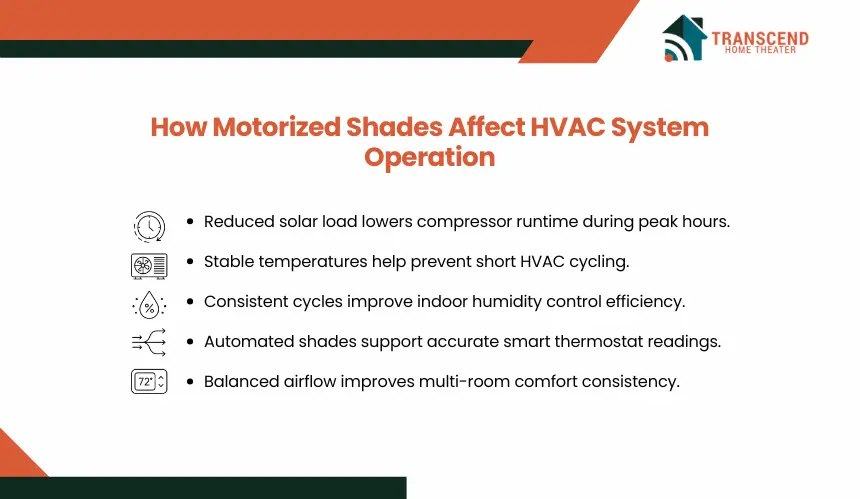
Motorized shades influence HVAC efficiency not only by reducing thermal load, but also by changing how heating and cooling equipment operates throughout the day. When indoor heat fluctuations become less aggressive, HVAC systems spend less time performing rapid corrective adjustments and more time maintaining controlled operating conditions. This affects compressor behavior, airflow stability, humidity regulation, and long-term mechanical strain.
Lower Compressor Runtime During Peak Cooling Periods
Air-conditioning systems consume the highest amount of electricity during active compressor operation. As indoor thermal load rises, compressors remain engaged longer to remove accumulated heat and return the home to thermostat setpoints.
Motorized shades reduce this demand indirectly by limiting how quickly indoor thermal conditions drift away from target ranges. When solar-driven heat accumulation slows earlier in the day, compressors cycle under lower peak-load conditions rather than sustained maximum operation.
This operational difference becomes more noticeable during:
- Multi-hour afternoon cooling periods
- High outdoor humidity conditions
- Peak utility-demand windows
- Extended occupancy periods inside sun-exposed rooms
Lower runtime accumulation can reduce overall electrical consumption while decreasing thermal stress placed on compressor components during continuous summer operation.
Reducing Short Cycling and Temperature Overshoot
HVAC systems operate most efficiently when they maintain relatively stable cycling intervals. Rapid indoor temperature fluctuation can force systems into short cycling behavior, where equipment turns on and off repeatedly within short operating windows.
Short cycling creates several performance problems:
- Higher startup energy demand
- Increased capacitor and relay wear
- Reduced humidity extraction efficiency
- Inconsistent air distribution
- Greater mechanical stress on blower systems
Motorized shades help moderate these rapid indoor load swings by reducing abrupt temperature escalation near exposed glazing zones. As indoor conditions stabilize, thermostat readings remain closer to target temperatures, allowing HVAC systems to maintain more controlled operating intervals.
This also reduces temperature overshoot, where systems continue cooling beyond intended levels because accumulated indoor heat causes delayed thermostat response.
Improving Humidity Control Efficiency
Cooling systems regulate both temperature and indoor moisture levels. In humid regions, HVAC equipment often runs longer not only to lower air temperature, but also to remove excess airborne moisture through evaporator coil condensation.
Frequent cycling interruptions reduce this dehumidification efficiency because moisture removal becomes less effective during shortened runtime intervals. Stable HVAC operation allows evaporator systems to maintain more consistent latent heat removal before cycles terminate.
This relationship becomes particularly important in Maryland during humid summer conditions, where elevated outdoor moisture levels increase latent cooling demand across occupied indoor spaces. By reducing abrupt solar-driven load changes, motorized shades can help HVAC systems maintain steadier moisture-control performance instead of repeatedly shifting between rapid cooling correction cycles.
Supporting Zoned HVAC and Smart Thermostat Performance
Modern HVAC systems increasingly rely on zoning controls, occupancy sensors, and smart thermostats to regulate room-by-room comfort conditions. These systems perform more accurately when indoor thermal behavior remains predictable throughout the day.
Motorized shades support this process by reducing localized temperature instability near large windows and sun-exposed rooms. Instead of forcing thermostats to react to concentrated perimeter heat buildup, automated shading helps maintain more balanced sensor readings across different occupied zones.
This becomes particularly relevant in parts of Maryland such as Potomac and Chevy Chase, where larger custom homes often use multi-zone HVAC configurations to manage temperature differences between expansive window-facing living areas, upper-floor spaces, and lower-level occupied zones.
This improves:
- Thermostat response accuracy
- Zoned airflow balancing
- Multi-room temperature consistency
- Smart scheduling efficiency
- HVAC staging coordination
As a result, HVAC systems operate with fewer aggressive corrections and more consistent environmental regulation across the home.
What Factors Determines Whether Motorized Shades Deliver Meaningful Energy Savings
Motorized shades do not produce identical results in every home because energy performance depends on how effectively the system interacts with the building envelope, window characteristics, and HVAC configuration.
The largest efficiency gains typically occur when automated shading is integrated into broader thermal-control strategy rather than operating as an isolated convenience feature.
Shade Material and Window Configuration
Fabric composition directly affects how much solar radiation, visible light, and conductive heat transfer reach interior spaces. Solar screen fabrics primarily reduce glare and radiant gain, while cellular and layered materials provide stronger insulating performance during both cooling and heating seasons.
Window size, glazing type, and installation fit also influence overall performance. Poor edge sealing or incomplete coverage allows continued thermal exchange around perimeter gaps, reducing the effectiveness of automated shading control.
Automation Quality and System Integration
Energy performance improves when shades respond dynamically to environmental conditions instead of relying only on fixed schedules. Systems integrated with smart thermostats, occupancy sensors, and daylight controls can coordinate shading behavior alongside HVAC demand patterns more efficiently.
This becomes especially important in homes with multiple exposure zones, where cooling demand changes throughout the day depending on sun angle and occupancy behavior.
Are Motorized Shades Worth It for HVAC Efficiency?
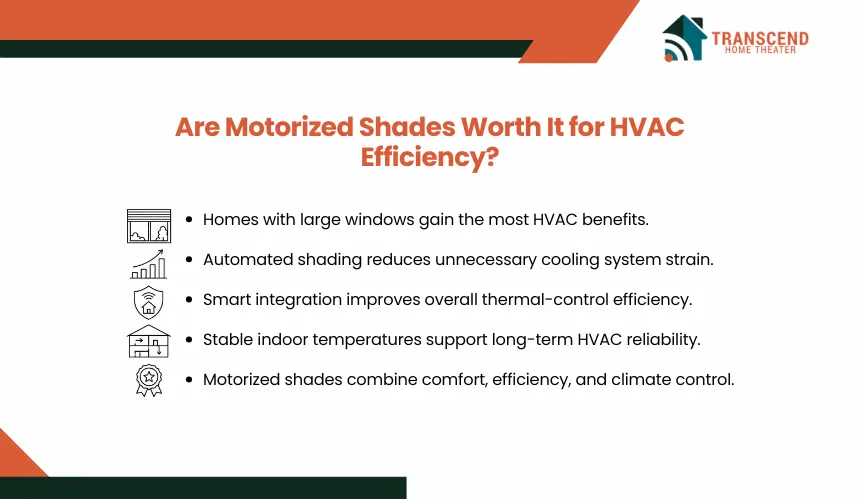
Motorized shades tend to provide the strongest long-term value in homes with:
- Large or west-facing windows
- High afternoon cooling demand
- Open-concept layouts
- Multi-zone HVAC systems
- Significant seasonal temperature variation
While utility savings vary by property conditions, automated shading can reduce unnecessary HVAC runtime, improve indoor temperature consistency, and lower repeated thermal stress on cooling equipment over time.
In many cases, the operational benefit comes less from dramatic energy reduction alone and more from maintaining steadier HVAC performance across changing seasonal conditions.
Smarter climate control often starts at the window level. Transcend Home Theater helps homeowners integrate motorized shading systems that support comfort, lighting control, and more efficient HVAC performance without disrupting the design of the space.
Frequently Asked Questions
Do motorized shades work better than regular blinds for energy savings?
Motorized shades can perform better when they are programmed around sunlight patterns, room use, and thermostat behavior. Regular blinds only help when someone adjusts them at the right time. The energy advantage comes from automation accuracy, fabric selection, window coverage, and how consistently the system limits unwanted heat transfer.
What type of motorized shade is best for reducing HVAC usage?
Cellular shades usually provide stronger insulation because their honeycomb structure traps air near the window surface. Solar shades are better for glare control and reducing radiant heat while preserving outward visibility. The right choice depends on whether the priority is heat retention, solar control, daylight filtering, or cooling-load reduction.
Can motorized shades help if a home already has energy-efficient windows?
Efficient windows reduce thermal transfer, but they do not eliminate solar gain, glare, or perimeter temperature variation. Motorized shades add another control layer by managing when sunlight reaches interior surfaces. This can still support HVAC efficiency, especially in rooms with large glass areas, afternoon exposure, or inconsistent comfort patterns.
How can homeowners tell if motorized shades are actually reducing energy use?
Energy impact can be tracked by comparing HVAC runtime, thermostat activity, and utility usage before and after installation. Smart thermostats often show cooling hours, heating cycles, and indoor temperature trends. The clearest results usually appear during peak summer afternoons, winter evenings, or periods with repeated sun-driven temperature swings.
Do motorized shades need sensors to reduce energy costs?
Sensors are not mandatory, but they improve performance when sunlight and occupancy patterns change throughout the day. A basic schedule can manage predictable exposure, while light sensors, temperature sensors, and smart thermostat integration allow more responsive shade movement. Sensor-based control is usually more useful in homes with multiple exposures.
Are battery-powered motorized shades practical for large homes?
Battery-powered systems can work well when wiring is difficult, especially for existing homes, upper windows, or retrofit projects. However, larger homes with many shades may benefit from hardwired systems for lower maintenance and stronger long-term reliability. The decision depends on window count, motor size, access height, and automation frequency.