
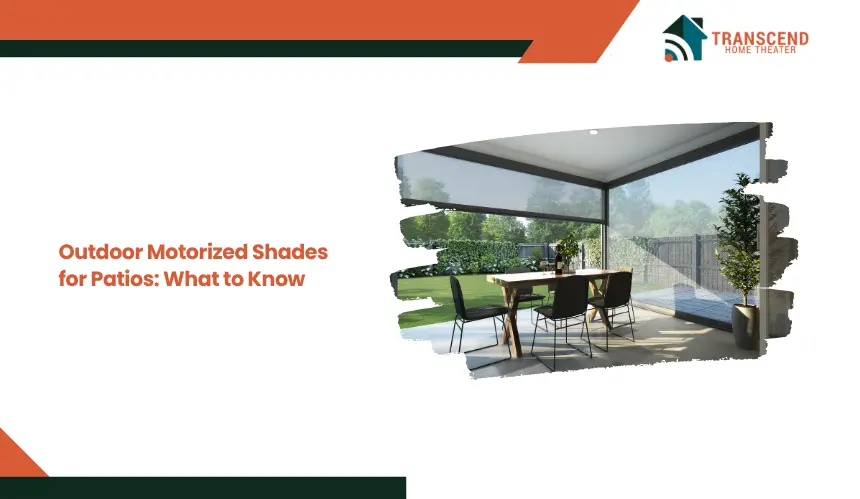
Outdoor Motorized Shades for Patios: What to Know
Key Takeaways:
|
A patio can quickly become uncomfortable when direct sunlight, heat, glare, or limited privacy make the space difficult to use throughout the day. Outdoor motorized shades address these challenges with automated sun control, but selecting the right system involves more than choosing a fabric or motor.
Performance depends on factors such as material durability, weather exposure, automation features, and installation quality. This guide explains how outdoor motorized patio shades work, what to consider before investing, and how to choose a system that delivers reliable long-term performance.
What Are Outdoor Motorized Shades for Patios and How Do They Work?
Outdoor motorized patio shades are retractable shading systems designed to control sunlight, reduce heat, and increase privacy with the push of a button or through automated controls. Unlike manually operated shades, they use an electric motor to extend or retract the fabric smoothly, allowing homeowners to adjust outdoor comfort based on changing weather and sunlight conditions.
What Are the Basic Components of a Motorized Patio Shade System?
A typical motorized shade system combines several components that work together to deliver reliable operation. The fabric acts as the primary barrier against sunlight and UV radiation, while a roller tube stores and deploys the material evenly. An electric motor housed inside the roller powers movement, and mounting brackets secure the assembly to a wall, ceiling, or overhead structure.
Many systems also include side channels or cable guides to improve stability during light wind conditions. Depending on the installation, optional accessories such as protective hoods can shield the roller and fabric from rain, debris, and prolonged weather exposure, helping extend the system’s service life.
How Do Remote Controls, Wall Switches, and Smart Home Integration Operate the Shades?
The motor receives commands through a control interface that matches the homeowner’s preferred level of automation. Basic systems use handheld remotes or wall-mounted switches for immediate operation. More advanced models connect with smart home platforms, allowing users to schedule shade movements, create automation routines, or control the system using a mobile app or voice assistant.
Automation becomes particularly valuable when outdoor conditions change throughout the day. Instead of manually adjusting the shades, homeowners can program them to respond to daily routines or integrate them with other connected outdoor living features for a more seamless experience.
What Materials Are Best Suited for Outdoor Performance?
Outdoor shade fabrics are engineered to withstand prolonged exposure to sunlight, moisture, and temperature fluctuations without sacrificing performance. High-quality solar screen fabrics filter sunlight while preserving outward visibility, whereas tightly woven privacy fabrics provide greater visual screening and increased shade.
The supporting hardware is equally important. Powder-coated aluminum frames and corrosion-resistant fasteners help the system withstand outdoor environments with minimal maintenance. In regions with changing seasonal conditions, including parts of Maryland, selecting weather-resistant materials can significantly improve durability and reduce long-term wear from repeated exposure to sun, humidity, and precipitation.
What Benefits Do Motorized Patio Shades Offer?
Beyond providing shade, a motorized system changes how an outdoor space functions throughout the day. By controlling sunlight automatically and creating a more stable environment, these systems improve comfort, protect outdoor investments, and make patios usable for longer periods across different seasons.
Reducing Heat and Glare for a More Comfortable Outdoor Space
Direct sunlight can quickly raise surface temperatures on patios, making furniture, decking, and seating areas uncomfortable. Motorized shades intercept a significant portion of solar radiation before it reaches the outdoor living space, helping maintain a cooler environment without enclosing the patio.
They also reduce glare that can make reading, dining, or using laptops and televisions outdoors difficult. Because the shade position can be adjusted throughout the day, homeowners can manage changing sun angles instead of relying on permanent structures that provide fixed coverage.
Increasing Privacy While Maintaining Airflow
Many homeowners want greater privacy without sacrificing the open feel of an outdoor patio. Screen fabrics designed with different openness factors limit outside visibility during daylight while still allowing air circulation and filtered natural light.
This creates a more comfortable setting for relaxing, entertaining, or dining outdoors. Rather than blocking the space completely, the shades create a visual barrier that preserves ventilation and helps the patio remain inviting during warm weather.
Protecting Outdoor Furniture from UV Exposure
Continuous ultraviolet exposure gradually fades fabrics, discolors cushions, and accelerates deterioration of wood, composite, and plastic outdoor furnishings. By limiting the amount of direct sunlight reaching these surfaces, motorized shades help slow weather-related wear.
This added protection can reduce the frequency of replacing cushions, rugs, and decorative finishes while helping outdoor materials retain their appearance over time. It also helps preserve flooring and nearby interior spaces that receive strong afternoon sunlight through large patio doors.
Enhancing Convenience and Everyday Usability
Convenience is one of the defining advantages of a motorized shade system. Instead of manually raising or lowering large exterior shades as weather conditions change, users can make adjustments instantly with a remote, wall control, smartphone, or automated schedule.
This ease of operation encourages more consistent use, allowing homeowners to respond quickly to changing sunlight without interrupting outdoor activities. In Kensington, MD, where many homes feature rear patios, decks, and screened outdoor living areas that receive strong afternoon and early evening sun during the warmer months, automated shades make it easier to maintain a comfortable outdoor space without repeatedly adjusting the system by hand.
What Should You Consider Before Choosing Outdoor Motorized Shades?
Not all motorized shade systems perform the same under real-world conditions. The right choice depends on how the patio is built, the local environment, and the level of automation you expect. Evaluating these factors before purchasing helps ensure the system delivers reliable performance for years rather than requiring early upgrades or adjustments.
1. Patio Size, Mounting Location, and Shade Coverage
The dimensions and layout of the patio determine how effectively a shade system will perform. Wider openings may require multiple shade units instead of a single oversized screen to maintain smooth operation and even fabric tension.
Mounting location also affects coverage. Wall-mounted systems often maximize usable shade, while ceiling or fascia installations may better suit covered patios and pergolas. Careful measurements help eliminate gaps where sunlight can enter during different times of the day and ensure the shades retract without interfering with lighting, ceiling fans, or outdoor fixtures.
2. Fabric Openness, Weather Resistance, and Durability
Shade fabric directly influences light filtration, visibility, and privacy. Fabrics with higher openness percentages allow more natural light and outward views, while tighter weaves provide greater shade and increased privacy by limiting visibility from outside.
Material durability is equally important. Outdoor-rated fabrics are engineered to resist fading, moisture, mildew, and repeated UV exposure. For homes across Maryland, where summers bring high humidity and seasonal thunderstorms while winters expose exterior systems to freezing temperatures, selecting weather-resistant fabrics and corrosion-resistant hardware can significantly improve long-term performance.
3. Motor Type, Power Source, and Automation Features
The motor is the operational core of the system, making its quality and features an important consideration. Homeowners can choose between hardwired motors that connect directly to the home’s electrical system or battery-powered options that simplify installation where new wiring is impractical.
Automation capabilities also vary. Some systems provide basic remote operation, while others support scheduled operation, smartphone control, voice assistants, and integration with broader smart home ecosystems. Choosing features that match everyday habits often delivers greater value than investing in automation functions that are unlikely to be used.
4. Wind Sensors, Maintenance Needs, and Long-Term Reliability
Outdoor shades operate in constantly changing weather conditions, making protective technologies an important part of system longevity. Wind sensors automatically retract the shades when wind speeds exceed safe operating limits, reducing strain on the fabric, motor, and mounting hardware.
Routine maintenance requirements are generally minimal but should not be overlooked. Cleaning debris from the fabric, inspecting mounting hardware, and confirming smooth motor operation can help prevent unnecessary wear.
Systems designed with durable components, weather-sealed motors, and high-quality hardware typically require fewer repairs and provide more consistent performance over their service life.
Are Outdoor Motorized Shades Worth the Investment?
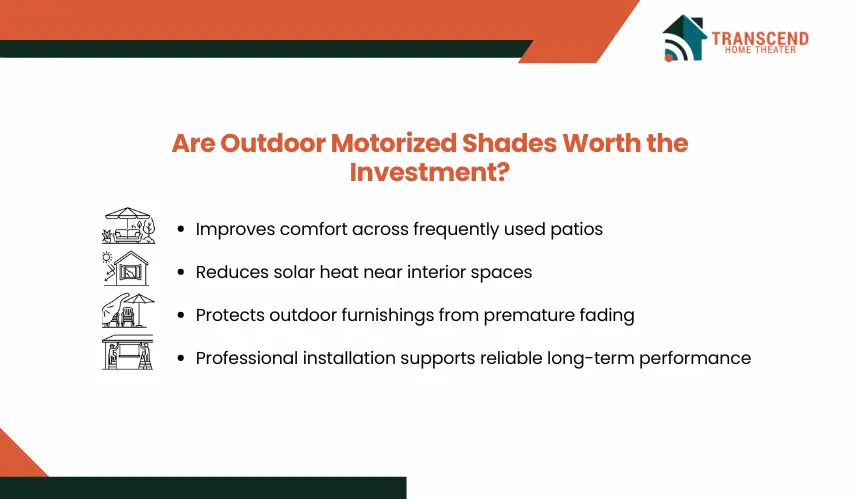
The value of outdoor motorized shades depends on how the space is used, the environmental conditions it faces, and the quality of the system installed. While they require a higher initial investment than manual shades, they often deliver measurable benefits in comfort, convenience, and long-term protection that extend beyond simple sun control.
Comparing Upfront Cost With Long-Term Comfort and Energy Savings
Motorized shades typically cost more because they incorporate electric motors, control systems, weather-resistant hardware, and specialized outdoor fabrics. However, their value should be evaluated over the lifespan of the system rather than the purchase price alone.
By limiting direct solar heat from reaching patio doors and adjacent windows, outdoor shades can reduce heat gain in nearby interior spaces during warmer months. This may lessen cooling demand in rooms directly connected to the patio while also reducing fading of flooring, furniture, and interior finishes exposed to prolonged sunlight.
When Do Motorized Shades Provide the Greatest Value?
Motorized shades deliver the strongest return when patios are used as functional living areas rather than occasional outdoor spaces. Homes with outdoor kitchens, dining areas, entertainment spaces, or west-facing patios often experience the greatest improvement because shade requirements change throughout the day.
They are also beneficial for homeowners who frequently entertain or want consistent comfort without manually adjusting shades as sunlight shifts. Properties exposed to extended afternoon sun or seasonal weather fluctuations generally benefit more than spaces that remain naturally shaded for most of the day.
Professional Installation Versus DIY Considerations
Although some motorized shade systems are marketed for self-installation, professional installation often produces better long-term results. Proper alignment, secure mounting, accurate electrical connections, and correct motor calibration all contribute to smooth operation and reduce unnecessary strain on the system.
Professional installers can also recommend the appropriate mounting method, fabric type, and automation options based on the home’s orientation and outdoor layout. This becomes particularly valuable in areas such as Kensington, MD, where mature tree canopies may provide partial shade during parts of the day, but changing sun angles and open backyard exposures still require carefully planned shade placement to achieve consistent coverage throughout the outdoor season.
How to Get the Best Performance From Outdoor Motorized Shades
A well-designed motorized shade system delivers its best results when the fabric, hardware, and installation are matched to the property’s environment. Proper selection and routine care not only improve daily performance but also reduce wear on mechanical components and extend the system’s operational lifespan.
Choosing the Right Fabric for Maryland’s Climate
Maryland experiences warm, humid summers, regular rainfall, cold winter conditions, and noticeable seasonal temperature shifts. Outdoor shade fabric must therefore resist UV exposure, moisture absorption, mildew, fading, and repeated expansion and contraction.
Corrosion-resistant hardware and dimensional stability are also essential because humidity and precipitation can affect rollers, fasteners, and side-channel performance over time.
In Kensington, MD, summer temperatures commonly reach the upper 80s °F (around 31 to 32°C), while muggy conditions are most persistent from late May through September. These conditions favor breathable solar screen fabrics that reduce heat and glare without trapping warm air around the patio. The material should also dry quickly after summer storms and remain flexible during winter, when temperatures can occasionally fall below 32°F (0°C).
Fabric openness should still reflect the patio’s orientation. A west-facing patio may require a tighter weave for stronger afternoon solar control, while a shaded or north-facing area may perform better with a more open fabric that preserves daylight and outward visibility.
Simple Maintenance Practices That Extend System Life
Although motorized shades require relatively little maintenance, regular inspections help prevent small issues from becoming costly repairs. Dirt, leaves, and other debris should be removed from the fabric and roller housing to minimize unnecessary strain during operation.
Homeowners should also periodically inspect mounting hardware, electrical connections, and moving components for signs of loosening or wear. Operating the shades only within the manufacturer’s recommended weather conditions and allowing automated safety features to function as intended can significantly reduce mechanical stress over time.
When Is It Time to Upgrade or Replace an Existing Shade System?
A shade system may no longer deliver optimal performance if the motor operates inconsistently, the fabric shows extensive fading or tearing, or automation features no longer meet the homeowner’s needs. Older systems may also lack modern safety technologies such as wind sensors or smart home integration, limiting both convenience and equipment protection.
For homeowners planning motorized shades installation in Maryland, replacement is also an opportunity to improve system performance with weather-resistant materials, updated automation controls, and professionally engineered mounting solutions suited to the state’s varied seasonal conditions. Upgrading before repeated mechanical failures occur often reduces long-term ownership costs while providing a more reliable and efficient outdoor shading system.
Ready to make your outdoor space more comfortable and functional? Transcend Home Theater provides professional motorized shade installation for homes across Maryland, Virginia, and Northwest, DC, helping you choose a system that fits your patio, lifestyle, and local climate. Contact the team today to explore smart outdoor shading solutions built for lasting performance and everyday convenience.
Frequently Asked Questions
Can motorized patio shades stay down when it rains?
Whether they should remain lowered depends on the screen material and wind conditions. Open-weave mesh allows some rain through, while clear vinyl provides stronger weather protection. Neither should be treated as permanent storm protection. Strong gusts can pull fabric from tracks or strain the motor, so follow the manufacturer’s operating limits.
Will motorized patio shades keep mosquitoes and no-see-ums out?
Only systems fitted with insect-rated mesh and sealed side tracks can meaningfully reduce mosquitoes, flies, and no-see-ums. A standard solar shade may leave gaps around the edges or use a weave too open for small pests. Ask whether the complete assembly is designed for insect control, not just whether the fabric is mesh.
Can neighbors see through outdoor patio shades at night?
Daytime privacy does not guarantee privacy after dark. When patio lighting is brighter than the area outside, silhouettes and activity may become visible through open-weave fabric. A lower openness factor improves screening, but homeowners seeking dependable nighttime privacy should consider privacy mesh, an opaque material, or a carefully planned outdoor lighting arrangement.
What happens to motorized shades during a power outage?
A hardwired shade usually stops in its current position when electricity is interrupted. Some systems retain programmed limits and control settings after power returns, while manual release, battery backup, or emergency operation varies by model. Confirm the recovery method before installation, especially when a lowered screen covers a primary patio exit.
Can motorized shades be added to an existing pergola or covered porch?
Many existing pergolas and covered porches can accept motorized shades through surface-mounted tracks or recessed housings. The structure must still provide level openings, adequate fastening points, motor clearance, and space for future servicing. An installer should verify beam strength and squareness before ordering because custom screens are manufactured for the finished opening.
Are outdoor motorized shades safe around children and pets?
Modern systems may include obstacle detection that stops or reverses the shade when resistance is detected, reducing pinching risks and fabric damage. That feature is not universal and should not replace supervision. Keep furniture, toys, pet gates, and grill equipment outside the shade’s travel path, and choose safety-compliant controls for occupied areas.