
Pet-Friendly Smart Homes: Cameras, Doors & Feeding Systems (2026 Edition)

Pet ownership has changed how people think about smart homes. Convenience alone is no longer enough. Pet owners now look for technology that actively supports safety, routine, and emotional well-being while they are away or busy.
Did you know? Pet ownership continues to grow at a national level. According to the American Pet Products Association, 94 million U.S. households own at least one pet, and total pet industry spending reached $152 billion in 2024, with further growth projected. This rapid expansion is driving demand for smarter, more pet-aware home environments. |
This shift has pushed smart home systems to evolve beyond lights and thermostats into solutions designed around animals and their daily needs. This 2026 edition explores how these systems function, what problems they solve, and how they fit into modern homes.
What Makes a Smart Home Truly Pet-Friendly?
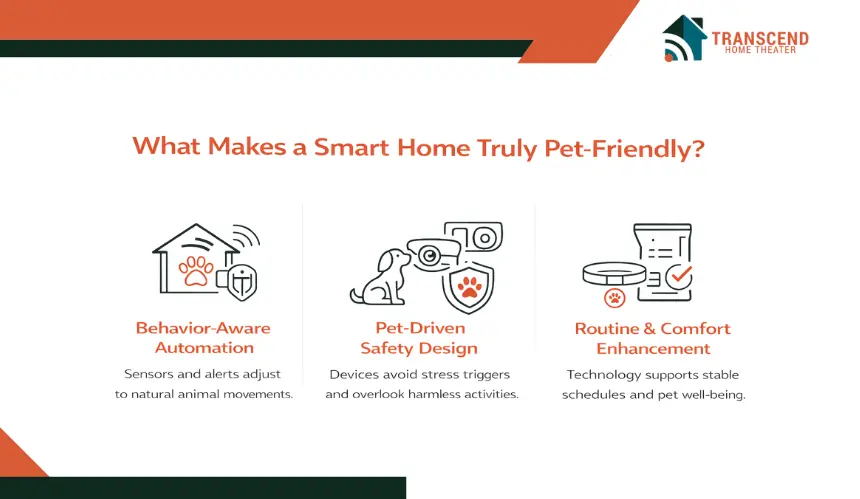
Not every smart home automatically works well for pets. Many systems are designed around human habits and movement, which can create gaps when animals are introduced into the environment. A pet-friendly smart home is defined by how intentionally it accounts for animal behavior, safety risks, and daily routines rather than simply adding devices to an existing setup.
How Pet-Centered Smart Homes Differ From Standard Automation
Traditional smart homes respond to predictable human actions such as scheduled departures, manual commands, or voice prompts. Pets move differently, act unpredictably, and cannot interact with systems intentionally.
Pet-friendly smart homes adapt to these realities by using behavior-aware automation, animal-specific motion detection, and controlled responses that reduce false alerts while still maintaining oversight.
This distinction matters because systems calibrated for humans may misinterpret pet movement as security threats or fail to recognize genuine safety concerns.
Pet-oriented automation prioritizes accurate detection, calm responses, and consistency that aligns with how animals experience their environment.
Which Design Elements Support Pet Safety and Comfort
A truly pet-friendly smart home integrates safety-driven design at every level. This includes pet-safe sensors that ignore routine movement while identifying unusual behavior, automated systems that reduce environmental stress, and devices that function reliably without frequent manual correction.
Comfort also plays a role, as stable routines and predictable responses help pets feel secure when owners are not present.
Smart technology designed with animals in mind focuses on minimizing disruption rather than adding complexity. When systems quietly support feeding schedules, access control, and passive monitoring, pets benefit without being overstimulated or confused by their surroundings.
Why Pet Behavior and Daily Routines Shape Smart Home Decisions
Pets thrive on routine, and smart homes must reinforce that structure rather than disrupt it. Feeding times, rest periods, and access to certain areas all contribute to emotional stability. Pet-friendly smart homes are built around these patterns, using automation to maintain consistency even when owners are away.
By aligning technology with natural behavior instead of forcing adaptation, smart homes become supportive environments rather than reactive systems. This behavior-first approach is what separates general smart automation from homes that are genuinely designed for pet well-being.
Smart Pet Cameras: Monitoring Behavior, Safety, and Daily Activity
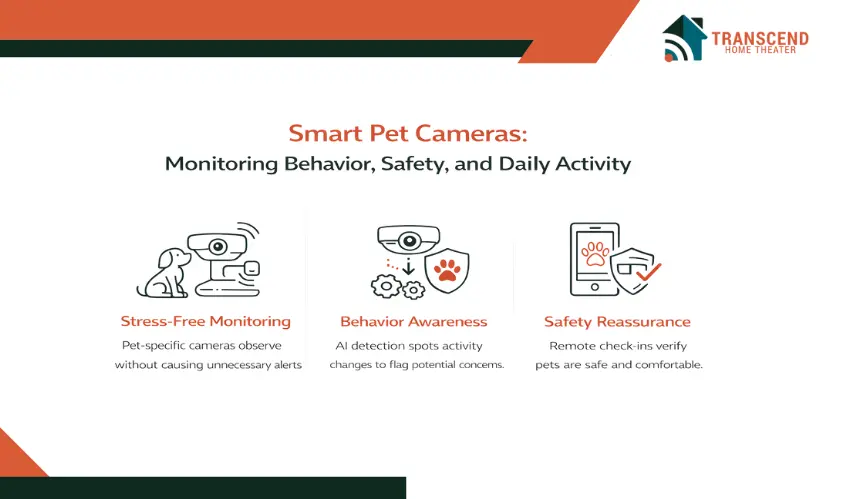
Once the foundation of a pet-friendly smart home is established, visibility becomes the next priority. Pet cameras serve a different purpose than standard indoor security cameras. They are designed to observe animals without creating constant alerts or unnecessary intervention.
Their value lies in awareness rather than control, allowing owners to understand what happens when pets are alone.
Smart Pet Cameras For Remote Supervision Without Disruption
Smart pet cameras provide real-time visibility into a pet’s environment while remaining unobtrusive. Unlike traditional security cameras that react aggressively to motion, pet monitoring cameras use animal-calibrated detection to recognize normal movement patterns.
This reduces false notifications while still alerting owners to meaningful changes such as prolonged inactivity, unusual pacing, or restricted movement.
Remote access through mobile apps allows owners to check in visually rather than relying on assumptions. This form of supervision reassures pet owners without interfering with the pet’s natural behavior, which is essential for reducing stress and maintaining routine comfort.
Did you know? Smart cameras are one of the fastest-growing categories in home automation. Industry research shows that adoption of smart cameras in U.S. households increased by 4% year over year, reflecting growing reliance on visual monitoring for both security and pet supervision. |
AI-Powered Cameras to Interpret Pet Behavior Patterns
Modern pet cameras increasingly rely on artificial intelligence to move beyond simple observation. These systems analyze behavior trends over time rather than reacting to isolated moments. Changes in activity levels, repetitive movements, or signs of restlessness can be flagged as potential concerns instead of triggering constant alerts.
Behavior-aware monitoring helps owners identify subtle shifts that may signal anxiety, boredom, or discomfort. This insight supports informed decisions about care adjustments, enrichment, or scheduling changes, turning passive monitoring into a meaningful understanding of pet activity.
When Camera-Based Monitoring Improves Pet Safety at Home
Pet cameras play a critical role in safety when animals have access to multiple rooms or remain alone for extended periods. Visual confirmation allows owners to verify that pets are not trapped, distressed, or interacting with unsafe objects.
This is especially valuable in homes with automated doors, feeding systems, or open layouts where movement is less predictable.
Rather than acting as surveillance tools, smart pet cameras function as reassurance systems. They help owners stay emotionally connected while ensuring pets remain safe, comfortable, and undisturbed within their familiar environment.
Did you know? Veterinary behavioral studies estimate that 5% to over 17% of dogs experience separation-related stress based on owner surveys, while behavior clinics report rates as high as 20% to 40%. |
Smart Pet Doors: Controlled Freedom Without Compromising Security
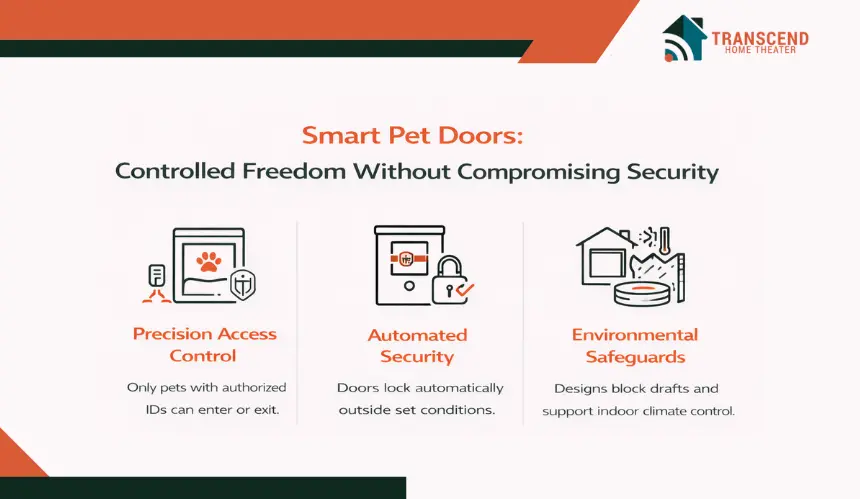
As visibility and monitoring are addressed, controlled movement becomes the next consideration in a pet-friendly smart home. Pets benefit from independence, but unrestricted access can introduce safety and security risks.
Smart pet doors solve this challenge by allowing movement that is intentional, regulated, and aligned with household boundaries rather than relying on constant human intervention.
How Smart Pet Doors Manage Access With Precision
Smart pet doors operate through identification-based access rather than open entry. Microchip recognition, RFID tags, and app-based permissions ensure that only authorized pets can use the door. This eliminates common concerns such as other animals entering the home or pets leaving at unsafe times.
Access rules can be customized to match daily routines, weather conditions, or time-based schedules. This precision allows pets to enjoy autonomy while maintaining control over when and how movement occurs, creating a balance between freedom and protection.
How Smart Pet Doors Enhance Home Security and Environmental Control
Security remains a central concern when adding automated access points. Smart pet doors are designed to lock automatically when conditions fall outside approved parameters. This prevents forced entry and reduces vulnerabilities commonly associated with traditional flap-style doors.
Environmental control also plays a role. Insulated designs help maintain indoor temperatures, while smart locking mechanisms prevent drafts and exposure during extreme weather. These features ensure that convenience does not come at the expense of comfort or energy efficiency.
Which Living Situations Benefit Most From Smart Pet Door Systems
Smart pet doors are particularly effective in homes where pets transition between indoor and outdoor spaces. Single-family homes with fenced yards, multi-level houses, and properties with variable schedules benefit from controlled access automation. Apartments and shared spaces can also use smart doors internally to manage room access without confinement.
By tailoring access to specific environments and lifestyles, smart pet doors support independence without introducing unnecessary risks. This controlled approach aligns movement with safety, reinforcing the role of smart homes as structured and responsive spaces for pets.
Automated Feeding Systems: Precision, Consistency, and Nutrition Control
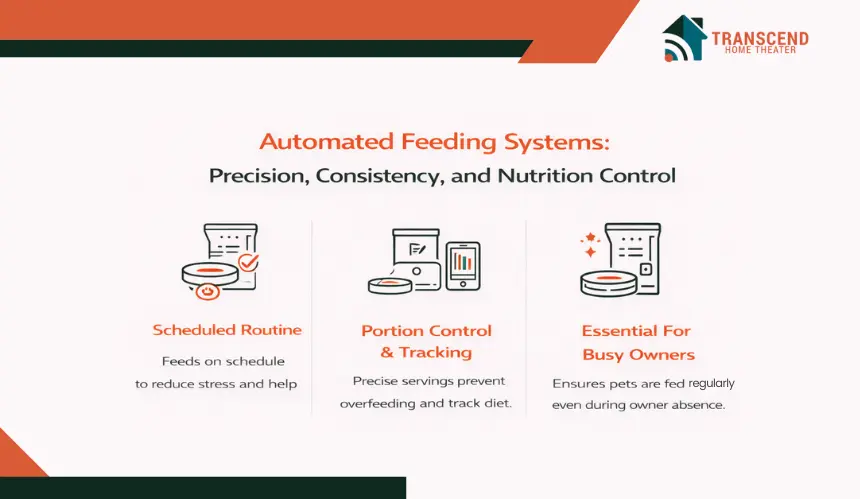
Once movement and monitoring are handled, feeding becomes the most sensitive aspect of pet automation. Meals are closely tied to health, behavior, and emotional stability.
Automated feeding systems focus on delivering consistency and accuracy rather than convenience alone, ensuring pets receive the right amount of food at the right time without disruption.
How Automated Feeding Systems Maintain Consistent Routines
Automated feeders are designed to replicate dependable feeding schedules even when owners are unavailable. Scheduled dispensing prevents delayed meals, which can trigger anxiety or behavioral issues in pets that rely on routine. Unlike manual feeding, automation removes variability caused by busy schedules or travel disruptions.
Consistency also supports digestive health. Predictable meal timing helps regulate metabolism and energy levels, especially for pets prone to weight fluctuations or food sensitivity. This reliability turns feeding into a stable anchor within a smart home environment.
How Portion Control and Diet Tracking Improve Pet Health
Modern feeding systems emphasize portion precision rather than simple dispensing. Measured servings reduce overfeeding and support dietary plans recommended by veterinarians. Some systems track consumption patterns, allowing owners to notice skipped meals or reduced appetite before issues escalate.
In multi-pet households, controlled feeding prevents food competition and uneven intake. Individualized access ensures each pet receives appropriate nutrition, reinforcing balanced health management without requiring constant supervision.
When Automated Feeding Becomes Essential for Busy Households
Automated feeding systems are especially valuable for owners with long work hours, irregular schedules, or frequent travel. They reduce reliance on third-party care while maintaining structure pets depend on. By removing uncertainty from daily feeding, these systems contribute to calmer behavior and improved overall well-being.
Integrating Pet Systems Into a Unified Smart Home Ecosystem
As individual pet devices become more common, integration determines how effective they are long term. A unified smart home ecosystem ensures that cameras, doors, and feeding systems function cohesively rather than operating in isolation. This coordination improves reliability and reduces management complexity.
How Smart Home Platforms Centralize Pet Automation
Centralized platforms allow pet-focused devices to operate within a single interface. Instead of managing separate apps, owners can monitor activity, adjust schedules, and receive alerts from one control point. This consolidation simplifies daily oversight and minimizes missed notifications.
Compatibility with broader smart home hubs ensures pet systems align with existing automation. Lighting, climate control, and security systems can function alongside pet technology without interference, maintaining a balanced household environment.
How Cross-Device Automation Enhances Daily Pet Care
Integrated systems enable automation scenarios that respond intelligently rather than mechanically. Feeding alerts can trigger visual checks through cameras. Door access can adjust based on time or environmental conditions. These interactions support pets without requiring constant manual input.
By coordinating responses across devices, smart homes shift from reactive tools to supportive environments. Automation becomes adaptive, reinforcing structure while remaining flexible to real-world conditions.
Safety, Privacy, and Ethical Considerations for Pet Smart Devices
As smart technology becomes more involved in pet care, responsibility becomes essential. Safety, privacy, and ethical use determine whether these systems truly enhance well-being or introduce unintended stress. Thoughtful implementation protects both pets and households.
How Data Privacy and Security Affect Pet Monitoring Systems
Pet cameras and feeding systems often rely on cloud connectivity, raising valid concerns about data handling. Secure networks, encrypted storage, and controlled access protect household information while ensuring monitoring remains private. Choosing systems with transparent data policies helps maintain trust.
Limiting unnecessary data collection reduces exposure without sacrificing functionality. Pet-focused devices should prioritize essential insights rather than continuous surveillance.
How Ethical Use of Pet Smart Devices Prevents Stress and Overmonitoring
Constant observation or excessive alerts can disrupt pets rather than support them. Ethical use involves setting boundaries that respect natural behavior. Monitoring should inform care decisions, not replace trust in routine or create constant intervention.
Responsible automation emphasizes calm oversight, allowing pets to move, rest, and eat without excessive interruption. When technology supports rather than dominates, it aligns with animal welfare principles.
Choosing the Right Pet-Friendly Smart Home Setup in 2026
With a growing range of options, selecting the right setup requires matching technology to lifestyle rather than chasing features. Effective systems are those that integrate smoothly into daily routines without overwhelming pets or owners.
How Pet Type and Household Structure Influence Device Selection
Different pets have different needs. Dogs often benefit from controlled access and activity monitoring, while cats may require quieter systems with minimal alerts. Household size, pet age, and behavior patterns all influence which devices add genuine value.
Considering these factors prevents unnecessary complexity. The goal is targeted support rather than complete automation.
How to Plan for Scalability and Future Technology Changes
Smart homes evolve, and pet systems should adapt without requiring replacement. Modular setups allow gradual expansion as needs change. Firmware updates and compatibility with emerging standards help maintain relevance beyond initial installation.
Planning for flexibility ensures investments remain useful as technology advances and household dynamics shift.
Frequently Asked Questions
How reliable are pet-friendly smart home systems during power or internet outages?
Most pet-focused smart devices are designed with fail-safe modes that preserve basic functionality during disruptions. Feeding systems often retain scheduled settings locally, while smart doors default to secure positions. Backup power options and local data storage help maintain stability until connectivity is restored.
Can smart pet systems adapt as pets age or develop health limitations?
Pet-friendly smart homes can be adjusted over time to match changing mobility, energy levels, or medical needs. Feeding schedules, access permissions, and monitoring sensitivity can be refined as pets mature. This adaptability allows technology to support long-term care without forcing major system changes.
Are pet-friendly smart devices suitable for homes with children or guests?
Yes, when configured correctly. Access controls, permissions, and alerts can be limited to prevent accidental activation. Smart systems designed for pets often include safeguards that prevent misuse, making them compatible with busy households that include children or frequent visitors.
How much maintenance do pet smart home devices typically require?
Most devices require minimal upkeep beyond occasional cleaning, software updates, and battery checks. Feeding systems may need routine sanitation, while cameras and doors benefit from periodic inspections. Regular maintenance ensures accuracy and prevents gradual performance decline.
Do pets usually need training to adjust to smart home devices?
In most cases, pets adapt naturally with minimal guidance. Smart systems are designed to respond passively rather than demand interaction. Gradual exposure and positive reinforcement help pets associate devices with routine comfort rather than disruption, leading to smooth long-term adoption.