
Smart Apartments & Multi-Unit Buildings: How Automation Is Going Vertical in 2026

Automation in smart apartments and multi-unit buildings is advancing rapidly as property owners turn to connected systems that improve convenience, energy performance, and daily living inside high-density communities.
The strongest trend shaping this evolution is vertical automation, where entire buildings integrate shared controls, centralized intelligence, and coordinated device networks across multiple floors rather than relying on isolated, unit-level setups.
This blog will break down how this transformation works, what technologies power it, and why multi-unit properties are embracing smarter, more connected vertical environments in 2026.
Why High-Rise and Multi-Unit Buildings Are Becoming the Next Smart-Home Frontier
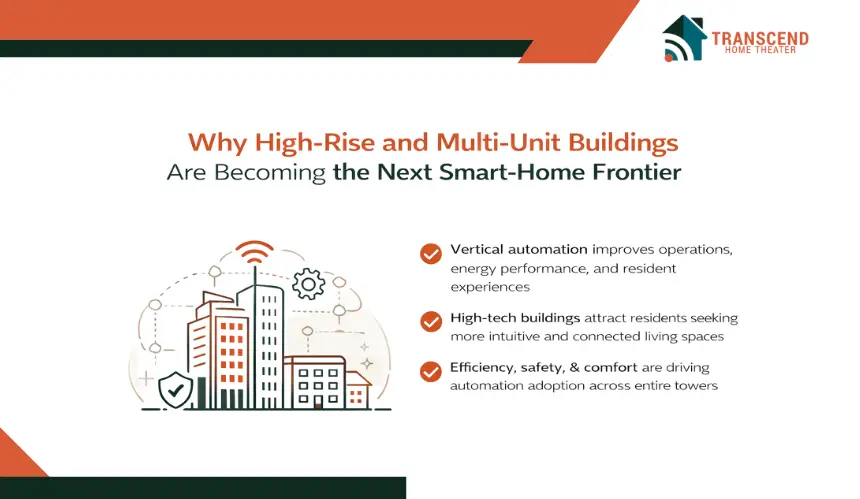
High-rise and multi-unit buildings are accelerating their adoption of smart technology because vertical automation has already proven its value in improving daily operations, energy performance, and resident experiences.
By 2025, many properties were already integrating building-wide controls, shared sensor networks, and centralized management tools that reduced inefficiencies and created smoother living environments. In 2026, this momentum continues as owners look for even greater stability, responsiveness, and long-term cost savings across entire towers.
Residents are also influencing this shift as they seek living spaces that feel more intuitive and connected. Features like keyless entry, automated lighting in shared corridors, app-based service requests, and real-time building updates offer a sense of comfort, belonging, and ease.
These changes position multi-unit buildings as one of the most important sectors in the smart living landscape, where automation is not only desired but increasingly essential for efficiency, safety, and resident satisfaction.
Core Technologies Powering Smart Multi-Unit Buildings
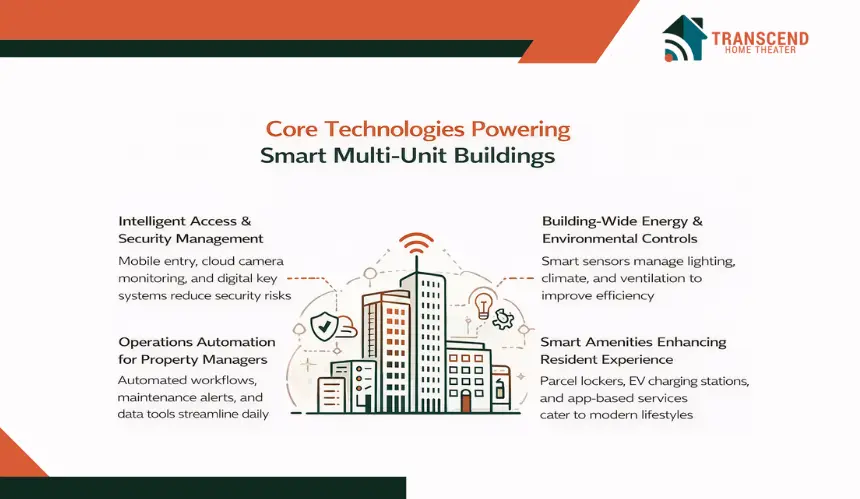
Smart multi-unit buildings depend on a collection of connected systems that work together to support smoother operations, stronger security, and more comfortable living environments.
These technologies form the foundation that allows vertical automation to function consistently across multiple floors and shared spaces.
1. Intelligent Access & Security Management
Smart access systems bring a higher level of safety and ease to large properties by replacing physical keys with digital credentials that are managed through secure platforms.
Features such as mobile entry, controlled visitor access, and cloud-based camera monitoring help reduce security risks while giving residents a sense of confidence in their building.
Property teams benefit from streamlined control since they can adjust permissions, track activity, and respond to alerts without relying on manual checks.
2. Building-Wide Energy & Environmental Controls
Energy and environmental controls help maintain comfort and reduce wasted resources by adjusting lighting, heating, cooling, and ventilation based on real-time conditions.
These tools use sensors to detect occupancy patterns, temperature shifts, and air quality changes, guiding the building toward healthier and more efficient operation.
In multi-unit settings, these systems improve consistency across floors while supporting sustainability goals that matter to both owners and residents.
3. Operations Automation for Property Managers
Automation supports property managers by turning routine tasks into guided, data-driven processes. Predictive maintenance alerts, equipment performance tracking, and automated workflow tools reduce unexpected downtime and help teams respond before issues become disruptive. This builds trust with residents who appreciate faster resolutions and more stable building functions.
4. Smart Amenities Enhancing Resident Experience
Smart amenities create daily conveniences that help residents feel more connected to their building. Automated parcel lockers, EV charging management, app-based space reservations, and digitally enhanced communal areas support modern lifestyles with less friction. These features turn large properties into communities that feel adaptable and welcoming.
How Smart Technology Enhances Life for Residents in Multi-Unit Buildings
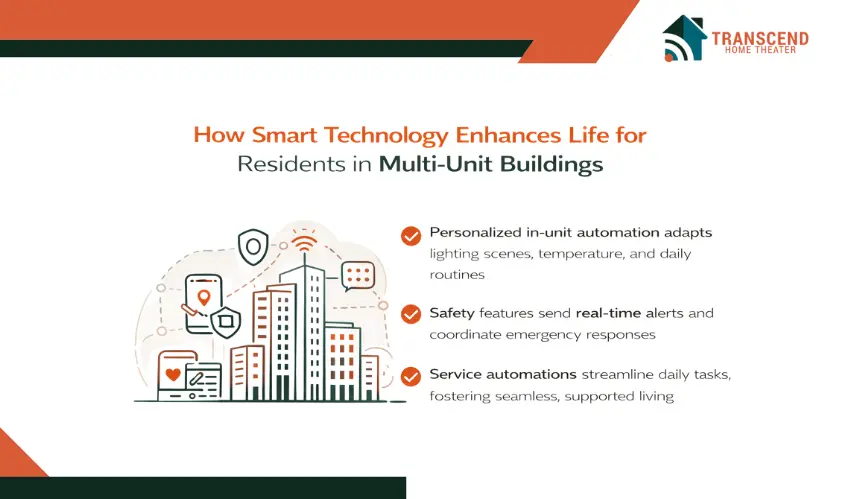
Smart technology is creating a living experience that feels more personalized, intuitive, and emotionally reassuring for residents. People want homes that respond to their routines and make daily life feel easier, and multi-unit buildings are using digital tools to meet those expectations.
1. Personalized In-Unit Automation That Syncs With Building Systems
In-unit automation helps residents create a space that feels uniquely their own. Adjustable lighting scenes, temperature preferences, and custom routines allow individuals to shape their environment to match their lifestyle.
These features work smoothly with the building’s larger systems so each apartment feels private and independent while still benefiting from the stability of shared digital infrastructure.
This balance gives residents a comforting sense of control over their personal space while knowing the building supports them behind the scenes.
2. Safety Enhancements: Real-Time Alerts and Integrated Emergency Systems
Safety-focused technology offers residents peace of mind through timely alerts and coordinated building responses. Features such as connected smoke detection, leak notifications, and emergency communication tools keep residents informed whenever something unexpected happens.
These systems create a feeling of reassurance by making sure that important information reaches people quickly and consistently during urgent moments.
3. Seamless Living Through Service Automations
Service automations help residents navigate their daily routines with fewer interruptions. Tools that simplify parking coordination, manage shared spaces, or track service requests reduce the friction that often comes with living in large communities.
When these interactions flow smoothly, residents feel more supported and valued because the building responds to their needs without requiring constant follow up.
The New Vertical Infrastructure: How Smart Tech Is Being Layered Into Towers
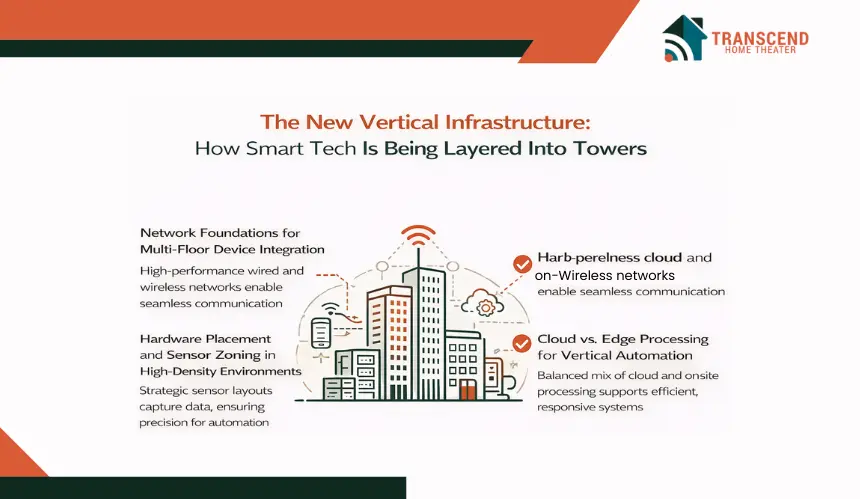
Creating a fully automated multi-unit building requires strong digital infrastructure that can support continuous communication, stable device performance, and coordinated responses across multiple floors.
This behind-the-scenes foundation makes vertical automation dependable for both residents and property teams. The goal is to build a structure that stays responsive, secure, and adaptable as new technologies emerge.
1. Network Foundations for Multi-Floor Device Integration
Modern smart buildings rely on network architecture that can handle the high volume of data exchanged between sensors, devices, and control platforms.
Fiber cabling, structured Ethernet, and high-performance wireless systems help maintain steady communication across every level of the property.
These networks provide the bandwidth needed for automation tasks, ensuring that commands, alerts, and updates move quickly between floors without delay.
2. Hardware Placement and Sensor Zoning in High-Density Environments
Smart buildings use carefully planned sensor layouts to capture accurate information and support automation decisions. Devices are placed in strategic positions such as hallways, mechanical rooms, elevator areas, and entry points where consistent data collection is essential.
Each zone is monitored independently so that lighting adjustments, occupancy readings, or environmental measurements respond precisely to what is happening in that specific part of the building.
3. Cloud vs. Edge Processing for Vertical Automation
Automated buildings depend on a mix of cloud and on-site processing to keep their systems stable and responsive.
Cloud platforms handle broader tasks such as data storage, reporting, and remote access, while edge processing allows time-sensitive actions to occur directly within the building.
This division helps maintain speed and reliability, especially in high-rise environments where many devices need immediate responses.
Challenges Slowing Adoption and How Developers Are Solving Them
Smart automation brings enormous value to multi-unit properties, yet the path to full adoption is not always simple. Buildings vary in age, design, and technical readiness, and these differences create hurdles that developers must navigate carefully.
1. Infrastructure Compatibility and Legacy System Replacement
Older buildings often rely on systems that were never designed for digital automation, which makes upgrades more complex. Outdated wiring, aging mechanical components, and inconsistent layouts can limit how easily new technology can be introduced.
Smart home automation experts are addressing this by creating phased upgrade plans that replace legacy parts incrementally, allowing properties to modernize without major disruptions. This approach helps property owners feel more confident about improving their buildings one layer at a time.
2. Data Privacy and Multi-Tenant Cybersecurity
Security concerns are among the most sensitive issues residents face. Multi-tenant buildings store large volumes of digital data, which makes privacy protection essential. Developers are adopting stronger encryption, isolated data pathways, and strict verification protocols to prevent unauthorized access. These safeguards reassure residents that their information remains protected and help property operators maintain trust throughout the community.
3. Cost Barriers and New Funding Models
For many building owners, cost is a major consideration. Smart automation requires investment in hardware, networking, and ongoing system support. To reduce financial strain, developers are embracing new funding models that combine utility savings, sustainability incentives, and shared-cost approaches between ownership groups.
These strategies make it easier for properties to adopt technology that pays off in comfort, reliability, and long-term value.
Choosing the Right Technology Stack for a Smart Multi-Unit Building in 2026
Selecting the right technology stack is a crucial step for property developers and managers who want systems that remain reliable, adaptable, and future-ready.
A smart building performs best when its components work together smoothly, so each decision must support long-term growth rather than short-term convenience.
Evaluating Vendor Ecosystems vs. Open-Platform Approaches
Some building owners prefer all-in-one solutions that come from a single vendor, while others choose open platforms that integrate devices from multiple brands. Vendor ecosystems offer simplicity and unified support, creating a single point of management.
Open-platform systems provide flexibility and reduce lock-in, giving properties the freedom to add or swap devices as needs change. The right choice depends on how much control and customization a property wants over time.
Prioritizing Scalability, Maintenance, and Upgradability
A strong technology stack should grow with the building instead of becoming a limitation. Systems that allow remote updates, modular expansions, and long-term maintenance support help properties stay current as new innovations appear.
This creates emotional reassurance for building owners because they know their investment will continue to support future capabilities rather than require expensive replacements.
Compliance, Certifications and Emerging Standards in 2026
Energy codes, data standards, and communication guidelines are evolving quickly as cities and regulatory bodies push for higher efficiency and better digital safety. Choosing technology that aligns with recognized certifications and emerging standards helps properties avoid complications later and ensures long-term compatibility.
This also strengthens credibility for owners who want to attract residents that value environmentally responsible and technologically reliable living spaces.
If you want your property to move confidently into the future of connected living, Transcend Home Theater can help you build a smart infrastructure that supports comfort, efficiency, and long-term reliability. Reach out today to explore solutions tailored to the needs of modern multi-unit communities.
Frequently Asked Questions
How do smart building platforms handle outages or temporary internet failures?
Most platforms use backup connectivity, offline operation modes, or local controllers that keep essential functions active during internet disruptions. This ensures basic building features continue working until full connectivity is restored.
Can residents customize the amount of automation they want in their apartment?
Many smart systems allow flexible participation levels. Residents can adjust personal settings, disable certain apartment features, or choose optional services so the automation fits their comfort level.
What types of insurance benefits are available for automated multi-unit properties?
Some insurance providers offer reduced premiums for buildings that use water monitoring, early detection sensors, or advanced security tools. These technologies lower risk, which makes coverage more cost effective.
How long does it typically take to fully transition a building to a smart environment?
Timelines vary based on building size, existing infrastructure, and the scope of automation. Many projects begin with priority upgrades and expand in stages to limit disruption and maintain normal operations.
Are there accessibility features in smart multi-unit buildings for elderly or mobility-challenged residents?
Yes, features such as voice-activated controls, automated lighting paths, simplified building apps, and sensor-driven support tools help residents with mobility needs navigate the environment more comfortably and safely.
How do smart buildings support sustainability goals beyond energy savings?
Smart buildings can track water usage, reduce waste through controlled resource management, and support green certifications by documenting environmental performance. These tools help owners meet broader sustainability commitments.