
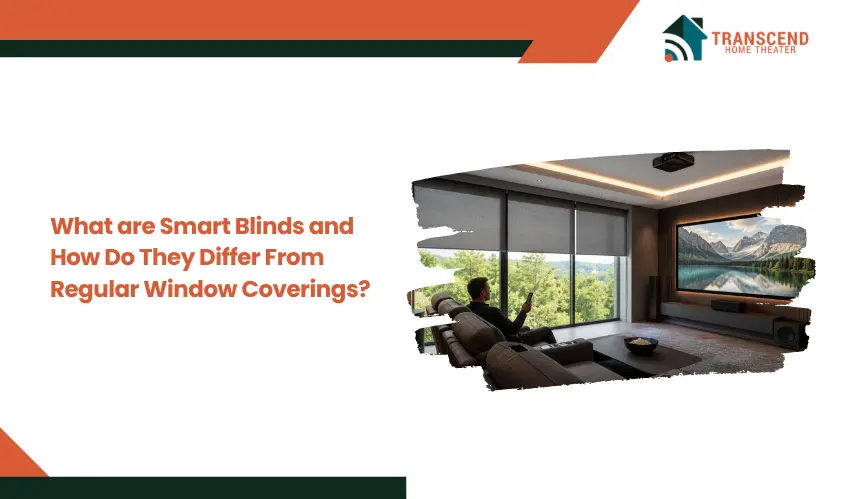
What are Smart Blinds and How Do They Differ From Regular Window Coverings?
Key Takeaways:
|
Choosing the right window covering is no longer just about blocking light or maintaining privacy. As homes adopt connected technologies, traditional blinds often fall short in delivering control, efficiency, and adaptability. Many users struggle to understand whether upgrading to automated solutions actually provides measurable benefits or just adds complexity.
Smart blinds introduce motorization, remote control, and environmental responsiveness, but their real value depends on how they differ from standard options in daily use. This article breaks down what smart blinds are and how they compare to regular window coverings in terms of functionality, performance, and decision-making impact.
What Defines Regular Window Coverings?
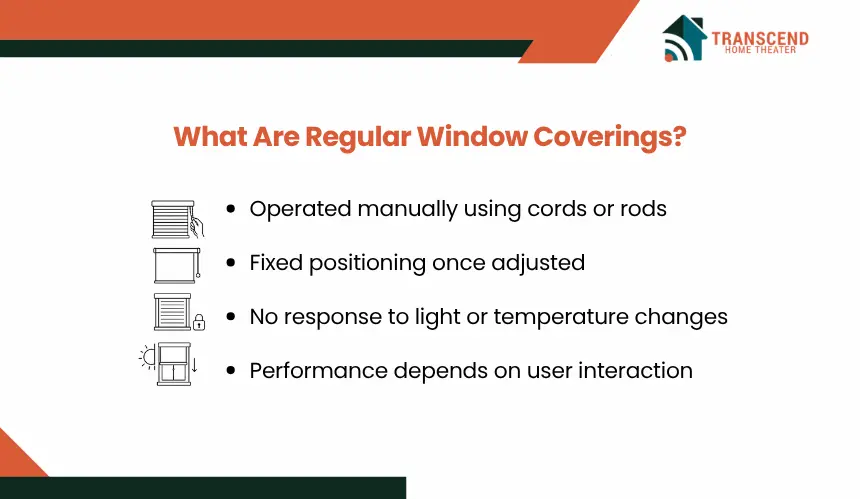
Regular window coverings are manually operated systems designed to control light and privacy through physical adjustment. They rely on cords, rods, or spring mechanisms to raise, lower, or tilt, with no automation or external control.
Common formats include roller blinds, Venetian slats, and fabric shades, each offering fixed functionality once positioned. Since they do not respond to environmental changes such as sunlight intensity or indoor temperature, performance depends entirely on user interaction throughout the day.
What Are Smart Blinds and How Do They Work?
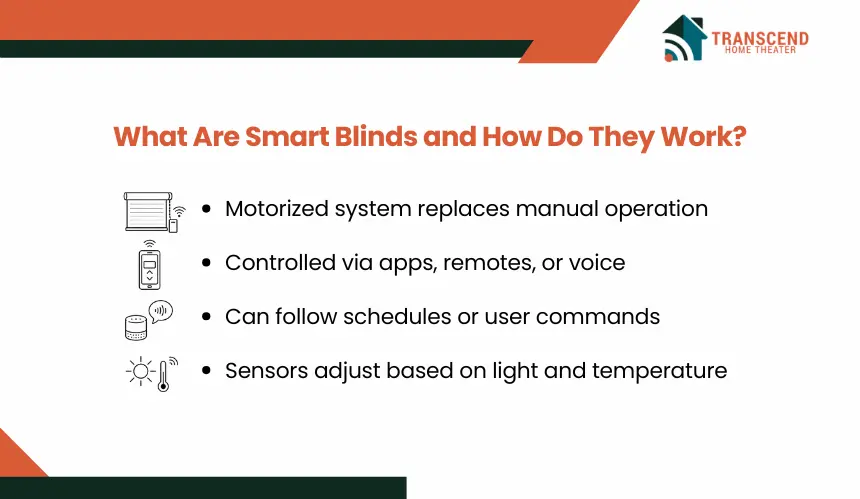
Smart blinds are automated window coverings designed to adjust positioning based on user input or environmental conditions.
Unlike manual systems, they rely on integrated motors, connectivity protocols, and control interfaces to enable remote operation and scheduled behavior.
Core Components Behind Smart Blinds
Motorized mechanisms drive the movement of the blinds, replacing manual cords or wands with precision-controlled motion. These motors are connected to communication modules such as Wi-Fi, Bluetooth, or Zigbee, allowing the system to receive commands from external devices.
Power is supplied through rechargeable batteries, direct wiring, or solar panels, each influencing installation complexity and maintenance requirements.
How Do Users Control Smart Blinds?
Control occurs through multiple input layers, depending on system configuration. Mobile applications provide centralized access for adjusting position, setting schedules, and monitoring status. Voice commands via platforms like Amazon Alexa or Google Assistant enable hands-free operation.
Advanced setups incorporate sensors that trigger automatic adjustments based on sunlight intensity, temperature shifts, or occupancy patterns, removing the need for constant manual input.
Integration With Smart Home Ecosystems
Smart blinds function as part of a broader automation network when integrated with platforms such as Apple HomeKit. This integration allows coordinated actions, such as lowering blinds when indoor temperatures rise or aligning with lighting systems to maintain consistent brightness levels.
The result is a synchronized environment where window coverings contribute to overall energy management, comfort optimization, and system-wide automation efficiency.
Smart Blinds vs Regular Blinds: Key Differences That Matter
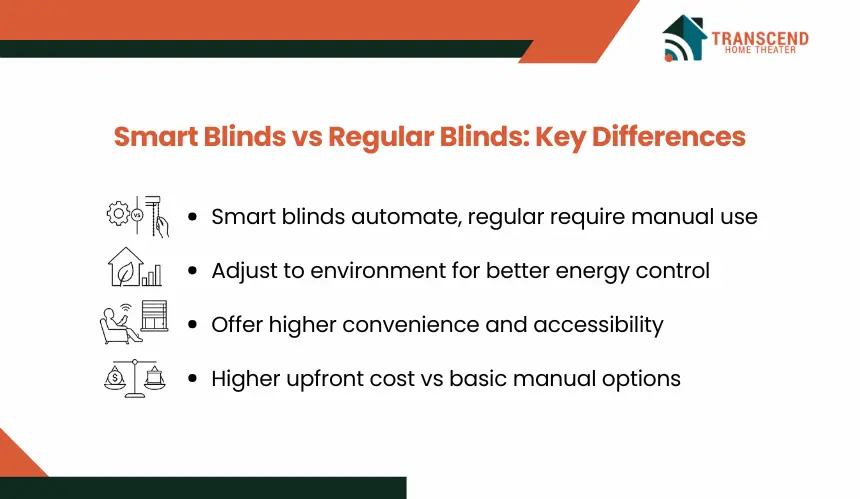
This comparison focuses on operational, performance, and usability differences that directly affect daily use and long-term value.
1. Automation vs Manual Control
Smart blinds execute commands through schedules, sensors, or remote inputs, enabling consistent adjustments without user presence. Regular blinds require repeated physical interaction, which introduces inconsistency in light control and limits responsiveness to changing conditions throughout the day.
2. Energy Efficiency and Environmental Response
Smart systems can react to sunlight intensity and indoor temperature by adjusting position in real time, reducing heat gain during peak hours and limiting heat loss when temperatures drop. Traditional blinds remain static, which means energy performance depends on how frequently and accurately users adjust them.
3. Convenience, Accessibility, and User Experience
Automated control eliminates the need to manually reach or adjust blinds, which becomes critical in spaces with high ceilings, large window spans, or limited accessibility. Regular blinds create friction in these scenarios, especially when frequent adjustments are required to maintain comfort or visibility.
4. Installation Complexity and Cost Considerations
Smart blinds involve higher upfront costs due to motorization, connectivity, and setup requirements. However, they offer operational advantages that can offset manual effort and improve environmental control over time. Regular blinds are simpler to install and more cost-effective initially, but they do not provide ongoing functional gains beyond basic coverage.
When Should You Choose Smart Blinds Over Regular Options?
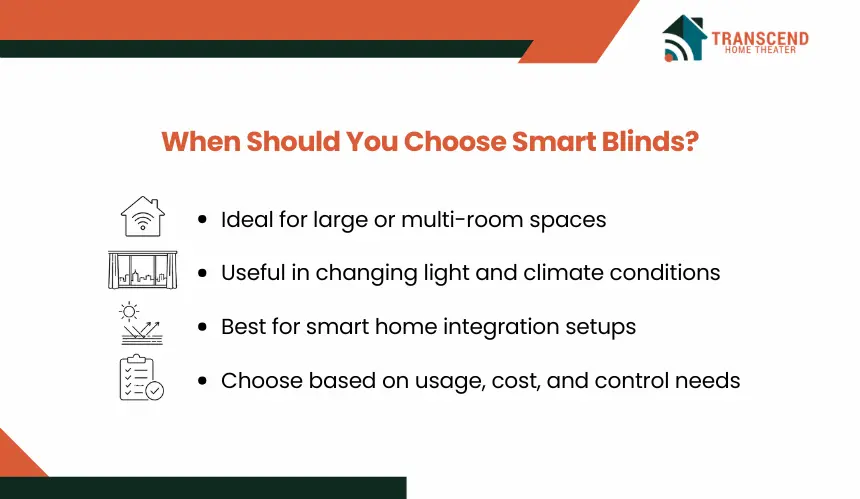
The decision depends on how much control, automation, and integration the environment actually requires. Instead of focusing on features, the selection should be based on usage patterns, property scale, and long-term operational needs.
Ideal Scenarios for Smart Blinds
Smart blinds are most effective in environments where manual adjustment becomes inefficient or inconsistent. This includes properties with large window areas, multiple rooms requiring synchronized control, or spaces exposed to varying sunlight throughout the day.
They also fit well in connected homes where automation systems are already in place and can be extended for centralized control.
How Does the Local Environment Influence the Choice?
Environmental conditions directly affect how often blinds need adjustment and how much value automation delivers. In Virginia, seasonal variation creates frequent shifts in daylight intensity and indoor temperature, increasing the need for consistent adjustments throughout the year.
In Maryland, humidity and sun exposure patterns can impact indoor comfort, making automated positioning more useful for maintaining stable conditions.
In dense urban areas like Washington, D.C., where buildings experience uneven light exposure due to surrounding structures, automated blinds help manage changing light angles without constant manual correction.
When Do Traditional Blinds Make More Practical Sense?
Regular blinds remain suitable in low-demand settings where adjustments are infrequent and environmental conditions are stable. Single-room applications, rental properties, or spaces with minimal exposure to sunlight do not typically justify the added complexity or cost of automation.
What Factors Should Guide the Final Decision?
The choice should be evaluated across three variables:
- Control requirements: frequency of adjustments and need for remote or automated operation
- System compatibility: whether the property already uses connected platforms or standalone setups
- Cost vs functional return: whether the operational benefits justify the initial investment based on usage patterns
A clear assessment of these factors ensures the decision aligns with actual needs rather than perceived convenience.
Upgrading to smarter living starts with the right systems in place. Transcend Home Theater delivers tailored smart shading solutions that integrate seamlessly with your home environment, giving you precise control, efficiency, and long-term performance without complexity.
Frequently Asked Questions
Do smart blinds work if the internet goes out?
Smart blinds can usually still operate through wall switches, remotes, Bluetooth control, or preset local controls, depending on the system. Internet loss mainly affects app-based remote access, cloud automations, and voice assistant commands. Wired or hub-based systems often maintain more reliable local operation than Wi-Fi-only setups.
Are smart blinds worth it for a home that is not fully automated?
Smart blinds can still be valuable in a non-automated home if the windows are hard to reach, receive strong sunlight, or require frequent adjustment. A full smart home system is not always necessary. Many motorized shades work independently through remotes, timers, or mobile apps.
Can regular blinds be converted into smart blinds?
Some regular blinds can be retrofitted with motorized kits, but compatibility depends on the blind type, weight, headrail design, and lift mechanism. Roller shades are usually easier to automate than older corded or uneven systems. Custom smart blinds often provide cleaner performance and fewer calibration issues.
How long do smart blind batteries usually last?
Battery life depends on blind size, motor strength, usage frequency, and wireless protocol. Many rechargeable smart blind batteries last several months between charges under normal use. Larger shades, daily automation schedules, and heavy fabrics may require more frequent charging than smaller window coverings.
Are smart blinds safe for homes with children or pets?
Smart blinds often improve safety because many systems remove exposed cords, which are a common risk in traditional window coverings. Motorized operation also reduces pulling, tangling, and manual strain. For family spaces, cordless smart shades provide safer light control without leaving hanging cords near children or pets.
What should homeowners check before buying smart blinds?
Homeowners should confirm window measurements, power options, Wi-Fi or hub compatibility, control preferences, and integration with platforms like Alexa, Google Assistant, Apple HomeKit, or other smart home systems. They should also consider whether they need room-by-room control, whole-home automation, or simple scheduled operation.