
What is Smart Home Integration and Why Does it Matter?
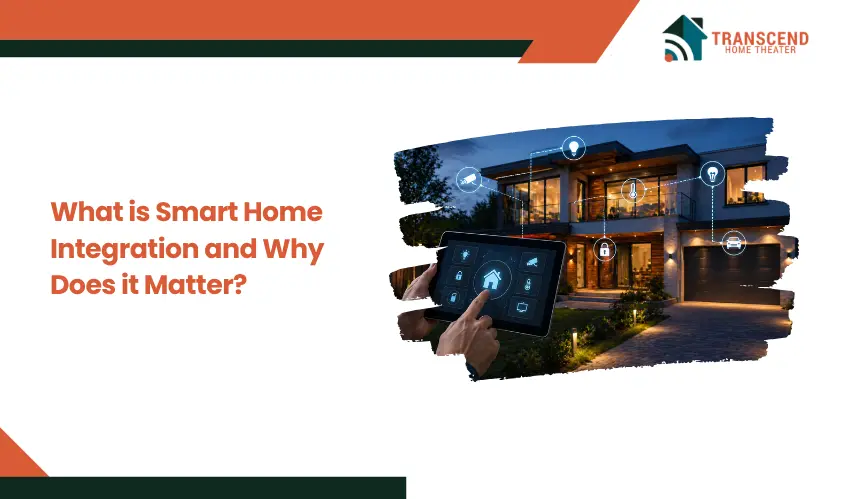
Disconnected devices, manual controls, and inconsistent automation often limit the real value of a “smart home.” Many setups include multiple smart devices, but without integration, they operate in isolation and create more complexity instead of efficiency.
Smart home integration solves this by connecting devices into a unified system where they communicate, automate tasks, and respond intelligently to user behavior and environmental inputs. This blog explains how smart home integration works and why it plays a critical role in building a truly functional and future-ready living environment.
What Is Smart Home Integration in Practical Terms?
Smart home integration refers to structuring connected devices into a single coordinated system rather than managing them individually. The focus is not on adding more devices, but on enabling them to operate as a unified environment with shared logic and centralized control.
In an integrated setup, devices such as lighting systems, thermostats, security cameras, and appliances communicate through a central platform or hub. This system processes inputs from sensors, user commands, or schedules, then triggers actions across multiple devices simultaneously. For example, a single command can adjust lighting, temperature, and security settings based on predefined conditions.
The distinction lies between isolated smart devices and an integrated ecosystem. A standalone smart bulb can be controlled through an app, but it does not interact with other devices. In contrast, an integrated system allows that same bulb to respond to motion sensors, time-based schedules, or occupancy data, creating coordinated automation.
Core elements of smart home integration include IoT devices, communication protocols, control interfaces, and automation rules. These components work together to create a responsive system where actions are not manually triggered each time, but executed based on real-time data and programmed behavior.
How Does Smart Home Integration Actually Work?
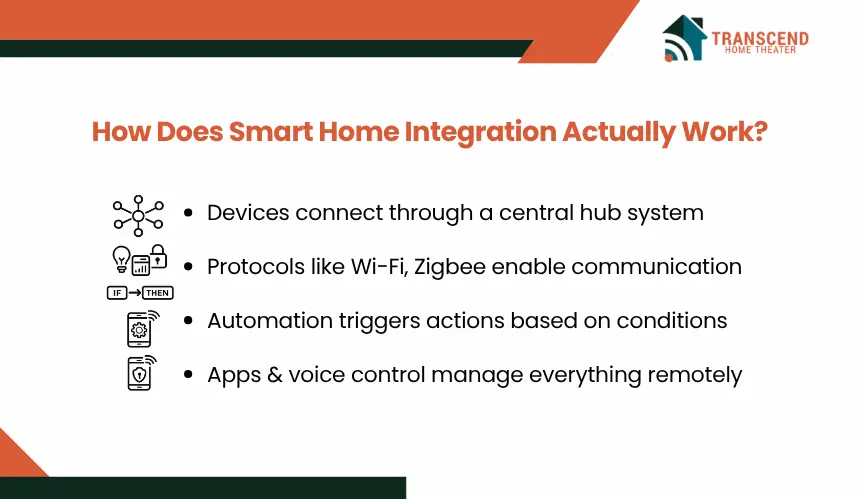
An integrated smart home operates through a layered system where devices, communication protocols, and control logic work together to execute automated actions. The system processes inputs such as user commands, sensor data, or schedules, then translates them into coordinated outputs across multiple devices.
Core Components of an Integrated System
A functional setup relies on interconnected hardware and software elements that enable communication and control:
- Smart devices: Sensors, lighting systems, thermostats, locks, and cameras that generate data or perform actions
- Central hub or controller: A platform that manages device communication and executes automation rules
- Communication protocols: Standards like Wi-Fi, Zigbee, Z-Wave, or Bluetooth that define how devices exchange data
These components ensure that devices do not operate independently but function within a shared network.
Automation and Communication Logic
Integration is driven by rule-based logic that defines how devices respond to specific conditions. Instead of manual control, the system uses triggers to initiate actions.
- Event triggers: Motion detection, time schedules, geolocation, or environmental changes
- Conditional logic: If-then rules that determine system behavior
- Execution flow: Multiple devices respond simultaneously based on a single trigger
For example, detecting motion at night can activate pathway lighting, adjust indoor brightness, and enable security recording without user intervention.
User Control Interfaces
Control interfaces provide visibility and override capabilities, allowing users to manage the system in real time or remotely.
- Mobile applications: Central dashboards for monitoring and manual control
- Voice assistants: Natural language commands for quick interactions
- Remote access: Control and monitoring from outside the home through cloud connectivity
These interfaces ensure that while automation handles routine tasks, users retain full control over system behavior when needed.
What Problems Does Smart Home Integration Solve?
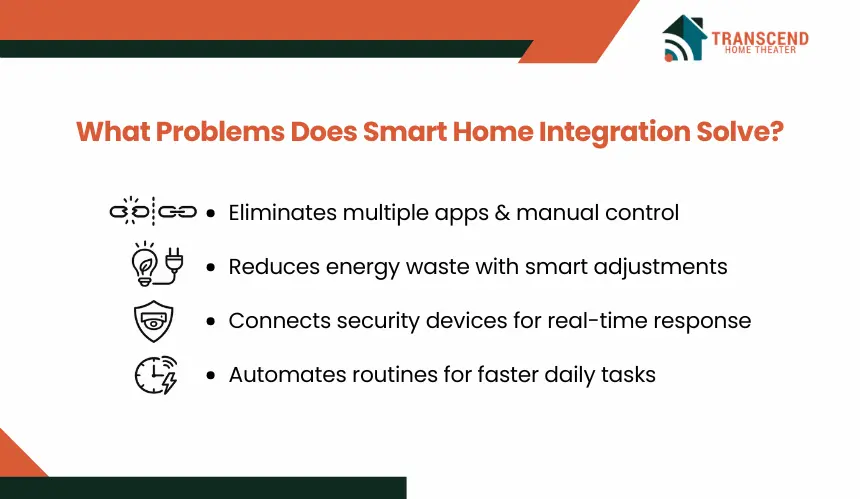
Fragmented device control, inefficient energy use, and limited visibility into home activity reduce the practical value of smart technology. Integration addresses these gaps by aligning devices under shared logic, enabling coordinated responses instead of isolated actions.
1. Convenience and Daily Efficiency
Managing multiple apps or manual switches creates friction in routine tasks. Integration removes this by centralizing control and automating repeated actions based on predefined conditions.
- Unified commands replace multiple manual inputs
- Routine-based automation reduces daily interaction time
- Context-aware responses adjust settings without user intervention
This shifts control from reactive usage to system-driven execution.
2. Energy Management and Cost Optimization
Uncoordinated systems often result in unnecessary energy consumption due to devices operating without context. Integration introduces data-driven control that aligns usage with actual need.
- Thermostats adjust based on occupancy patterns and external conditions
- Lighting systems respond to motion or daylight availability
- Energy monitoring provides usage insights for optimization
This reduces waste while maintaining consistent indoor comfort levels.
3. Security and Monitoring Gaps
Standalone security devices provide limited protection due to lack of coordination. Integration creates a connected security framework that reacts in real time.
- Sensors, cameras, and alarms operate as a unified system
- Immediate alerts are triggered based on defined events
- Remote access allows continuous monitoring and response
This improves situational awareness and reduces response time during potential security incidents.
Why Does Smart Home Integration Matter in Modern Living?
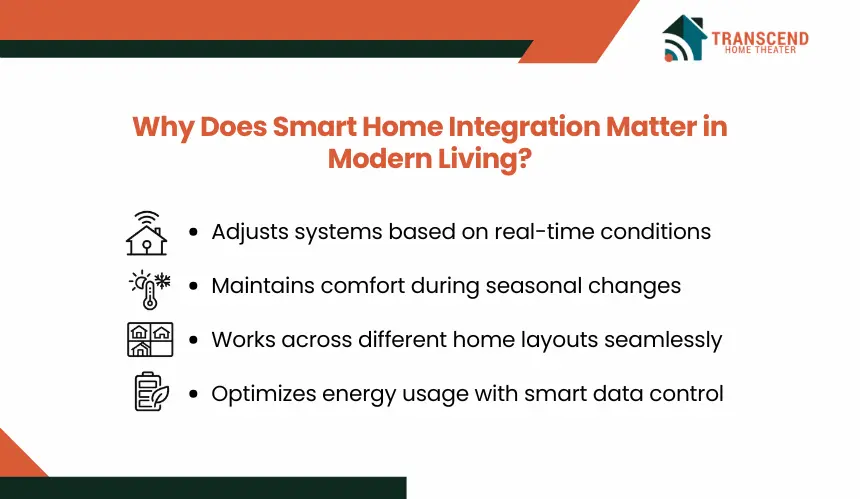
The value of integration extends beyond convenience by aligning home systems with real-time data, user behavior, and region-specific living conditions. In the Washington metropolitan area, homes face a mix of humid summers, cold winters, and varying property layouts, which require systems that can respond dynamically rather than operate on fixed settings.
Integrated systems improve operational consistency by adjusting climate control, lighting, and ventilation based on real-time conditions. For example, during peak summer humidity, coordinated control between thermostats and ventilation systems helps maintain indoor comfort without overloading HVAC systems, which is a common challenge in this region.
From a lifestyle and infrastructure perspective, integration supports scalability across different housing types, from DC row homes to suburban properties in Maryland and Virginia. A unified system ensures that as devices are added, they remain synchronized rather than fragmented, maintaining control efficiency.
Integration also strengthens energy optimization by aligning device usage with actual occupancy and environmental data. This reduces unnecessary energy consumption during seasonal extremes, helping maintain performance while managing utility demands more effectively.
What Should You Consider Before Setting Up Smart Home Integration?
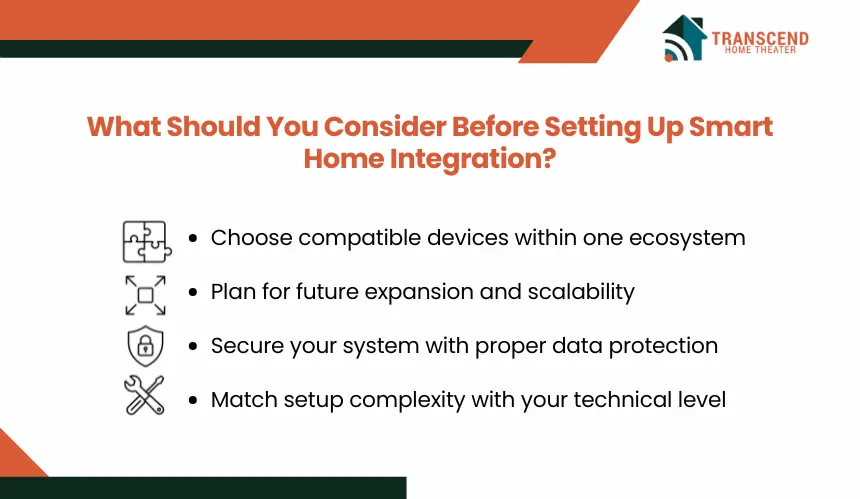
Setting up an integrated system requires planning at the architecture level, not just device selection. Decisions made early affect compatibility, performance, and long-term scalability, especially as more devices are added over time.
Compatibility and Ecosystem Selection
Integration depends on whether devices can communicate within the same ecosystem. Selecting products that support common standards or are certified to work with a central platform prevents system fragmentation.
- Ensure devices support shared protocols such as Zigbee, Z-Wave, or platform-specific integrations
- Avoid mixing incompatible brands that require separate control environments
- Prioritize ecosystems that offer broad device support and regular updates
This reduces the risk of isolated devices that cannot participate in automation workflows.
Scalability and Future Expansion
A system designed only for current needs often becomes restrictive as requirements grow. Integration should support expansion without requiring a full system overhaul.
- Choose hubs and platforms that can handle additional device loads
- Plan automation logic that can be extended without rewriting existing rules
- Consider multi-room or multi-zone configurations from the start
This ensures the system remains functional as new devices and use cases are introduced.
Privacy, Security, and Data Control
Connected systems introduce data exposure risks if not properly secured. Each device and platform becomes part of the network surface, requiring controlled access and monitoring.
- Use secure networks with strong encryption and updated firmware
- Limit device permissions to only required functions
- Evaluate whether data is processed locally or through cloud services
Proper configuration reduces vulnerabilities while maintaining system performance.
Installation and Complexity Level
The level of system integration determines whether a setup can be managed independently or requires professional configuration. Complex automation logic and multi-device coordination often exceed basic DIY setups.
- Simple systems can be configured through mobile apps with guided setup
- Advanced integrations may require structured wiring, hub configuration, and rule design
- Consider long-term maintenance and troubleshooting requirements
Choosing the right level of complexity ensures the system remains usable and stable after deployment.
Turn disconnected devices into a seamless, intelligent system with expert guidance from Transcend Home Theater. From planning to full integration, create a smart home that responds, adapts, and performs exactly how your lifestyle demands.
Frequently Asked Questions
Is smart home integration worth it if I only have a few devices?
Smart home integration is usually worth it once devices affect daily routines, security, comfort, or energy use. A few isolated devices may be manageable at first, but integration becomes valuable when lighting, thermostats, locks, cameras, or sensors need to respond together through one control system.
What is the difference between home automation and smart home integration?
Home automation refers to programmed actions, such as lights turning on at sunset. Smart home integration is broader because it connects devices, platforms, sensors, apps, and control systems so automation can happen across the entire home instead of within one device category.
Can smart home integration work without internet?
Some integrated systems can work without internet if they use local processing through hubs, wired controls, or local network protocols. However, cloud-based features like remote access, voice assistants, app notifications, and software updates usually require an active internet connection.
What devices should be integrated first in a smart home?
The best starting points are devices that affect daily comfort, safety, or energy use. Smart thermostats, lighting controls, door locks, motion sensors, and security cameras usually create the strongest early value because they support automation, monitoring, and routine-based control.
Does smart home integration increase security risks?
Connected systems can increase risk if devices use weak passwords, outdated firmware, unsecured Wi-Fi, or excessive app permissions. Risk is reduced by using secure networks, two-factor authentication, trusted platforms, encrypted devices, and regular updates across hubs, cameras, locks, and mobile apps.
Can renters use smart home integration without permanent changes?
Renters can use smart plugs, wireless sensors, smart bulbs, voice assistants, and portable cameras without major modifications. For locks, thermostats, wired switches, or mounted security devices, lease rules and landlord approval may apply, especially when installation affects wiring, doors, or shared building systems.