
Smart Home ROI: Which Upgrades Actually Add Resale Value in 2026?
A Quick Answer: The smart home upgrades that add the most resale value in 2026 are energy efficient systems, advanced security devices, whole home networking improvements, EV charging installations, and integrated lighting solutions. These upgrades influence buyer interest because they enhance comfort, lower utility costs, and support modern lifestyle needs. |
Homebuyers now expect connected features that feel reliable and easy to maintain. As real estate markets become more competitive, sellers benefit from improvements that make the property feel current, tech ready, and aligned with everyday digital habits.
This article explains how specific upgrades influence resale value, why buyer expectations have shifted, and how homeowners can prioritize the improvements that create measurable return in 2026.
Understanding Smart Home ROI in 2026
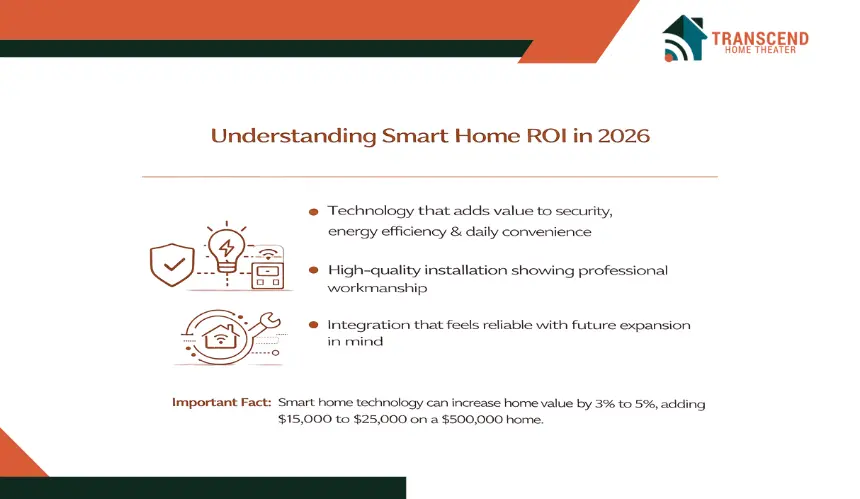
Homeowners evaluating smart upgrades often want clarity on how resale value is measured in today’s market. ROI in 2026 depends on the type of technology, the installation quality, and the level of daily convenience it brings to potential buyers.
What Defines a Value Adding Smart Upgrade in 2026?
A value adding upgrade is one that improves daily functionality, supports energy control, or enhances security in a way that buyers recognize during the first walkthrough.
Devices that integrate into a unified system tend to perform better because they reduce maintenance concerns and create a smoother living experience. Real estate agents increasingly highlight these features to differentiate modern listings from standard homes.
How Have Buyer Expectations Shifted Toward Smart Features?
Many buyers now expect connected living as a basic standard. Remote work households look for stronger connectivity, while tech aware families favor homes that limit energy waste and streamline routines.
These expectations influence purchasing decisions, especially in markets where newer builds and tech friendly neighborhoods are becoming more common. Homes without useful automation often feel dated when compared to similar listings.
Which Factors Influence the ROI of Smart Home Technology?
ROI varies based on alignment with buyer priorities, compatibility with existing systems, and the lifespan of the device. Upgrades that use open platforms or industry supported protocols tend to maintain value longer because they remain compatible with future expansions.
Proper installation, clear documentation, and long term manufacturer support also strengthen perceived reliability and help buyers feel confident about the technology they are inheriting.
Important Fact: Smart home technology typically increases home value by about 3% to 5%, with smart security systems providing up to a 5% increase. This translates to an added value of roughly $15,000 to $25,000 on a $500,000 home. |
High-ROI Smart Home Upgrades That Boost Resale Value
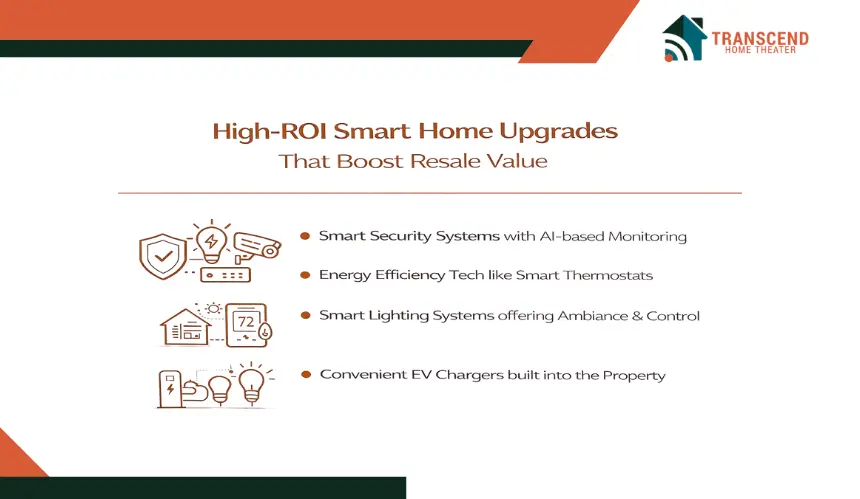
Buyers in 2026 place the highest value on smart features that improve security, energy efficiency, convenience, and daily functionality. These upgrades strengthen property appeal during showings and help listings stand out in competitive neighborhoods.
1. Smart Security Systems with Next-Gen Monitoring
Modern buyers view security as an essential component of a connected home. Systems that combine smart locks, high resolution video doorbells, and motion alerts supported by AI monitoring create a strong sense of safety.
Homes with reliable security ecosystems often show higher buyer confidence because the technology removes uncertainty around neighborhood risks and provides clear practical benefits. Devices that store encrypted data and offer remote access also appeal to families and frequent travelers who want secure oversight.
2. Energy Efficiency Tech with Strong Market Demand
Energy management plays a significant role in resale discussions. Smart thermostats, automated HVAC zoning, and devices that monitor real time consumption help reduce monthly costs while improving indoor comfort.
Buyers appreciate upgrades that manage heating and cooling more intelligently because they connect financial savings to everyday convenience.
Homes equipped with these systems often feel more balanced in temperature, which supports better first impressions during property tours and signals long term operational efficiency.
3. Smart Lighting Ecosystems That Enhance Property Appeal
Lighting automation influences both ambiance and practicality. Smart bulbs, dimming controls, and occupancy based lighting deliver consistent comfort and create a unified look during showings.
Outdoor smart lighting also reinforces curb appeal and adds a layer of real world security. Buyers tend to value lighting systems that adjust automatically throughout the day because they reduce manual effort and support energy conservation.
4. EV Chargers as Mandatory 2026 Upgrade
The rise of electric vehicles has shifted buyer expectations. A Level 2 EV charger in the garage increases home desirability because it removes the cost and effort associated with future installation. Many homeowners view EV readiness as a core utility similar to high speed internet.
Properties that offer convenient charging often attract a wider buyer audience, especially in communities with growing EV adoption.
5. Whole-Home Networking and Mesh WiFi as 2026 Essentials
Reliable connectivity has become a foundation of modern living. Mesh WiFi systems reduce dead zones and support streaming, gaming, smart work setups, and device heavy households.
Buyers look for networking systems that maintain stable performance across every room because it influences work productivity and entertainment quality.
Homes with upgraded networking infrastructure feel more functional and future ready, which strengthens resale appeal.
Smart Home Upgrades With Moderate or Situational ROI
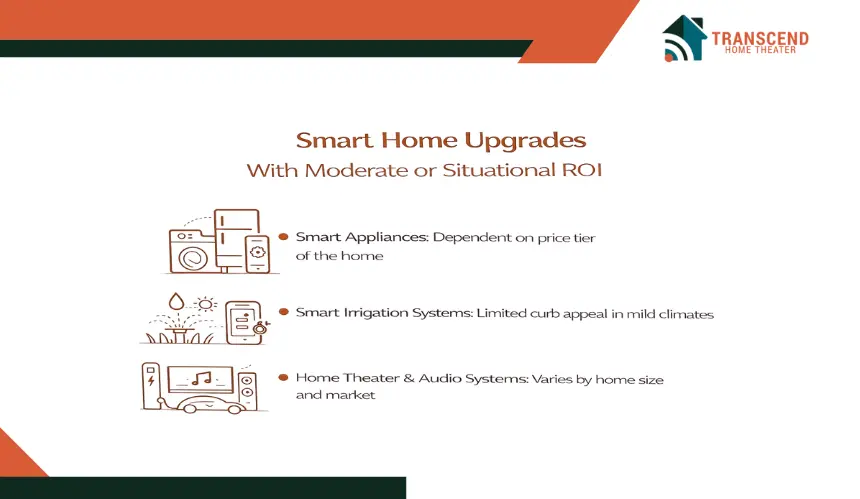
Some smart home features do not produce universally strong returns. Their value depends on buyer demographics, property type, neighborhood characteristics, and the local real estate market. These upgrades can enhance the experience of living in a home, but resale impact varies greatly.
1. Smart Appliances: When They Matter and When They Don’t
Smart appliances provide convenience through app based monitoring, predictive maintenance alerts, and energy efficient functions, yet their value depends on the home’s price tier. In higher end markets, buyers often expect updated appliances that complement a modern kitchen.
In mid range or starter homes, appliance age and aesthetic appeal matter more than connectivity, which limits their influence on resale potential.
2. Smart Irrigation and Lawn Automation
Homes in regions affected by water restrictions or unpredictable weather patterns may benefit from automated irrigation systems that adjust watering based on soil moisture and climate conditions.
These features reduce waste and maintain healthier landscaping, which helps curb appeal. However, in areas with mild climates or smaller yards, the cost does not always translate into measurable increases in buyer willingness to pay.
3. Home Theater and Multiroom Audio Systems
Audio and cinema upgrades are appealing to entertainment focused households, yet they are not universally viewed as essential. Their value is strongly influenced by home size and layout. Larger homes or luxury listings tend to see better returns because buyers expect immersive media options.
Smaller properties, on the other hand, may not gain significant market advantage since many buyers prefer portable audio solutions or simpler setups.
Low-ROI Smart Home Upgrades Homeowners Should Approach Carefully
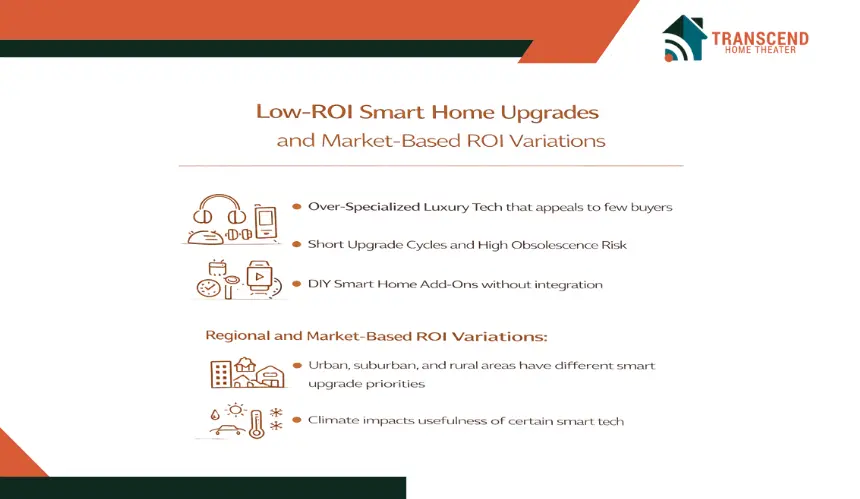
Certain smart features offer convenience but rarely influence resale decisions. These upgrades may be expensive, require specialized maintenance, or appeal to a narrow group of buyers. Understanding these limitations helps homeowners avoid investing in technology that does not significantly improve property value.
1. Over-Specialized Luxury Tech That Appeals to Few Buyers
Some premium systems are designed for highly specific lifestyles rather than general household needs. Spa automation tools, specialty fitness integrations, and automated wardrobe systems often look impressive, yet they attract limited interest during home tours.
Most buyers prefer flexible spaces instead of high cost features that feel personalized to someone else’s routine.
2. Systems With Short Upgrade Cycles or High Obsolescence Risk
Fast moving consumer technology can lose relevance quickly, which affects how buyers perceive long term value. Devices that rely on proprietary ecosystems or require frequent hardware revisions become less appealing because future compatibility is uncertain.
Homeowners who invest in short lifespan gadgets often see minimal return since buyers focus on reliability and support availability.
3. DIY Smart Home Add-Ons That Lack Integration
Standalone devices installed without proper system planning can create clutter rather than convenience. Disconnected hubs, mismatched protocols, and inconsistent app controls make the home feel difficult to manage.
Buyers tend to avoid setups that require troubleshooting or reconfiguration. A professionally integrated system provides smoother operation, while piecemeal additions rarely enhance the property’s perceived value.
Regional and Market-Based ROI Variations
Smart home investments do not deliver the same value in every market, and consulting a smart home automation expert often helps homeowners understand how regional trends impact resale performance. Local demand, climate patterns, and buyer expectations strongly influence how much these upgrades contribute to a property’s overall value.
How Do ROI Patterns Differ In Urban, Suburban, And Rural Markets?
Property location shapes the value of smart upgrades because buyers in each area have different priorities. Urban households often favor strong networking systems, advanced security, and energy monitoring tools due to limited space and busy lifestyles.
Suburban buyers tend to appreciate EV chargers, smart lighting, and family oriented automation. Rural areas usually see stronger returns from connectivity improvements and security features that support larger properties, while some upgrades hold less relevance where utility costs and lifestyle needs differ.
How Does Climate Influence Smart Tech ROI?
Weather conditions influence which smart features matter most to buyers. Regions with high humidity benefit from sensors that manage moisture and prevent indoor air issues. Areas facing heavy rainfall or seasonal storms may value smart leak detection, automated sump alarms, or climate adaptive HVAC settings.
Homes in hotter climates see stronger returns from energy efficient cooling automation, while colder regions often value heating optimization and occupancy based temperature control.
For example, Homes in Maryland and Virginia experience frequent humidity shifts, seasonal storms, and fluctuating temperatures, which makes moisture control and adaptive energy management especially appealing to buyers in these regions.
The combination of hot summers and variable winter patterns in these areas increases the usefulness of climate responsive automation.
How Do Home Age And Construction Type Affect ROI?
A home’s structure plays an important role in how buyers perceive the value of smart features. Newer properties designed with modern wiring usually support advanced upgrades more effectively, which increases buyer confidence.
Older homes may require electrical updates before installation, creating higher upfront costs but also producing noticeable functional improvements.
Well documented upgrades that align with the building’s architecture often feel more integrated, which enhances their contribution to overall resale value.
Ready to turn your home into a smarter, more valuable space that impresses every buyer who walks through the door? Transcend Home Theater can design a custom smart system that boosts convenience, strengthens resale appeal, and brings modern living to life. Our experts help you upgrade with confidence so every investment truly pays off.
Frequently Asked Questions
Are buyers concerned about the privacy features of smart home devices?
Many buyers want reassurance that the devices installed in a home protect personal data. Features such as encrypted storage, secure access controls, and clear privacy settings help ease concerns. Homes that provide documented security options often feel more trustworthy to tech aware buyers.
Do smart home upgrades affect home inspection results?
Smart systems do not typically change inspection criteria, but inspectors may note device functionality and integration quality. Homes with organized wiring, stable connectivity, and properly mounted equipment tend to leave a stronger impression, which supports buyer confidence during final negotiations.
Can smart home technology influence appraisal adjustments?
Appraisers sometimes recognize advanced smart features when they contribute to measurable benefits such as improved energy efficiency or enhanced safety. Although not every upgrade results in an added line item, well documented systems can support higher valuation justification when compared to standard homes.
Do smart home features appeal to remote workers and hybrid professionals?
Remote workers value stable connectivity, intelligent climate control, and adaptable lighting environments that support productivity. Homes that offer features designed for flexible work routines often gain stronger interest from modern professionals who prioritize comfort and functional workspace enhancement.
Are there insurance benefits for homes with advanced smart systems?
Some insurance providers offer small incentives for homes equipped with security monitoring, water leak detection, or fire safety sensors. These systems reduce the risk of costly incidents, which can make coverage slightly more favorable for qualified homeowners.