
Smart Security and Home Automation: How They Work Together
Key Takeaways:
|
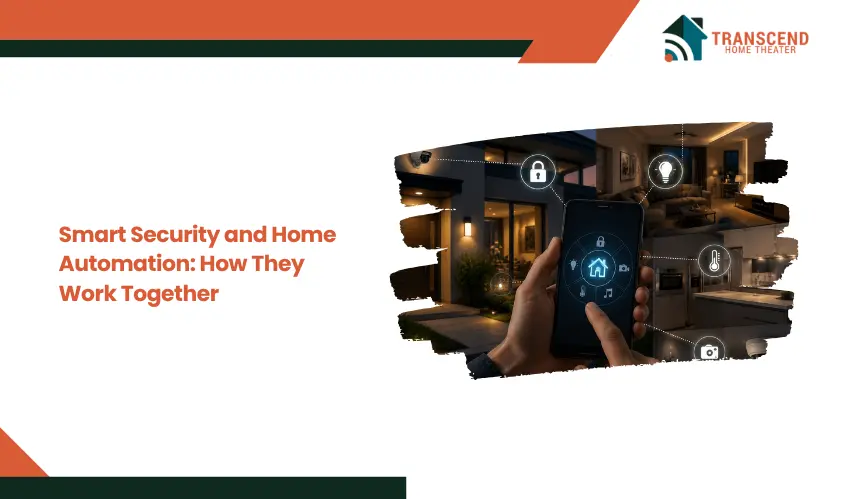
Smart security devices and home automation systems are often installed separately, but their value increases when they operate as a connected ecosystem. Integration allows devices to communicate, automate responses, and provide homeowners with greater control over security and daily routines. This article explains the relationship between smart security and home automation and how integrated systems function in real-world use.
What Is the Connection Between Smart Security and Home Automation?
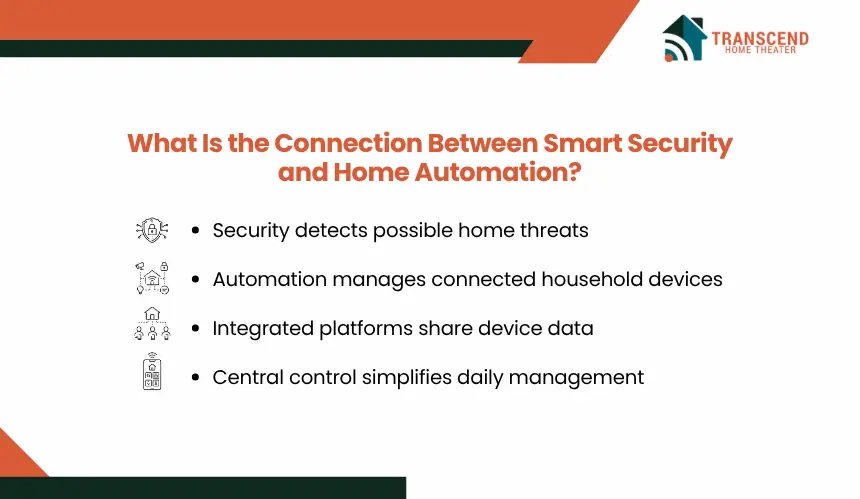
Smart security and home automation serve different functions, but they become more effective when they operate through the same connected platform. Security systems focus on detecting and responding to potential threats, while home automation manages devices and routines that improve convenience and efficiency.
A connected smart home ecosystem allows cameras, sensors, locks, lighting controls, and other devices to exchange information through Wi-Fi, cloud services, or centralized hubs. Instead of functioning independently, devices can react to events automatically based on predefined rules.
For example, a motion sensor can trigger outdoor lights, a smart camera can begin recording when activity is detected, and a smart lock can send notifications when someone enters the home. These actions occur because integrated devices share data and operate within the same network.
Modern smart home platforms often provide centralized control through mobile applications or voice assistants. This allows homeowners to manage multiple systems from a single interface rather than switching between separate apps.
The connection between smart security and home automation creates a coordinated environment where monitoring, access control, and device management work together to support both protection and everyday household operations.
Which Smart Security Devices Can Be Integrated Into a Home Automation System?
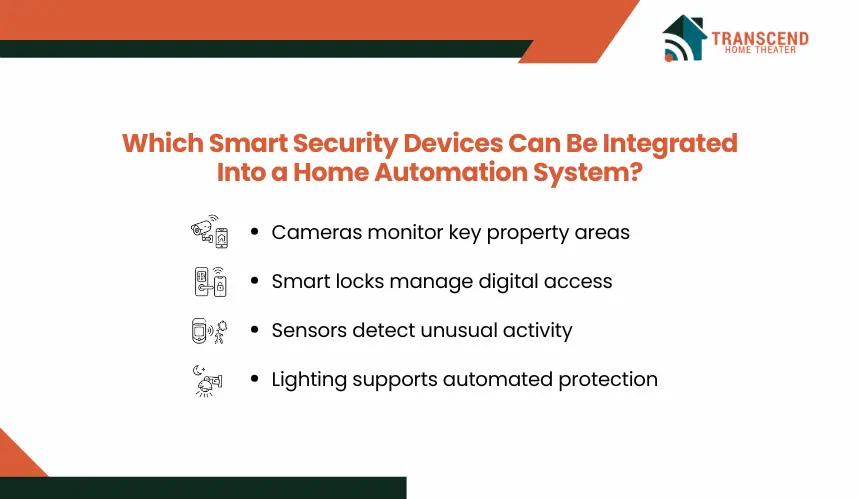
An integrated smart home relies on multiple connected devices that perform specific functions while sharing information across the system. Each component contributes to security, access management, or automated responses.
Smart Cameras and Video Doorbells
Smart cameras and video doorbells provide visual monitoring of entrances, driveways, and other areas around the property. Many models support motion detection, live video streaming, cloud storage, and instant alerts through a mobile app.
When integrated with home automation, these devices can initiate actions based on detected activity. For example, a camera detecting movement may activate exterior lighting or send a notification to the homeowner for real-time review.
Smart Locks and Access Control
Smart locks replace traditional keys with digital access methods such as smartphone control, PIN codes, biometric authentication, or temporary guest credentials. These systems allow homeowners to monitor entry activity and manage access remotely.
Integration with automation platforms enables routines such as locking all doors when the security system is armed or unlocking the front door when an authorized user arrives.
Sensors and Alarm Systems
Security sensors form the detection layer of a smart security network. Common devices include door sensors, window sensors, motion detectors, and glass-break sensors.
When abnormal activity occurs, these sensors communicate with the alarm system and other connected devices. Depending on system settings, triggered sensors may activate sirens, start camera recordings, or generate emergency notifications.
Smart Lighting and Connected Devices
Smart lighting systems, thermostats, voice assistants, and connected plugs extend automation beyond traditional security equipment. These devices allow homeowners to create coordinated actions that support both comfort and protection.
For example, scheduled lighting can simulate occupancy while residents are away, and voice-controlled platforms can manage multiple devices through a single command. The combination of connected devices creates a more responsive and adaptable home environment.
How Do Smart Security and Home Automation Work Together in Everyday Situations?
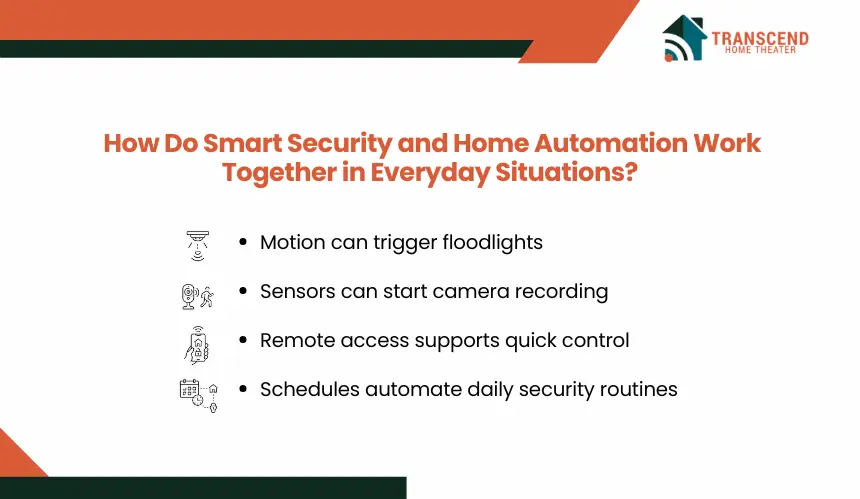
Integration becomes most valuable when connected devices respond automatically to events occurring inside or outside the home. These interactions reduce manual tasks and allow systems to react based on predefined conditions.
Automated Responses to Security Events
Smart home platforms can be configured to perform specific actions when security devices detect unusual activity. A motion sensor near the backyard may trigger floodlights, while a door sensor can instruct nearby cameras to begin recording.
These automated responses create layered protection because multiple devices react simultaneously rather than relying on a single alarm notification.
Remote Monitoring and Control
Integrated systems allow homeowners to monitor and manage devices through a smartphone application, even when they are away from the property. Live camera feeds, lock status, alarm controls, and device notifications remain accessible from a single interface.
Remote access allows users to verify events, grant temporary entry to visitors, or activate security settings without being physically present.
Customized Schedules and Routines
Automation routines enable devices to operate according to daily habits or specific time-based rules. Homeowners can schedule lights to turn off at bedtime, activate cameras during working hours, or arm the security system automatically when everyone leaves.
These routines reduce dependence on manual operation and create consistent security practices that align with household schedules.
What Benefits Do Homeowners Gain From Combining Both Systems?
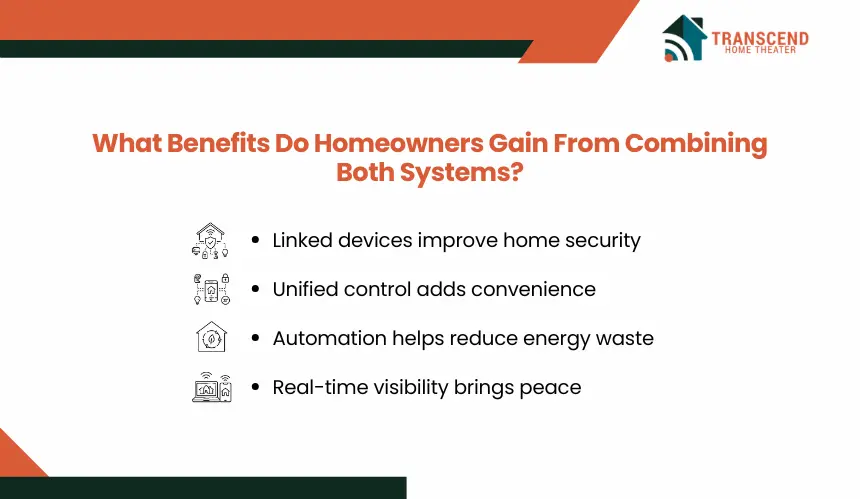
Combining smart security with home automation gives homeowners a more coordinated way to manage safety, access, comfort, and energy use. The main value comes from connected devices acting on shared data instead of requiring separate manual control.
Improved Home Security
Integrated systems strengthen home security by linking detection, verification, and response. When a sensor detects activity, cameras can capture visual evidence, lights can expose the area, and alerts can reach the homeowner immediately.
This connection reduces response delays and helps homeowners distinguish between routine activity, delivery visits, and possible security risks.
Greater Convenience and Control
A unified smart home system allows homeowners to manage locks, cameras, alarms, lights, and other connected devices from one control point. This reduces app switching and makes daily operation easier.
Centralized control is especially useful for families, frequent travelers, and homeowners managing multiple entry points or shared access permissions.
Better Energy Efficiency
Home automation can reduce unnecessary energy use by adjusting lighting, thermostats, and connected devices based on schedules, occupancy, or security modes. Lights can turn off when rooms are empty, and climate settings can adjust when the home is armed away.
These automated adjustments support lower energy waste without requiring constant manual changes.
Increased Peace of Mind
Integrated systems provide clearer visibility into what is happening at home. Homeowners can check device status, review alerts, confirm locked doors, and monitor activity from a mobile app.
This visibility reduces uncertainty because users can verify conditions directly instead of relying on assumptions.
What Should Homeowners Consider Before Choosing an Integrated System?
Not all smart home products are designed to work together. In Virginia, homeowners should also consider property layout, seasonal weather, and local living patterns before choosing an integrated security and automation system.
Device Compatibility
Compatibility determines whether cameras, locks, sensors, and automation devices can communicate through the same platform. Homes in areas such as Northern Virginia, Richmond suburbs, and Virginia Beach often use multiple entry points, garages, patios, and detached spaces, so device coordination matters.
Verifying compatibility before purchase helps prevent fragmented systems that require separate apps for locks, cameras, alarms, and lighting.
Internet Connectivity and Reliability
Most smart security and automation devices depend on stable internet access for remote monitoring, alerts, and cloud communication. Larger Virginia properties, older homes, and multi-level houses may need stronger Wi-Fi coverage to keep exterior cameras, doorbells, and sensors connected.
A reliable network helps prevent missed alerts, delayed video feeds, and disconnected devices during daily use.
Scalability for Future Upgrades
Smart homes often expand over time. A scalable system allows Virginia homeowners to add cameras for driveways, lighting for outdoor areas, sensors for sheds, or automation features for vacation homes without replacing the full setup.
This flexibility supports changing household needs, property upgrades, and future smart home standards.
User Preferences and Daily Needs
The right system should match how the home is actually used. Commuters in Northern Virginia may prioritize remote access and garage monitoring, while coastal homeowners near Virginia Beach may value exterior cameras, lighting automation, and weather-resistant devices.
Choosing features around real routines and property risks helps homeowners avoid unnecessary complexity.
Ready to create a smarter and more connected home? Transcend Home Theater provides professional home automation services designed to integrate security, convenience, and control into one seamless system. Whether homeowners are located in Virginia, Maryland, or Northwest DC, the team delivers customized solutions that fit each property’s needs. Contact the team today to bring smarter living and enhanced security to your home.
Frequently Asked Questions
Can existing security equipment be connected to a new home automation system?
Existing security equipment can sometimes be integrated, but compatibility depends on the device brand, communication protocol, and control platform. Older wired alarms, cameras, or sensors may need a bridge, smart hub, or panel upgrade. A professional assessment helps determine whether the current system can be reused or should be replaced.
What happens to smart security devices if the internet goes out?
Some smart security devices continue basic local functions during an internet outage, such as recording to local storage or triggering alarms. Remote access, cloud video, app notifications, and voice assistant control usually stop until service returns. Battery backup and local network features can reduce downtime for critical security functions.
Is professional installation better than DIY smart home security setup?
Professional installation is better when the system includes multiple cameras, smart locks, alarm sensors, lighting controls, or whole-home automation. DIY setups can work for simple devices, but professional configuration improves device placement, network reliability, automation logic, and long-term scalability. It also reduces pairing errors and disconnected device issues.
Do smart home security systems require monthly fees?
Some systems work without monthly fees, but advanced features often require subscriptions. Common paid features include cloud video storage, professional monitoring, extended event history, AI motion detection, and emergency dispatch support. Homeowners should compare upfront equipment costs with ongoing service plans before choosing a smart security platform.
Can smart security and automation work in older homes?
Older homes can support smart security and automation, but wiring, Wi-Fi coverage, wall materials, and electrical layouts may affect installation. Wireless devices, mesh networks, smart hubs, and retrofit-friendly equipment can solve many limitations. A system design should account for thick walls, detached garages, basements, and older electrical infrastructure.
How secure are smart locks compared to traditional locks?
Smart locks can be secure when they use strong encryption, two-factor authentication, access logs, and reliable hardware. Their advantage is controlled digital access, temporary codes, and remote lock status. Security risks usually come from weak passwords, outdated firmware, poor installation, or unsecured Wi-Fi networks rather than the lock alone.