
Smart Thermostats & HVAC Automation: Cutting Energy Bills with AI (2026 Data Review)
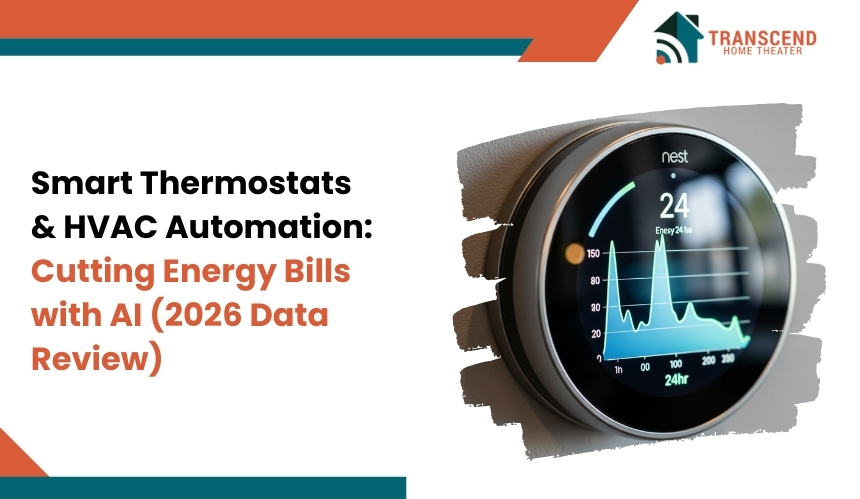
A Quick Answer: Smart thermostats and advanced HVAC automation reduce energy bills by an average of 10 to 23 percent, based on widely documented 2026 smart home performance reviews. These reductions occur because AI systems learn heating and cooling patterns, adjust temperatures more precisely, and eliminate waste during periods of low occupancy. Predictive temperature control, sensor-driven climate adjustments, and automated scheduling consistently lower HVAC runtime while maintaining comfortable indoor conditions. |
As connected devices, climate sensors, and intelligent HVAC controllers become more common, homeowners are turning to AI tools that respond to weather shifts, occupancy changes, and daily routines.
This article explains how the latest smart thermostat technology works, what the latest performance data reveals, and why AI-driven automation continues to outperform traditional systems.
Understanding How Smart Thermostats Transform Modern HVAC Systems
Smart thermostats have reshaped how heating and cooling systems respond to daily use, relying on automation instead of manual adjustments. Their value comes from analyzing patterns, reacting to real-time indoor conditions, and coordinating with other connected devices to maintain balanced comfort levels.
Working with a smart home automation company can also help homeowners unlock these advanced features more effectively by ensuring every device communicates the way it should. Let’s understand the foundational mechanics behind these AI-powered climate tools.
How Do Modern AI Thermostats Learn Daily Temperature Preferences?
Smart thermostats use machine learning to study how a home is heated or cooled throughout the day. They observe when rooms warm up, when people leave or return, and how outdoor weather influences indoor temperatures.
Over time, the system builds a predictive schedule that adjusts settings automatically. This learning process reduces the need for manual changes and keeps energy use aligned with actual living patterns.
What Technologies Allow Smart Thermostats to Communicate With HVAC Equipment?
These devices connect with HVAC systems through integrated sensors, WiFi modules, and compatibility protocols that allow fast data sharing. They gather information about humidity levels, system runtime, airflow strength, and duct performance.
The thermostat then sends commands to the heating or cooling unit based on this information. When paired with zoning controls or smart vents, the system can direct airflow to specific rooms for better efficiency.
Which Features Make Smart Thermostats More Effective Than Manual Models?
Older and manually operated HVAC systems often run longer than required because they lack automated monitoring. Worn components, slow response times, and inconsistent airflow can force the system to work harder to achieve the same temperature. Poor insulation around ducts or outdated compressors also restricts performance and leads to higher utility bills.
Smart thermostats can monitor indoor conditions continuously, identify small inefficiencies, and adjust temperatures before discomfort occurs.
Many models also track energy reports, provide seasonal recommendations, and coordinate with air quality monitors for better indoor health. These automated decisions help maintain stability without relying on human intervention.
How AI Smart Thermostats Cut Energy Bills: 2026 Insights
Recent performance studies highlight how AI-driven climate tools outperform traditional thermostats by predicting temperature needs, adjusting system runtime, and improving airflow balance. This section breaks down the latest findings so readers understand the exact mechanisms contributing to measurable savings.
What Do Latest Energy Reports Reveal About Smart Thermostat Performance?
Energy performance audits published in 2026 confirm that AI-enabled thermostats lower heating and cooling costs by 10 to 23 percent, based on national averages measured across thousands of homes.
These studies used year-long runtime tracking, baseline comparisons, and occupancy pattern analysis to determine how accurately automated systems reduce unnecessary HVAC operation.
Findings show that AI thermostats identify wasteful cycles within the first few weeks of installation and adjust temperature settings with far greater precision than manual controls.
How Does Predictive Temperature Control Help Reduce Annual Energy Use?
AI thermostats evaluate weather forecasts, indoor temperature shifts, and occupancy patterns to anticipate when the system should start or stop. By preparing the home before temperature swings occur, the system avoids sudden spikes in HVAC usage.
This predictive strategy prevents overcorrection and minimizes long heating or cooling cycles. The result is a smoother, more efficient operation that naturally lowers energy consumption.
Why Do Sensor-Based Adjustments Lead to More Efficient HVAC Operation?
Modern smart thermostats rely on connected sensors that track humidity, motion, room usage, and airflow pressure. These sensors help the system decide where climate adjustments are truly needed instead of treating the entire home the same way.
If a room is unoccupied or if air quality changes in a specific area, the thermostat modifies airflow or temperature settings accordingly. This targeted approach reduces stress on the system and directs energy only where it creates value.
A Case Study: Real-World Smart Thermostat Retrofit and Savings In a field study published by ASHRAE (“Analysis of Indoor Environmental Conditions and Electricity Savings Using a Smart Thermostat”), a single‐family residence retrofitted a conventional HVAC system with a smart thermostat plus remote occupancy/temperature sensors. The house achieved an estimated annual savings of 5,208 kWh (about 43.6 %) and measured savings of 496 kWh (37.9 %) after installation. Key factors in this case:
This demonstrates that under favorable conditions (good data collection, zoning, occupancy detection), the saving potential may exceed the typical 10-23 % range cited for the mass market. |
Comparing Leading Smart Thermostat Systems and HVAC Automation Platforms
Many homeowners explore different smart thermostat brands before making a decision because each system offers a unique mix of automation, compatibility, and long-term efficiency benefits. This section focuses on the platforms that stand out in 2026 and explains how their features influence real-world performance.
How Do Popular Smart Thermostat Brands Differ in Their Core Capabilities?
Leading brands such as Nest, Ecobee, Honeywell, Trane, and Lennox approach HVAC automation with different strengths. Some prioritize adaptive learning that improves over time, while others focus on multi-sensor networks that increase temperature accuracy in larger homes.
Brand ecosystems also influence how well the thermostat integrates with smart vents, zoning accessories, and indoor air quality monitors. These distinctions help homeowners understand which system aligns best with their climate needs and home layout.
Key brand capabilities include:
- Nest: Known for strong learning algorithms that adjust schedules automatically and refine energy use based on daily patterns.
- Ecobee: Popular for its remote sensor network that improves room-by-room accuracy and enhances comfort in multi-level homes.
- Honeywell Home: Focuses on reliable scheduling tools, broad HVAC compatibility, and consistent performance across older and newer systems.
- Trane: Integrates deeply with Trane HVAC units for stable communication, better airflow control, and advanced automation within the same ecosystem.
- Lennox: Offers thermostats designed for high-efficiency HVAC setups, with features that optimize system output and monitor indoor air quality trends.
Which Connectivity Standards Matter Most When Choosing a Thermostat in 2026?
Connectivity affects how smoothly a smart thermostat communicates with sensors, HVAC equipment, and the wider smart home ecosystem.
In 2026, most leading thermostat brands follow upgraded communication standards that support faster responses, lower energy consumption, and more reliable device-to-device coordination.
Key 2026 connectivity standards include:
- Matter: By 2026, Matter adoption has become a baseline requirement for new smart thermostats because it allows products from different brands to communicate without compatibility gaps.
Matter improves setup simplicity, enhances security, and ensures that thermostats can integrate with smart vents, air quality monitors, and multi-brand automation platforms. - Thread: Thread gained significant traction in 2026 for homes running multiple climate sensors. It supports low-power mesh networking, which improves signal stability across larger properties.
Thread helps thermostats collect temperature, humidity, and occupancy data more consistently by reducing dropouts that occur with older protocols. - WiFi 6 and 6E: Many modern thermostats now support WiFi 6 or 6E to accommodate high data throughput from cameras, sensors, and other connected appliances.
These upgraded WiFi standards reduce latency and keep automation routines stable even when the network is heavily used.
A thermostat that supports these 2026 standards typically maintains better communication with HVAC equipment, processes environmental data quickly, and avoids the connection issues that affect older models.
Factors To Consider Before Buying a Smart Thermostat in 2026
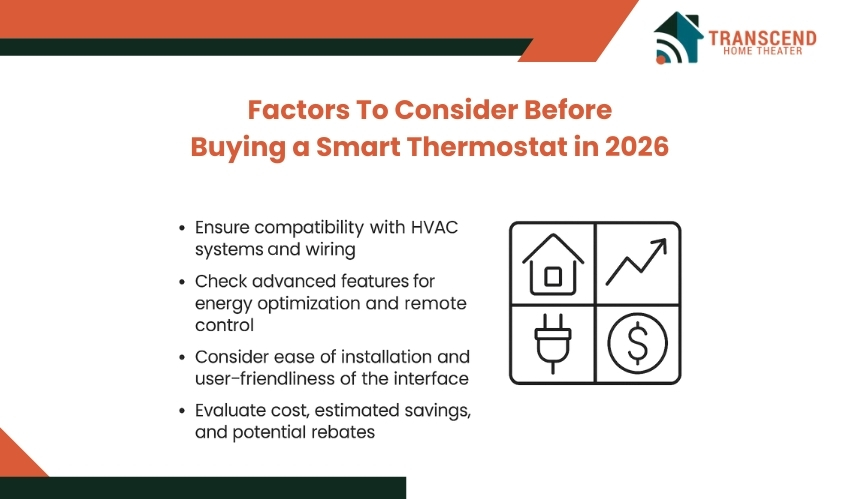
Choosing a smart thermostat involves more than selecting a brand or downloading an app. Each home has different HVAC requirements, wiring layouts, and comfort preferences that influence how well the thermostat performs.
Let’s understand the factors homeowners should evaluate before making a purchase so they can match the right device to their specific system.
1. HVAC Compatibility and Wiring Requirements
Not all thermostats work with every heating and cooling setup. Some models require a C wire to supply continuous power, while others support heat pumps, multi-stage systems, or variable speed equipment. Homes with radiant heating, older furnaces, or dual fuel systems may need a thermostat that can manage complex temperature settings.
Checking these compatibility details helps prevent installation issues and ensures stable communication between the thermostat and HVAC controller.
2. AI Features That Provide Real Climate Control Benefits
Artificial intelligence plays a major role in how efficiently a thermostat manages temperature changes. Features such as adaptive learning, predictive scheduling, and occupancy recognition can significantly reduce unnecessary heating and cooling.
Humidity monitoring, air quality insights, and seasonal adjustment recommendations also support long-term comfort. A thermostat with strong AI capabilities aligns climate control with daily routines and reduces manual adjustments.
3. Pricing, Long-Term Costs, and Subscription Considerations
Pricing varies widely among modern thermostats, especially as more brands introduce advanced automation features. Some models have a higher upfront cost but no subscription fees. Others offer premium capabilities such as detailed energy reporting or advanced AI optimization through monthly plans.
Evaluating long-term expenses, warranty coverage, and future software support helps homeowners choose a system that offers meaningful value rather than a short-term upgrade.
Smart HVAC Automation Beyond Thermostats
Smart thermostats are only one part of a modern automated climate system. Many homes benefit from additional devices that manage airflow, track room conditions, and improve overall comfort. Let’s explore how expanded HVAC automation works and why these tools enhance efficiency beyond basic temperature adjustments.
1. Sensor-Based Zoning and Airflow Management
Zoning systems divide the home into separate climate areas that receive heating or cooling based on real-time usage. Smart vents and connected sensors help direct airflow toward occupied rooms and reduce energy spent on unused spaces.
This targeted approach keeps temperatures more consistent throughout the home and prevents the system from running longer than necessary. When combined with thermostats, zoning tools create smoother airflow patterns and reduce pressure imbalances.
2. Indoor Air Quality Tracking and Environmental Monitoring
Modern HVAC automation includes sensors that monitor air quality, humidity, carbon dioxide levels, and particulate concentration. These devices help the system respond to indoor conditions that affect comfort and health.
For example, a rise in humidity may trigger increased dehumidification, while elevated CO2 levels can activate additional ventilation. This automatic response improves indoor freshness and supports a healthier living environment.
3. Connected Air Purifiers and Humidity Control Systems
Smart air purifiers and humidity management tools work with HVAC equipment to balance indoor comfort more precisely. Air purifiers help remove allergens and fine particles, while humidifiers and dehumidifiers maintain stable moisture levels.
When these devices share data with thermostats, the system can adjust temperatures more efficiently because air quality and humidity directly influence how warm or cool a room feels. This coordination helps reduce unnecessary heating and cooling cycles.
Steps for Homeowners Ready to Adopt AI-Powered Climate Control
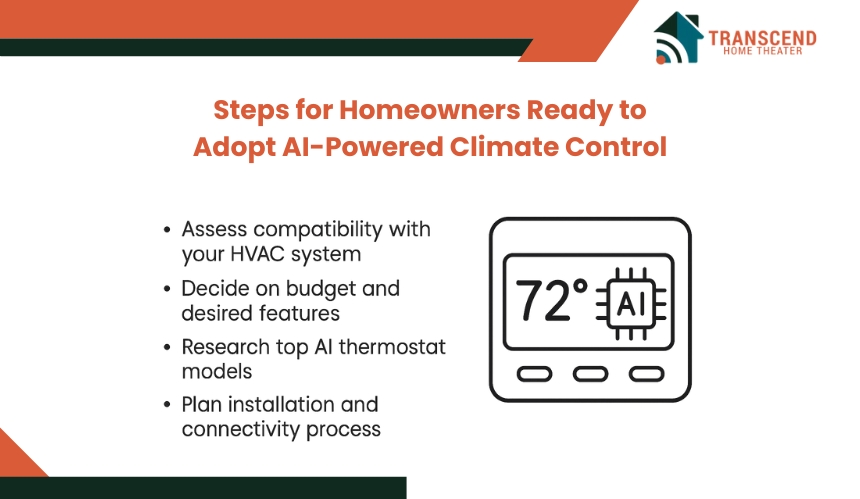
Homeowners who want to transition to smarter heating and cooling often benefit from a structured starting point. Taking a few practical steps helps ensure that the thermostat, sensors, and automation tools perform well once installed. This section outlines the key actions that support a smooth upgrade.
Step 1: Evaluate Your Current HVAC Setup
Begin by checking the age, model, and compatibility of your existing HVAC system. Identify whether it supports multi-stage operation, heat pumps, or variable speed components. Understanding these details helps match the right smart thermostat to your equipment.
Step 2: Compare Automation Platforms and Features
Different platforms offer varying strengths, including learning algorithms, remote sensors, and indoor air quality tools. Reviewing these features helps you select a system that aligns with your comfort needs and energy goals.
Step 3: Choose Between DIY or Professional Installation
Some thermostats are simple enough for a do-it-yourself installation, especially models designed for quick mounting and basic wiring. DIY works well for homeowners who already have a C wire and a compatible HVAC setup.
More complex systems, such as heat pumps or multi-stage units, benefit from professional installation because they may require wiring adjustments and advanced configuration.
If you want a smooth and hassle-free upgrade, Transcend Home Theater is ready to help. Our team handles the wiring, setup, and system optimization so your smart thermostat performs at its best from day one. They make the entire process simple, reliable, and tailored to your home.
Step 4: Monitor Energy Use After Installation
Once the system is active, track energy reports and temperature trends to understand how the thermostat responds to your routine. This helps you fine-tune settings, identify savings opportunities, and get familiar with automation features.
Frequently Asked Questions
Do Environmental Changes and Weather Patterns Affect HVAC Efficiency?
Shifts in outdoor weather impact how hard a system must work to stabilize indoor temperatures. Humidity spikes, sudden cold fronts, or prolonged heat waves add extra strain to systems that cannot adapt automatically.
When an HVAC unit reacts late to these changes, it runs for longer periods and consumes more energy. Homes located in regions with frequent temperature swings experience even higher variability in energy use without automated control.
Can smart thermostats improve indoor air freshness along with temperature control?
Some smart thermostats connect with air quality sensors that detect CO2 levels, particles, and humidity. When these sensors signal poor conditions, the system can activate ventilation or adjust fan speed to improve indoor freshness. This adds comfort benefits that go beyond simple temperature changes.
Do smart thermostats help reduce noise from HVAC equipment?
AI-driven climate tools can soften sudden heating or cooling cycles by adjusting system output gradually. This smoother operation can reduce the abrupt starts and stops that cause extra noise in older HVAC setups. In some homes, users notice quieter airflow and fewer loud system activations.
How long does it take for a smart thermostat to learn a household’s routine?
Most systems begin adapting within the first week, using early temperature patterns and basic occupancy data. Over the next few weeks, the thermostat refines its schedule with more precise adjustments. By the end of the first month, most devices run with noticeably improved accuracy.