
What is Included in Professional Residential AV Installation?
Key Takeaways:
|
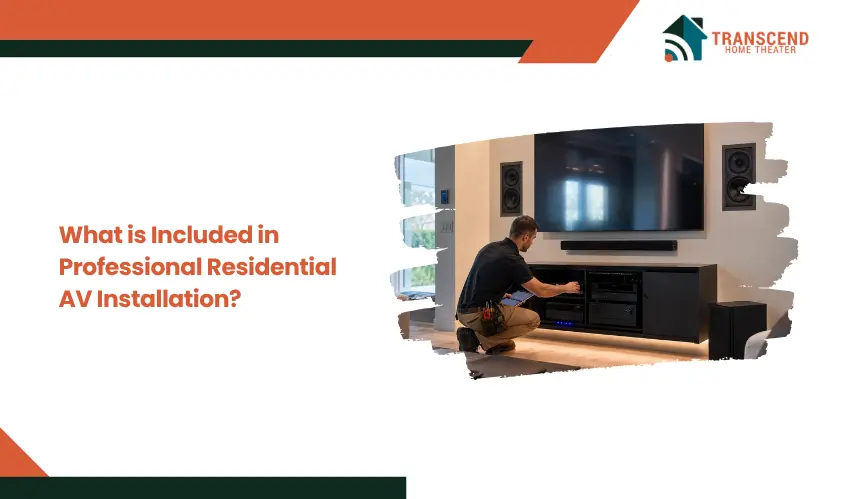
Professional residential AV installation involves far more than connecting a television or placing speakers in a room. Modern audio visual systems require careful planning, equipment compatibility, structured wiring, network integration, and performance calibration to ensure every component works together reliably.
This guide explains the key elements typically included in professional residential AV installation, from system planning and equipment setup to integration, optimization, and user support.
1. System Design and Pre-Installation Planning
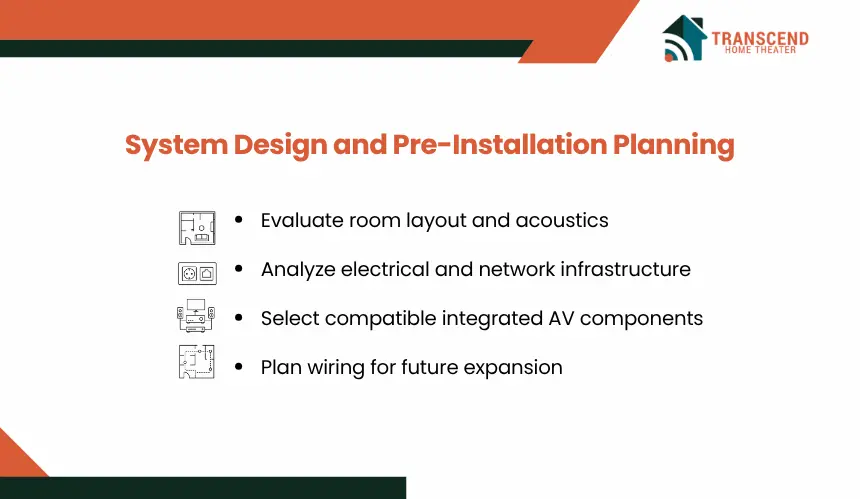
A successful residential AV system is determined long before equipment is mounted or connected. Professional installers begin by evaluating the home environment, user requirements, and technical constraints to create a system that delivers reliable performance, scalability, and seamless operation.
How Do Professionals Assess the Home and Installation Space?
The first step is a detailed site assessment. Installers evaluate room dimensions, seating locations, ceiling height, wall construction, ambient lighting, and acoustic characteristics to determine how audio and video equipment will perform within the space.
Viewing distance influences display size recommendations, while room shape and surface materials affect sound distribution and speaker placement. Existing electrical outlets, network infrastructure, and construction features are also reviewed to identify installation opportunities and limitations before work begins.
How Is Equipment Selected for the AV System?
Equipment recommendations are based on performance goals, room requirements, and compatibility across the entire system. Rather than selecting devices independently, professionals design an integrated ecosystem where displays, speakers, AV receivers, streaming devices, and control platforms operate together without connectivity or performance conflicts.
The selection process considers factors such as audio coverage, video resolution requirements, source device support, future upgrade potential, and interoperability between components. This approach reduces compatibility issues and prevents costly equipment mismatches after installation.
What Is Included in Wiring and Connectivity Planning?
Professional AV installation includes a structured plan for signal distribution, power access, and network connectivity. Installers determine cable pathways for HDMI, speaker wire, Ethernet, fiber, and control cables while minimizing visible wiring and avoiding interference sources.
Connectivity planning also addresses bandwidth requirements for streaming, smart home integration, multi-room audio systems, and future technology upgrades. By designing the infrastructure before installation begins, professionals create a foundation that supports both current equipment and long-term expansion without requiring major modifications later.
2. Audio and Video Equipment Installation
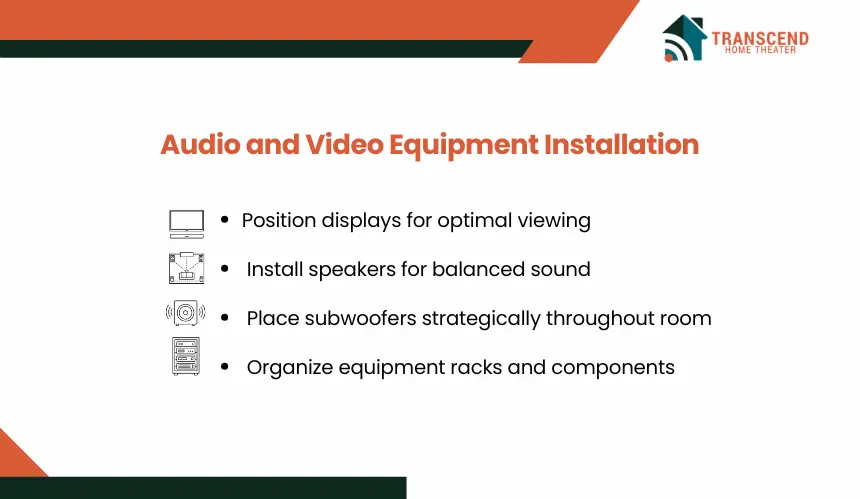
Once the system design is finalized, the installation phase focuses on physically deploying the equipment according to the approved plan. Professional installation prioritizes performance, safety, accessibility, and long-term reliability while ensuring every component is positioned for optimal operation within the room.
How Are Displays and Projection Systems Installed?
Display installation involves more than mounting a television on a wall. Professionals determine the appropriate mounting height, viewing angle, structural support requirements, and cable management strategy to create a clean and functional setup.
For projector systems, installers evaluate throw distance, screen placement, projector alignment, and mounting stability. Precise positioning is necessary to achieve proper image geometry, viewing comfort, and consistent visual performance across the entire viewing area.
How Are Speakers and Audio Components Positioned?
Speaker placement directly affects soundstage accuracy, dialogue clarity, surround effects, and low-frequency performance. Professional installers position speakers according to room layout and listening zones rather than simply placing them where space is available.
Installation may include in-wall speakers, in-ceiling speakers, bookshelf speakers, floor-standing speakers, soundbars, or dedicated surround sound channels. Subwoofers are also positioned strategically to reduce uneven bass response and improve overall audio balance throughout the room.
What Is Included in the Equipment Rack and Component Setup?
Many residential AV systems rely on multiple source devices and processing components that must remain organized and accessible. Professionals install and arrange AV receivers, amplifiers, media players, streaming devices, network hardware, and control processors in a structured configuration.
Equipment organization supports proper ventilation, simplified maintenance, efficient cable routing, and easier troubleshooting. Labels, cable management systems, and logical device placement help create a clean installation that remains manageable as the system grows or changes over time.
3. System Integration and Connectivity Setup
After the hardware is installed, professional AV installation shifts to system integration. This stage connects individual components into a unified platform so audio, video, networking, streaming, and control functions operate seamlessly across the home.
How Are Devices and Entertainment Sources Integrated?
Professional installers connect and configure all source devices, including streaming players, gaming consoles, media servers, cable boxes, and Blu-ray players. The objective is to create reliable communication between devices while ensuring video formats, audio codecs, and control protocols are properly recognized.
Input assignments, signal routing, source prioritization, and device synchronization are also configured during this stage. Proper integration eliminates common issues such as signal loss, audio delays, device conflicts, and inconsistent switching between entertainment sources.
How Is Network Connectivity Configured for an AV System?
Modern AV systems rely heavily on network infrastructure for streaming, content distribution, software updates, and smart home communication. Installers configure wired and wireless connections to support stable performance across all connected devices.
In larger homes throughout McLean, VA, where dedicated media rooms, whole-home audio systems, and multiple entertainment zones are common, network planning often includes strategically placed access points and hardwired connections to maintain consistent bandwidth and reduce connectivity bottlenecks.
How Are Control Systems and Automation Features Set Up?
Professional residential AV installation typically includes programming control systems that simplify daily operation. Instead of managing multiple remotes and applications, users can access displays, audio systems, lighting integrations, and media sources through a centralized interface.
Installers configure universal remotes, touch panels, mobile applications, and automation routines based on homeowner preferences. Common functions include single-touch entertainment scenes, automated device startup sequences, and customized controls that streamline system operation without requiring technical expertise from the user.
4. Calibration and Performance Optimization
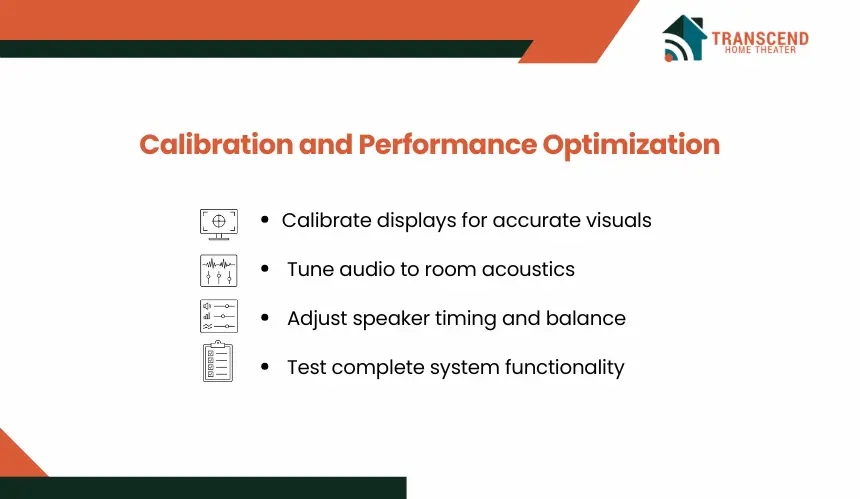
Installing equipment does not guarantee optimal performance. Professional AV installation includes calibration and system tuning to ensure audio and video components operate according to the room’s characteristics, equipment specifications, and intended user experience.
How Is Video Performance Calibrated After Installation?
Professional calibration adjusts display settings to match the viewing environment rather than relying on factory presets. Installers optimize brightness, contrast, color accuracy, motion handling, and image sharpness based on room lighting conditions and screen placement.
This process helps prevent issues such as washed-out images, excessive glare, inaccurate colors, and loss of detail in dark or bright scenes. The result is a more consistent and realistic viewing experience across movies, sports, gaming, and streamed content.
How Is Audio Tuned for the Room?
Sound performance is heavily influenced by room acoustics, furniture placement, ceiling height, and reflective surfaces. Professional installers measure and adjust speaker output levels, crossover settings, timing delays, and channel balance to create a cohesive listening environment.
In McLean, VA, many luxury homes feature open-concept living spaces, vaulted ceilings, and large glass surfaces overlooking areas near the Potomac River corridor. These architectural features can affect sound reflections and speech clarity, making room-specific audio calibration particularly valuable for achieving balanced performance throughout the space.
What Testing Is Performed Before the System Is Completed?
Before handoff, installers conduct comprehensive testing to verify that every component functions correctly under normal operating conditions. Signal paths, source switching, network communication, control systems, streaming services, and automation routines are evaluated for reliability.
This validation process helps identify configuration errors, connectivity issues, and performance inconsistencies before the homeowner begins using the system. Thorough testing reduces service callbacks and ensures the installation performs as designed from day one.
5. User Training, Documentation, and Ongoing Support
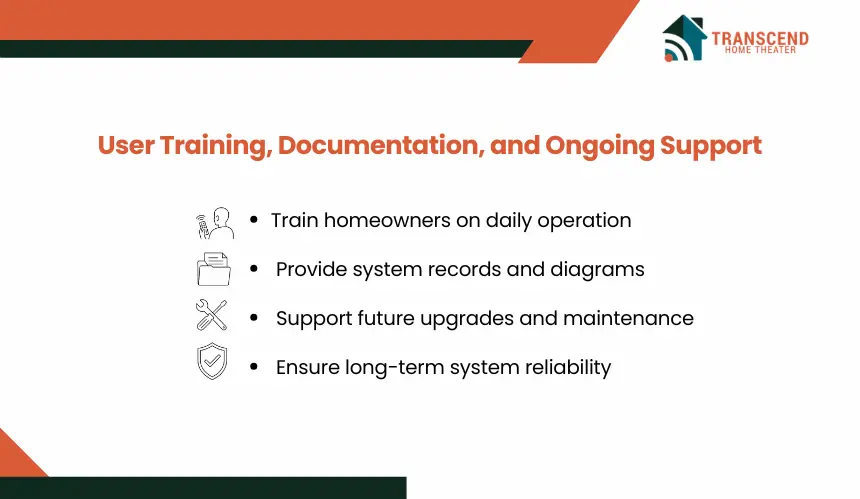
A professional residential AV installation is not complete when the equipment is turned on. Homeowners must be able to operate the system confidently, understand its capabilities, and have access to support resources that help maintain long-term performance.
How Do Homeowners Learn to Use the System?
After installation and testing are completed, professionals provide a guided walkthrough of the entire system. This includes operating displays, switching between content sources, adjusting audio settings, accessing streaming platforms, and using automation features.
The training process focuses on real-world usage scenarios so homeowners can perform everyday tasks without navigating complex menus or managing multiple control devices.
What Documentation Is Included After Installation?
Professional installers typically provide documentation that serves as a reference for future maintenance, upgrades, and troubleshooting. This information may include equipment inventories, system diagrams, device configurations, network details, warranty information, and manufacturer documentation.
Proper records make it easier to diagnose issues, replace components, and expand the system without recreating the original design and configuration process.
What Ongoing Support Is Usually Available?
Many providers offer post-installation support to address software updates, equipment additions, configuration adjustments, and technical issues that may arise over time. Ongoing support helps maintain compatibility as streaming platforms, network requirements, and connected technologies continue to evolve.
Homeowners investing in AV installation services in McLean, VA often view long-term support as an important part of the overall project, particularly in residences where integrated entertainment systems, smart home controls, and multi-room audio environments are expected to operate reliably for years after installation.
Ready to create a seamless home entertainment experience? Transcend Home Theater delivers professionally designed AV solutions tailored to your space, lifestyle, and technology goals. Whether you’re upgrading a media room, installing whole-home audio, or building a dedicated theater, the team serves homeowners throughout Virginia, Maryland, and Northwest DC, including McLean, Arlington, Bethesda, Rockville, and Potomac.
Frequently Asked Questions
How long does a residential AV installation usually take?
A basic TV and soundbar setup may take a few hours, while a full home theater, multi-room audio system, or integrated smart AV setup can take several days. Timeline depends on wiring access, wall construction, equipment complexity, network requirements, and whether the home needs retrofitting or new low-voltage cabling.
Can an AV system be installed in an existing home without major remodeling?
Most residential AV systems can be installed in existing homes without major remodeling. Professionals often use attic spaces, crawl spaces, wall cavities, equipment closets, and concealed cable pathways to reduce visible wiring. More complex systems may require limited drywall access, especially for in-wall speakers, projector wiring, or centralized equipment racks.
What should homeowners prepare before an AV installer arrives?
Homeowners should identify the rooms they want connected, preferred viewing areas, streaming platforms, audio zones, and any existing devices they want to keep. Sharing Wi-Fi details, floor plans, equipment model numbers, and smart home preferences helps the installer plan faster and avoid compatibility issues during setup.
Is professional AV installation worth it for a small media room?
Professional installation can still be valuable in a small media room because screen placement, speaker positioning, cable concealment, and acoustic balance affect performance regardless of room size. A compact room often needs precise equipment selection to prevent overpowering bass, poor dialogue clarity, or uncomfortable viewing angles.
Can residential AV installation include outdoor entertainment areas?
Residential AV installation can include outdoor TVs, weather-rated speakers, patio audio zones, landscape speakers, and outdoor Wi-Fi support. Outdoor systems require equipment designed for moisture, heat, glare, and temperature changes. Proper placement also protects components while keeping sound coverage balanced across decks, patios, pools, or backyard seating areas.
What is the difference between AV installation and home theater installation?
AV installation is broader and may include TVs, speakers, streaming devices, whole-home audio, smart controls, networking, and outdoor entertainment. Home theater installation is more specialized, focusing on a dedicated cinema-style space with surround sound, projection or large-format display, acoustic treatment, lighting control, and immersive viewing performance.