
Whole-Home Wi-Fi vs Traditional Routers: Which Is Better For Your Home?

Key Takeaways:
|
Reliable internet coverage has become a challenge for many households, especially when dead zones, inconsistent speeds, or multiple connected devices begin affecting daily activities. Choosing between a whole-home Wi-Fi system and a traditional router can be difficult because both solutions serve different network demands and home layouts.
Understanding how each option performs in real-world conditions makes it easier to select a setup that matches a household’s size, usage patterns, and connectivity requirements. This guide explains the differences between whole-home Wi-Fi and traditional routers to help homeowners make an informed decision.
How Whole-Home Wi-Fi and Traditional Routers Work
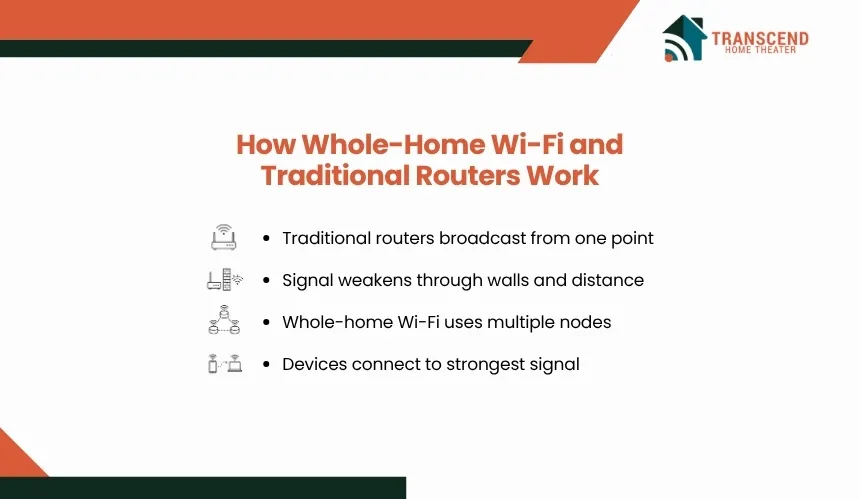
Both systems provide wireless internet access, but they distribute network signals differently. Understanding how each setup operates creates the foundation for comparing performance, coverage, and suitability for different homes.
How Does a Traditional Router Distribute Internet Signals?
A traditional router receives internet access from a modem and broadcasts a wireless signal from a single location. All connected devices communicate through that central access point, which manages traffic between the home network and the internet.
Signal strength decreases as distance increases. Physical barriers such as concrete walls, metal structures, and multiple floors can weaken Wi-Fi coverage, creating dead zones or inconsistent performance in certain areas of the house.
Most standalone routers work efficiently in smaller homes, apartments, or layouts where devices remain relatively close to the router.
How Does Whole-Home Wi-Fi Extend Coverage?
Whole-home Wi-Fi systems use multiple interconnected devices, commonly called mesh nodes or satellites, to create a unified wireless network across the property. Instead of relying on one broadcasting point, the network distributes coverage through several locations.
As users move throughout the house, devices automatically connect to the node providing the strongest signal. This seamless roaming process reduces interruptions during activities such as video conferencing, streaming, and online gaming.
Mesh systems are designed to maintain broader coverage and support connectivity in areas where a single router may struggle.
What Are the Main Components That Differentiate Both Systems?
The primary difference lies in network architecture. Traditional routers depend on one access point, while whole-home Wi-Fi systems rely on multiple coordinated nodes that communicate with each other.
Key distinctions include:
- Number of wireless access points
- Coverage distribution method
- Roaming capability between devices
- Expansion options for larger homes
- Network management through dedicated mobile apps
These architectural differences influence how each system handles signal quality, device density, and overall user experience within a home network.
Technical Differences Between Whole-Home Wi-Fi and Traditional Routers
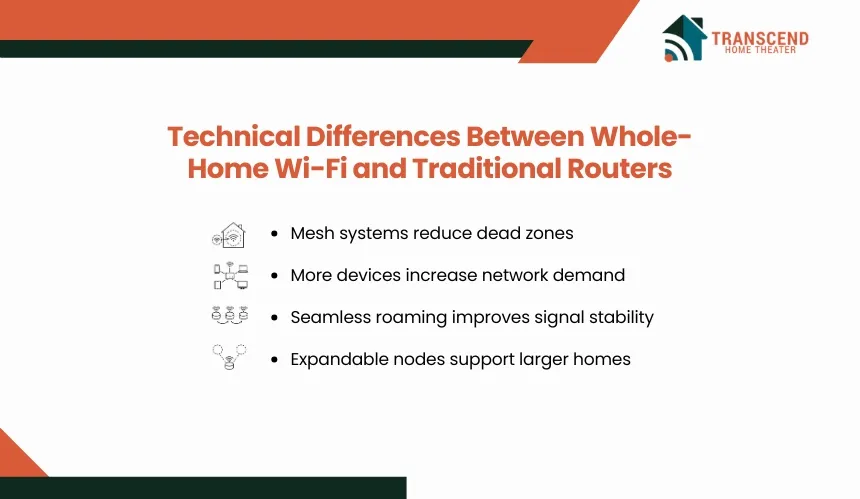
Although both systems deliver internet access, their performance characteristics differ under varying network demands. Factors such as coverage consistency, device load, and future expansion determine how efficiently each setup supports daily use.
1. Coverage Range and Dead Zone Reduction
A traditional router concentrates signal transmission from one location. As the signal travels farther from the router, attenuation occurs, which can lead to weaker connectivity in distant rooms or upper floors.
Whole-home Wi-Fi systems distribute coverage through multiple mesh nodes positioned throughout the house. Because each node extends the network, signal strength remains more consistent across larger spaces and hard-to-reach areas.
Homes with thick walls, elongated floor plans, or multiple stories often experience fewer dead zones when using a mesh-based system.
2. Device Capacity and Network Management
Modern households frequently connect smartphones, laptops, televisions, gaming consoles, smart speakers, security cameras, and IoT devices simultaneously. Increased device density can place additional demand on a wireless network.
Traditional routers vary in their ability to manage multiple connections efficiently. Entry-level models may experience congestion when numerous devices compete for bandwidth at the same time.
Whole-home Wi-Fi systems are typically designed for connected households with higher device counts. Many platforms include centralized management features, allowing users to monitor devices, prioritize traffic, configure parental controls, and perform firmware updates through a mobile application.
3. Signal Stability, Roaming, and Speed Consistency
With a traditional router, devices may remain connected to a weaker signal even after a user moves farther away from the router. This behavior can result in slower speeds, increased latency, or temporary interruptions.
Mesh systems support seamless roaming, enabling devices to transition automatically between nodes without requiring manual reconnection. This process maintains more stable performance while users move throughout the property.
Applications that require uninterrupted connectivity, including video calls, cloud-based work, and media streaming, generally benefit from this continuous handoff capability.
4. Installation Complexity and Expandability
Traditional routers typically involve a straightforward setup process because only one device requires configuration. However, expanding coverage later may require additional hardware such as Wi-Fi extenders, which can create separate network names or inconsistent performance.
Whole-home Wi-Fi systems require the placement and synchronization of multiple nodes during installation. Once configured, additional nodes can usually be added to increase coverage without redesigning the network.
This scalability allows homeowners to adapt the system as internet usage grows or as new devices are introduced into the home environment.
Is Traditional Router Sufficient For Your Home Or You Need Whole-Home Wifi?
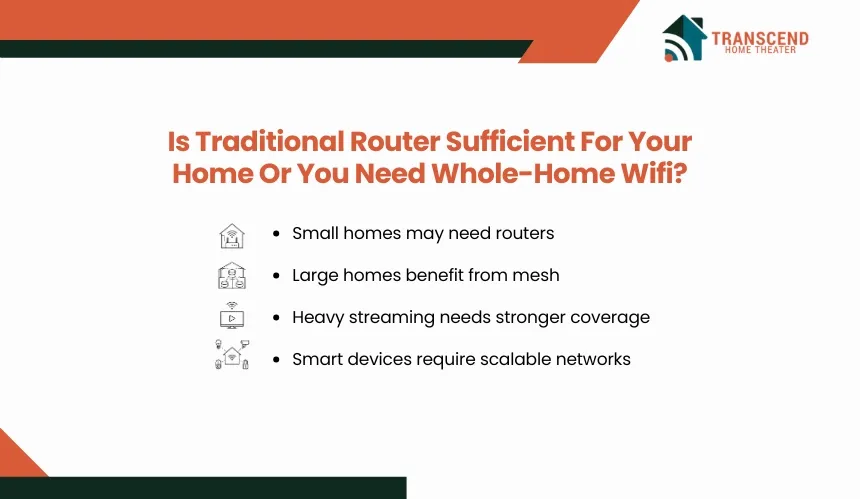
Network performance depends not only on the equipment itself but also on the characteristics of the home and the way internet-connected devices are used. Home size, construction materials, and digital activity patterns all influence which solution delivers better results.
When Is a Traditional Router Sufficient?
A traditional router is often adequate for apartments, condos, and smaller single-story homes where wireless devices remain within a reasonable distance from the router.
Households with moderate internet usage, such as web browsing, email, occasional streaming, and limited smart home integration, may not require a multi-node system. In these environments, a quality standalone router can provide reliable connectivity without additional hardware.
Traditional routers are also suitable for users seeking a simpler setup with lower upfront costs.
When Does Whole-Home Wi-Fi Provide Better Performance?
Whole-home Wi-Fi systems are generally better suited for large homes, multi-story properties, and layouts where walls or structural materials interfere with wireless signals.
Households with numerous connected devices often place heavier demands on the network. Simultaneous activities such as remote work, online gaming, 4K streaming, video conferencing, and smart home automation benefit from broader and more uniform coverage.
Mesh systems also serve families that frequently move between rooms while using connected devices, since seamless roaming reduces interruptions during active sessions.
Which Factors Should Homeowners Consider Before Choosing?
Several practical factors influence the most appropriate network solution:
- Total square footage of the home
- Number of floors and room layout
- Building materials that may weaken wireless signals
- Number of connected devices in daily use
- Internet activities performed simultaneously
- Existing and future smart home requirements
- Budget for initial installation and future expansion
Evaluating these variables provides a more accurate basis for selecting a network setup than relying solely on advertised speed ratings. The most effective choice depends on how the home operates rather than on a one-size-fits-all approach.
Pros and Limitations of Each Network Setup
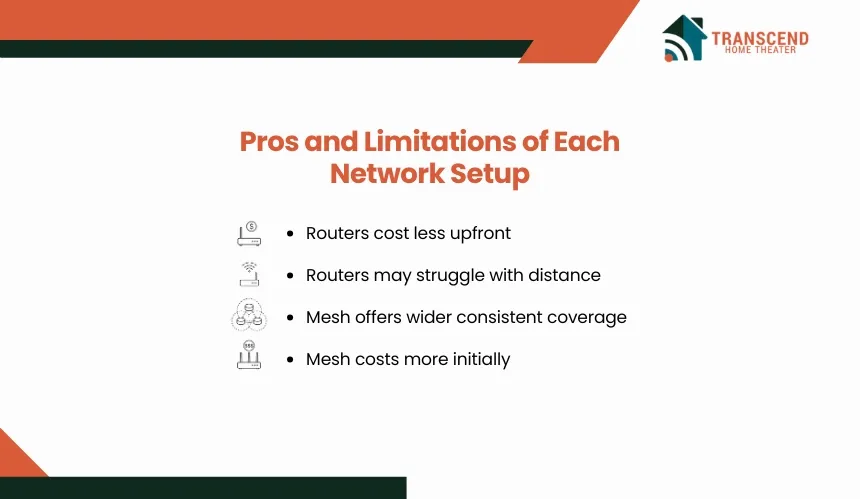
Every wireless solution involves trade-offs between cost, coverage, simplicity, and future flexibility. Understanding these advantages and limitations allows homeowners to select equipment based on operational needs rather than marketing claims.
Benefits and Drawbacks of Traditional Routers
Traditional routers offer a lower initial investment and a simpler installation process. Since only one device manages the network, troubleshooting and maintenance are generally straightforward.
However, performance can decline in larger homes where distance and building materials weaken wireless signals. Some homeowners attempt to solve coverage gaps with range extenders, but separate networks and inconsistent handoffs may still affect the user experience.
Traditional routers are often practical for smaller households with predictable internet usage and limited expansion requirements.
Benefits and Drawbacks of Whole-Home Wi-Fi Systems
Whole-home Wi-Fi systems provide broader coverage and maintain stronger signal consistency across multiple rooms and floors. Additional nodes can be added when internet demands increase, making the network easier to scale over time.
The primary limitation is cost. Mesh systems require multiple devices, resulting in higher upfront expenses compared to standalone routers. Initial setup can also be more involved because node placement directly affects performance.
Despite the added investment, households with extensive smart home ecosystems or numerous connected devices often gain greater long-term value from a mesh architecture.
Cost Versus Long-Term Flexibility
Budget considerations should include future connectivity needs rather than focusing only on purchase price. A lower-cost router may require additional accessories or replacement as internet usage expands.
This consideration is particularly relevant in parts of Maryland, where many households rely on high-speed internet for hybrid work arrangements, streaming services, and smart home technology. In Potomac, MD, larger multi-story residences in communities near Avenel, River Falls, and Falconhurst frequently present coverage challenges due to home size and interior construction materials.
In these environments, whole-home Wi-Fi systems can reduce dead zones and provide more uniform coverage across home offices, entertainment areas, and outdoor living spaces. Smaller residences and townhomes in the region may still operate efficiently with a high-quality traditional router, making the best choice dependent on both current requirements and future expansion plans.
Key Questions to Ask Before Upgrading Your Home Wi-Fi
Upgrading a wireless network should be based on measurable performance issues and future connectivity requirements. Evaluating usage patterns and coverage limitations helps homeowners choose equipment that aligns with long-term network demands.
1. Are Dead Zones Affecting Daily Internet Use?
Dead zones occur when wireless signals weaken because of distance, walls, flooring materials, or interference from other electronic devices. If video calls drop, streaming buffers, or smart devices frequently disconnect in certain rooms, the existing network may no longer provide adequate coverage.
Persistent dead zones often indicate that signal distribution, rather than internet speed itself, has become the limiting factor.
2. How Many Devices Connect to the Network Each Day?
Modern households routinely operate dozens of connected devices simultaneously. Smartphones, laptops, tablets, gaming systems, smart TVs, security cameras, voice assistants, and IoT devices all compete for bandwidth and router resources.
As device density increases, network congestion can affect throughput, latency, and overall stability. Understanding the number of active devices helps determine whether the existing infrastructure can continue supporting daily demand.
3. Will Future Smart Home Devices Increase Network Demand?
Home automation systems continue to expand beyond basic lighting and thermostats. Smart locks, doorbell cameras, energy monitors, and connected appliances add additional traffic to the wireless network.
Homeowners planning future upgrades should evaluate whether their network can scale without compromising performance. Expandable mesh systems often provide greater flexibility for growing smart home ecosystems.
4. Is Expanding the Network More Cost-Effective Than Replacing It Later?
Selecting equipment based only on current requirements can lead to additional expenses as internet usage evolves. Investing in scalable infrastructure may reduce the need for repeated hardware replacements.
For homeowners considering a whole-home WiFi setup in Potomac, MD, long-term planning is especially valuable. Many properties throughout Potomac feature larger floor plans, finished basements, dedicated home offices, and outdoor entertainment areas that place additional demands on wireless coverage.
Choosing equipment with expansion capabilities can provide more consistent connectivity as household technology needs continue to grow.
Struggling with weak signals or inconsistent Wi-Fi coverage? Transcend Home Theater provides customized networking solutions across Virginia and Maryland, designed to match your home’s layout and connectivity needs. Whether you need a router upgrade or a complete mesh system, the team at Transcend Home Theater can help create a faster, more reliable home network experience.
Frequently Asked Questions
Can whole-home Wi-Fi replace Wi-Fi extenders?
Whole-home Wi-Fi can replace extenders when the goal is smoother coverage under one unified network. Extenders often rebroadcast a weakened signal and may create separate network names. Mesh systems coordinate multiple nodes, which can reduce handoff issues, improve device roaming, and create more predictable coverage across larger homes.
Does a mesh Wi-Fi system make internet speed faster?
A mesh Wi-Fi system does not increase the internet speed provided by the service plan. It improves how that speed is distributed across the home. If the main issue is weak signal, dead zones, or poor coverage in distant rooms, mesh Wi-Fi can deliver more usable speeds where devices previously struggled.
Is Ethernet backhaul worth it for whole-home Wi-Fi?
Ethernet backhaul is valuable when maximum stability and lower latency are priorities. It connects mesh nodes through wired cables instead of relying only on wireless communication between nodes. This can improve performance for gaming, video conferencing, 4K streaming, home offices, and high-traffic areas where wireless interference is common.
How many mesh nodes does a typical home need?
Most homes need two to three mesh nodes, but the right number depends on square footage, floor count, wall materials, and router placement. For example, a two-story home may use one main unit near the modem, one node upstairs, and one near a basement or back room. Proper spacing matters because each node needs a strong connection to the main unit or wired network.
Should homeowners upgrade the router or the internet plan first?
Homeowners should test whether the problem is internet speed or Wi-Fi distribution before upgrading. If speeds are strong near the router but weak in other rooms, the network equipment is likely the issue. If speeds are poor even beside the router, the internet plan, modem, or service provider may need review.
Can smart home devices overload a home Wi-Fi network?
Smart home devices can strain a network when many cameras, sensors, speakers, displays, and appliances stay connected at once. The issue is not always bandwidth usage. Router processing capacity, device management, signal interference, and network congestion can all affect performance, especially in homes with growing automation systems.